YOLO26-depth
Ultralytics' YOLO26 for monocular depth in meters, five sizes from n to x at 768 pixels. AGPL-3.0.
Conditional for size n: code AGPL-3.0-only, weights AGPL-3.0-only. Measured on our RTX 4090: 11.9 ms median, 673 MiB VRAM peak. PyTorch weights, 12 MB.
Conditional for size s: code AGPL-3.0-only, weights AGPL-3.0-only. Measured on our RTX 4090: 12.0 ms median, 715 MiB VRAM peak. PyTorch weights, 26 MB.
Conditional for size m: code AGPL-3.0-only, weights AGPL-3.0-only. Measured on our RTX 4090: 12.9 ms median, 806 MiB VRAM peak. PyTorch weights, 45 MB.
Conditional for size l: code AGPL-3.0-only, weights AGPL-3.0-only. Measured on our RTX 4090: 16.6 ms median, 835 MiB VRAM peak. PyTorch weights, 53 MB.
Conditional for size x: code AGPL-3.0-only, weights AGPL-3.0-only. Measured on our RTX 4090: 16.5 ms median, 1.2 GiB VRAM peak. PyTorch weights, 109 MB.
License
Conditional
Conditional
Conditional
Conditional
Conditional
- Code
- AGPL-3.0-onlychecked 21 Nov 2026
- Weights
- AGPL-3.0-onlyall sizes, checked 21 Nov 2026
AGPL-3.0: shipping it in a product means releasing your source, unless you buy an Ultralytics Enterprise license.
AGPL-3.0: shipping it in a product means releasing your source, unless you buy an Ultralytics Enterprise license.
AGPL-3.0: shipping it in a product means releasing your source, unless you buy an Ultralytics Enterprise license.
AGPL-3.0: shipping it in a product means releasing your source, unless you buy an Ultralytics Enterprise license.
AGPL-3.0: shipping it in a product means releasing your source, unless you buy an Ultralytics Enterprise license.
On our RTX 4090, measured
11.9ms median
p90 12.7 ms, fp16, batch 1, 768x768
- VRAM peak
- 673 MiB
- Status
- Runs as is
Phases of one call
- Pre-processing
- 1.8 ms
- Network
- 6.8 ms
- Post-processing
- 0.1 ms
Split by the official package's own timer over 20 calls, with a synchronize after each phase. Its timer leaves out about 3.4 ms of the 12.2 ms call there, such as converting the input and building the result, so the phases don't add up to the median.
Environment, 22 Nov 2026
NVIDIA GeForce RTX 4090, driver 580.173.02, CUDA 13.0, torch 2.14.1+cu130, Python 3.12.9, ultralytics==8.4.189. Baseline 1032 MiB. 10 warm-up + 100 timed. Scope: predict(): pre-processing, forward pass and post-processing; input file decoded beforehand.
Accuracy
Not yet scored
12.0ms median
p90 12.6 ms, fp16, batch 1, 768x768
- VRAM peak
- 715 MiB
- Status
- Runs as is
Phases of one call
- Pre-processing
- 2.0 ms
- Network
- 7.2 ms
- Post-processing
- 0.1 ms
Split by the official package's own timer over 20 calls, with a synchronize after each phase. Its timer leaves out about 3.3 ms of the 12.6 ms call there, such as converting the input and building the result, so the phases don't add up to the median.
Environment, 22 Nov 2026
NVIDIA GeForce RTX 4090, driver 580.173.02, CUDA 13.0, torch 2.14.1+cu130, Python 3.12.9, ultralytics==8.4.189. Baseline 1032 MiB. 10 warm-up + 100 timed. Scope: predict(): pre-processing, forward pass and post-processing; input file decoded beforehand.
Accuracy
Not yet scored
12.9ms median
p90 13.7 ms, fp16, batch 1, 768x768
- VRAM peak
- 806 MiB
- Status
- Runs as is
Phases of one call
- Pre-processing
- 1.8 ms
- Network
- 7.5 ms
- Post-processing
- 0.1 ms
Split by the official package's own timer over 20 calls, with a synchronize after each phase. Its timer leaves out about 3.0 ms of the 12.4 ms call there, such as converting the input and building the result, so the phases don't add up to the median.
Environment, 22 Nov 2026
NVIDIA GeForce RTX 4090, driver 580.173.02, CUDA 13.0, torch 2.14.1+cu130, Python 3.12.9, ultralytics==8.4.189. Baseline 1071 MiB. 10 warm-up + 100 timed. Scope: predict(): pre-processing, forward pass and post-processing; input file decoded beforehand.
Accuracy
Not yet scored
16.6ms median
p90 17.2 ms, fp16, batch 1, 768x768
- VRAM peak
- 835 MiB
- Status
- Runs as is
Phases of one call
- Pre-processing
- 1.9 ms
- Network
- 12.5 ms
- Post-processing
- 0.1 ms
Split by the official package's own timer over 20 calls, with a synchronize after each phase. Its timer leaves out about 3.5 ms of the 18.1 ms call there, such as converting the input and building the result, so the phases don't add up to the median.
Environment, 22 Nov 2026
NVIDIA GeForce RTX 4090, driver 580.173.02, CUDA 13.0, torch 2.14.1+cu130, Python 3.12.9, ultralytics==8.4.189. Baseline 1032 MiB. 10 warm-up + 100 timed. Scope: predict(): pre-processing, forward pass and post-processing; input file decoded beforehand.
Accuracy
Not yet scored
16.5ms median
p90 17.1 ms, fp16, batch 1, 768x768
- VRAM peak
- 1.2 GiB
- Status
- Runs as is
Phases of one call
- Pre-processing
- 1.9 ms
- Network
- 11.7 ms
- Post-processing
- 0.1 ms
Split by the official package's own timer over 20 calls, with a synchronize after each phase. Its timer leaves out about 3.7 ms of the 17.4 ms call there, such as converting the input and building the result, so the phases don't add up to the median.
Environment, 22 Nov 2026
NVIDIA GeForce RTX 4090, driver 580.173.02, CUDA 13.0, torch 2.14.1+cu130, Python 3.12.9, ultralytics==8.4.189. Baseline 1065 MiB. 10 warm-up + 100 timed. Scope: predict(): pre-processing, forward pass and post-processing; input file decoded beforehand.
Accuracy
Not yet scored
Weights
PyTorch
- Size
- 12 MB
- sha256
befed1b8561d8b2eaa66274b070cdfc9c44853bda6d6d62a04759f9383af74e9
PyTorch
- Size
- 26 MB
- sha256
0ab8fa24504a5efa8dd8dd46870c25146ebd22508c64f5e29656e17c59bc24dd
PyTorch
- Size
- 45 MB
- sha256
c0ff310571f0f159436e95a2a4fa3f8c40e1fbf36fac66a211347bd189990165
PyTorch
- Size
- 53 MB
- sha256
8d6210f3d17c7633cd3fbf02436265d9006cd72a67f4b43c08e762397aa3ad7e
PyTorch
- Size
- 109 MB
- sha256
a01d5e38f66db8617720d7765ef6228343e75c49b2790fbeb10316c5b8db817c
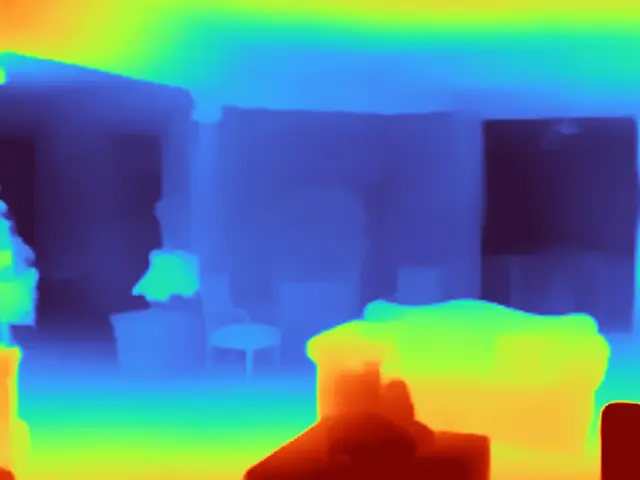
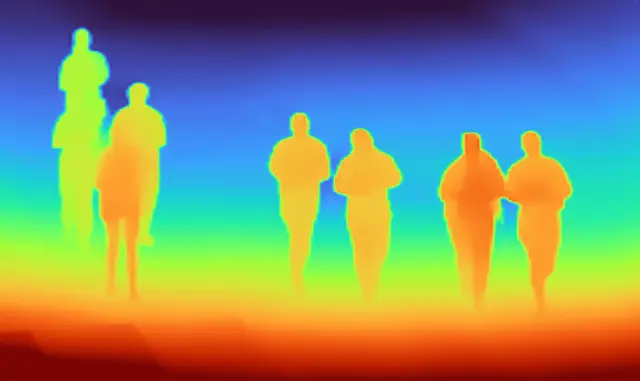
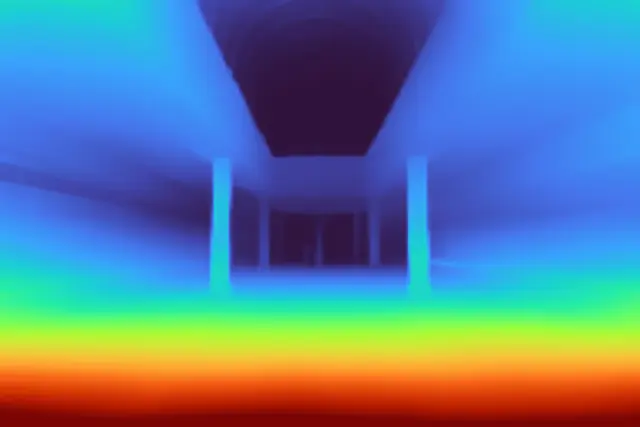
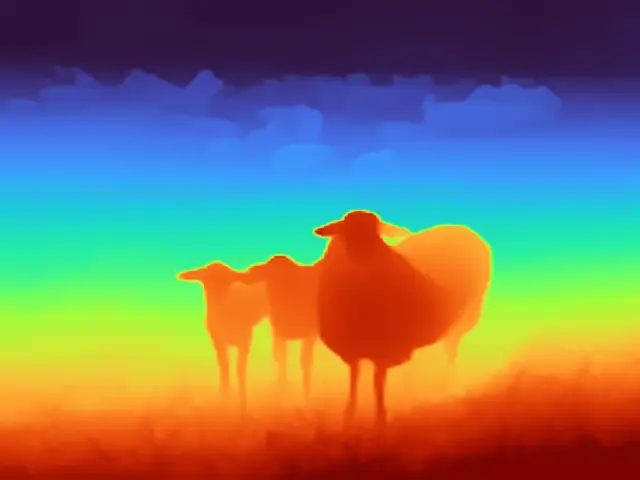
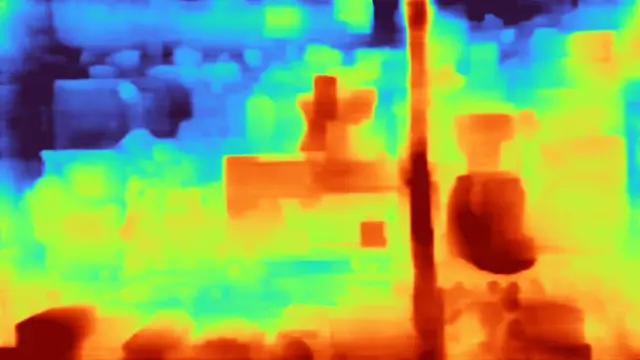
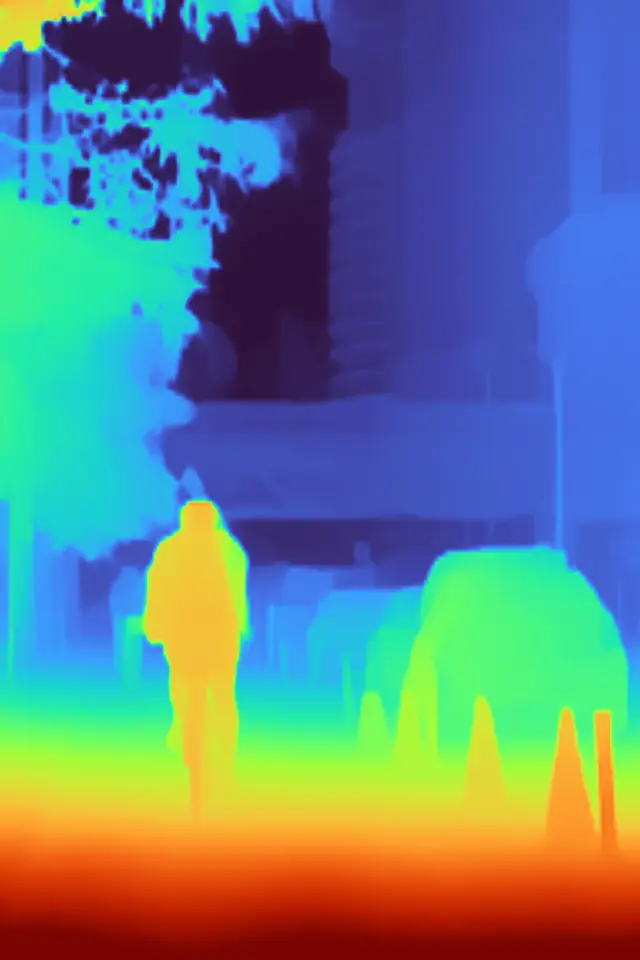
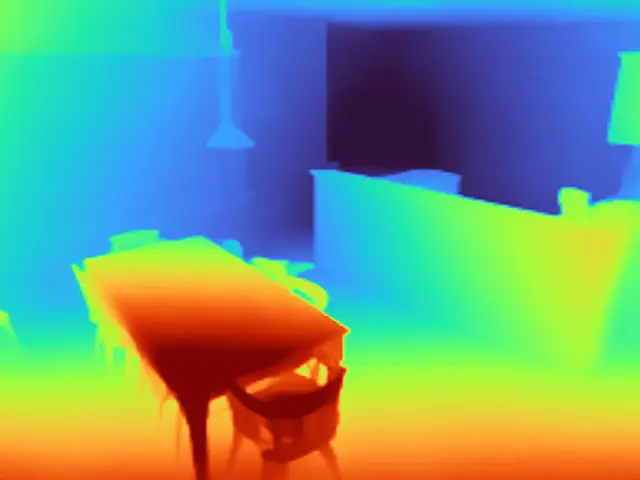
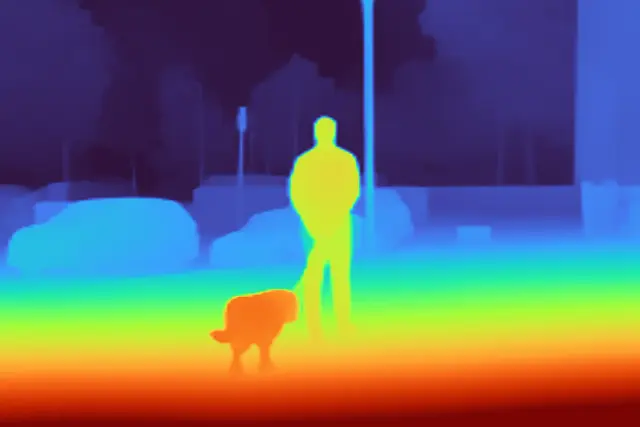
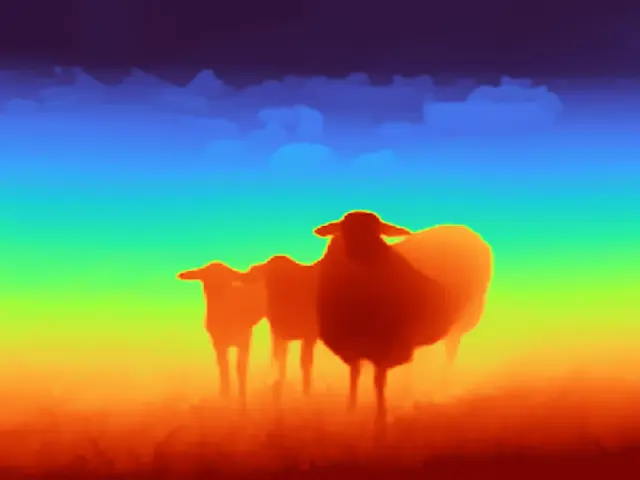
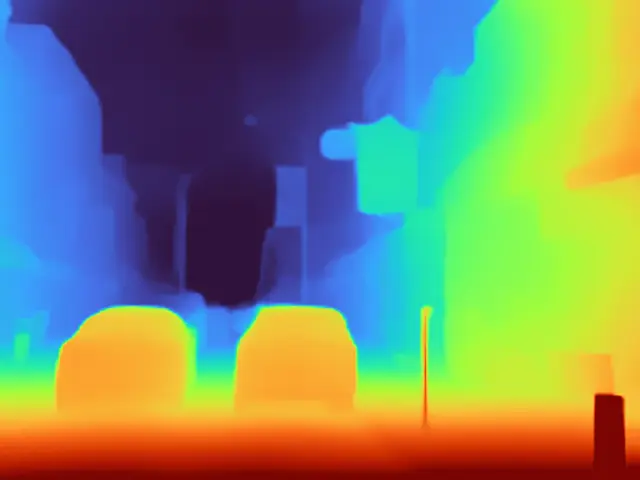
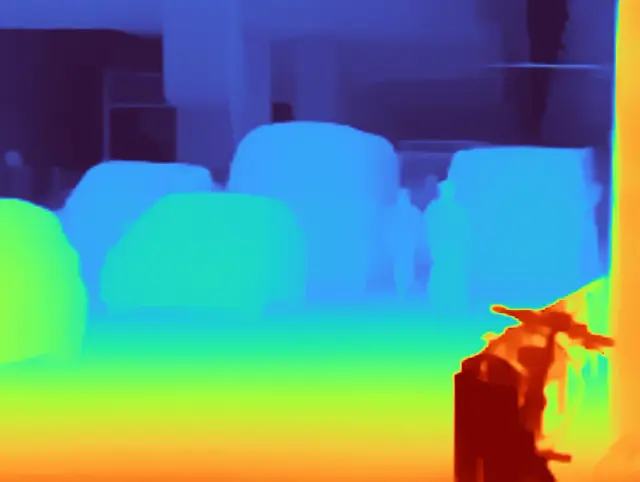
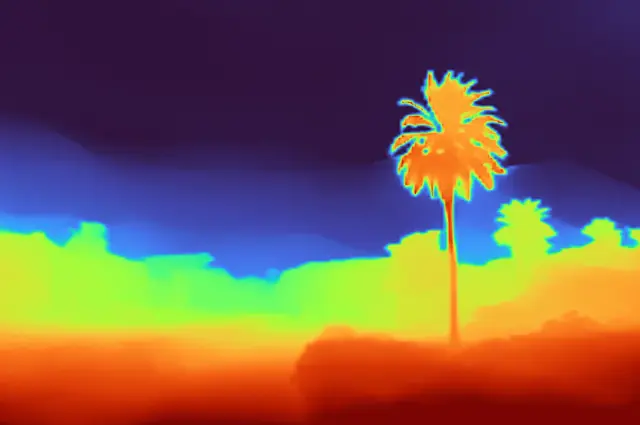
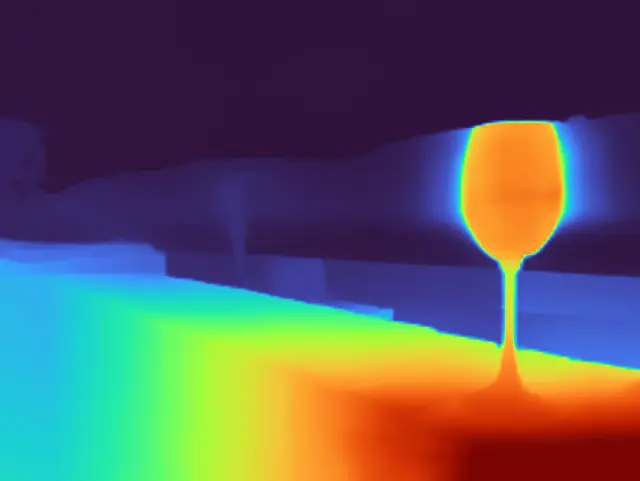
Outputs on the shared test photos
Same photos and one score threshold for every model of this task. Failures are marked.
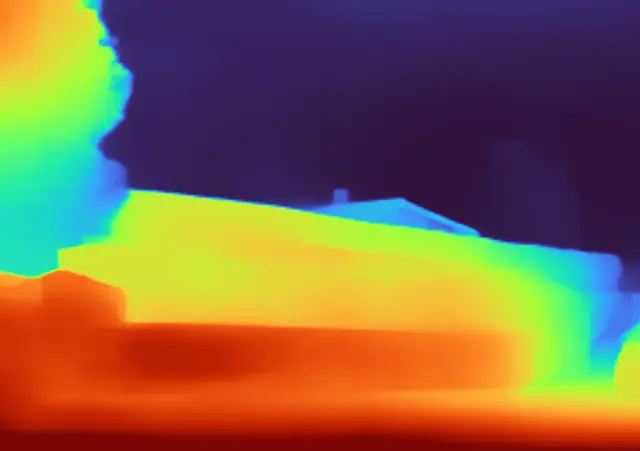
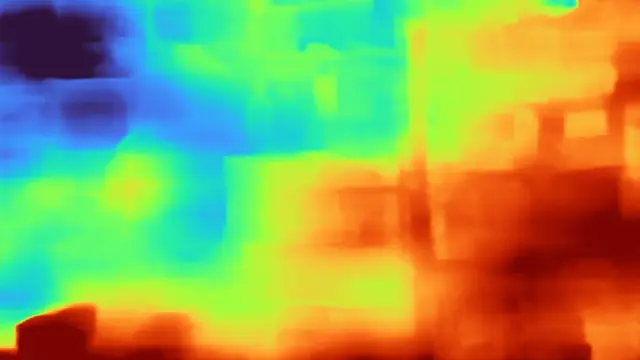 drone-city-blockFails: top-down view melts into a blur; parking lot drawn as near as the tallest building
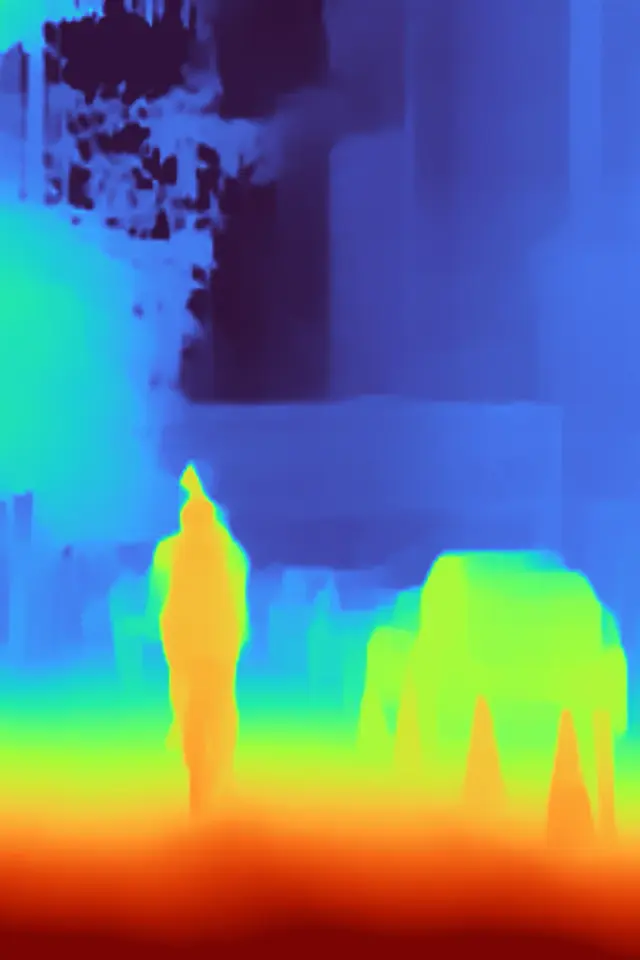 cyclist-bike-lane
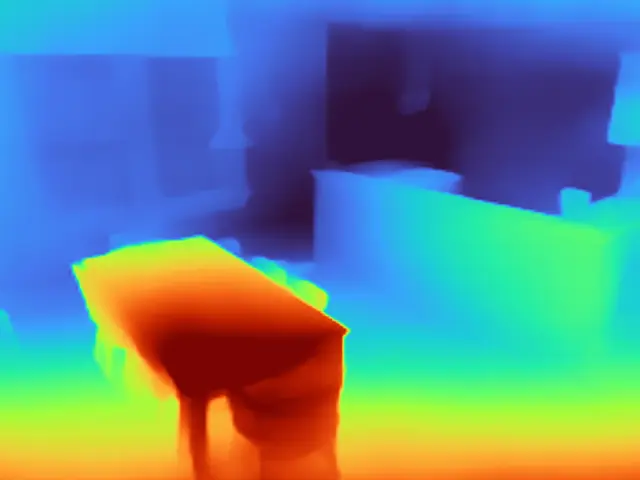 dining-room-kitchen
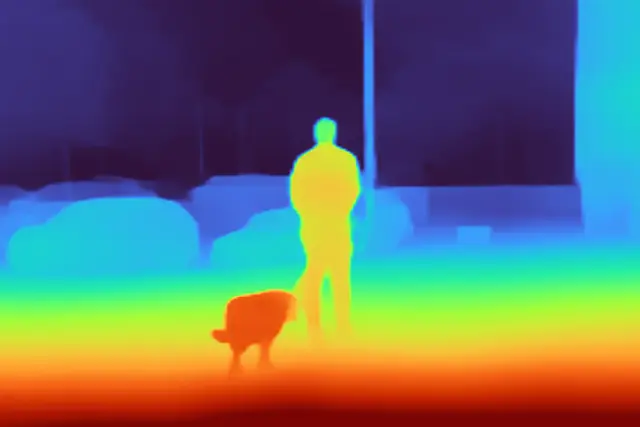 dog-walk-square
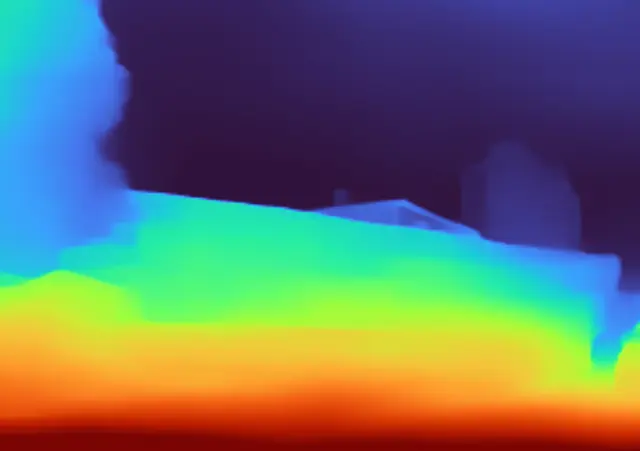 fire-engine-blur
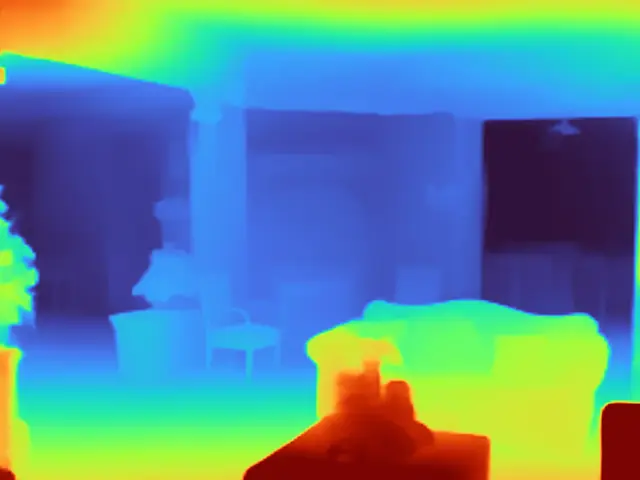
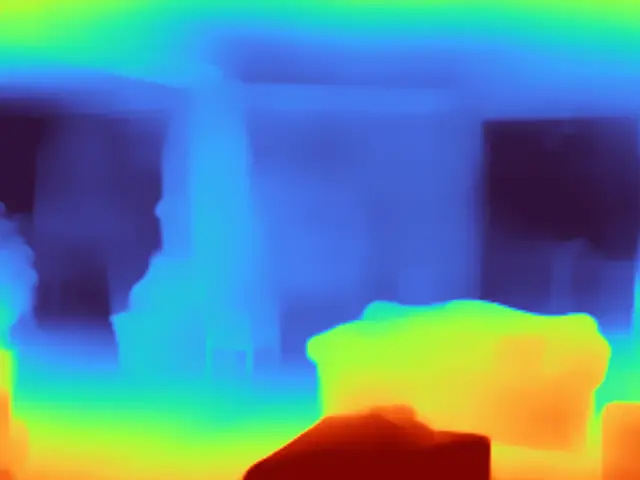 living-room-couch
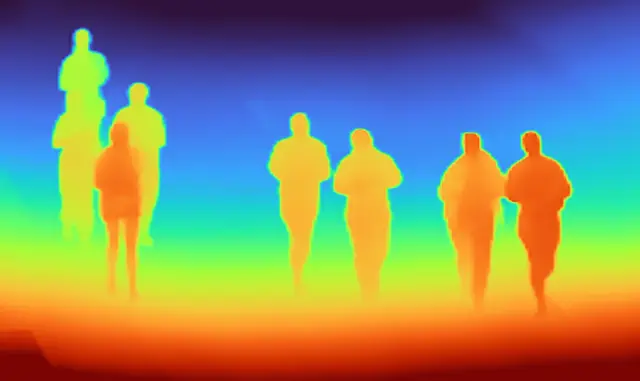
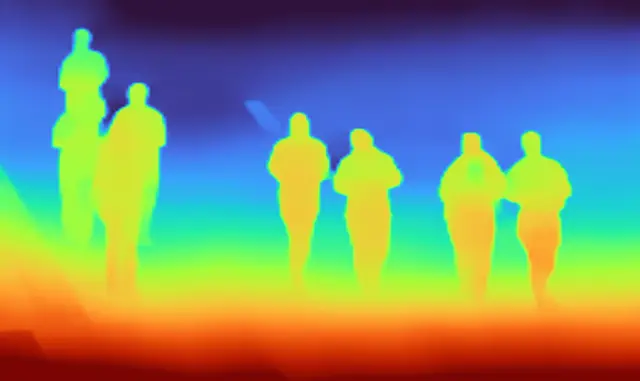 marathon-crossing
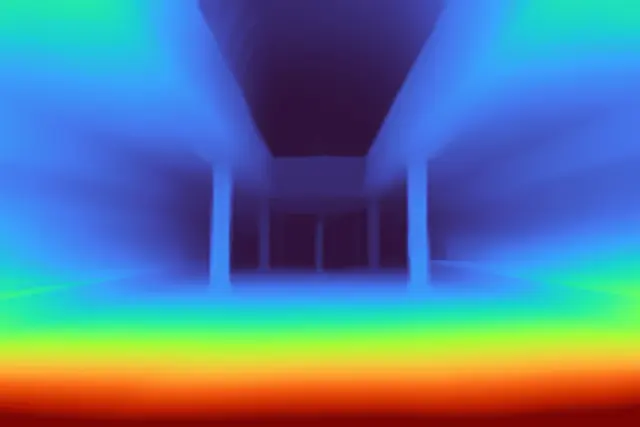
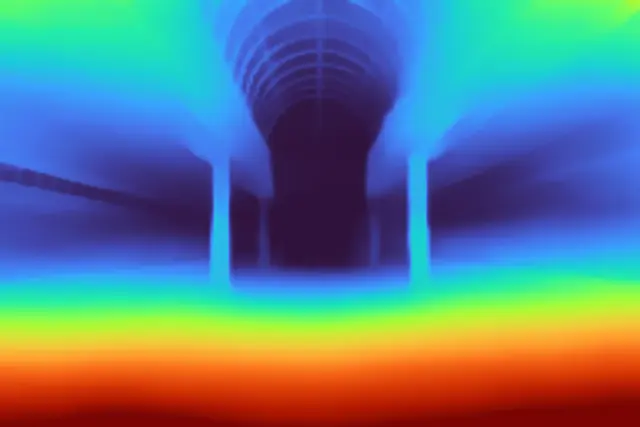 metro-platform
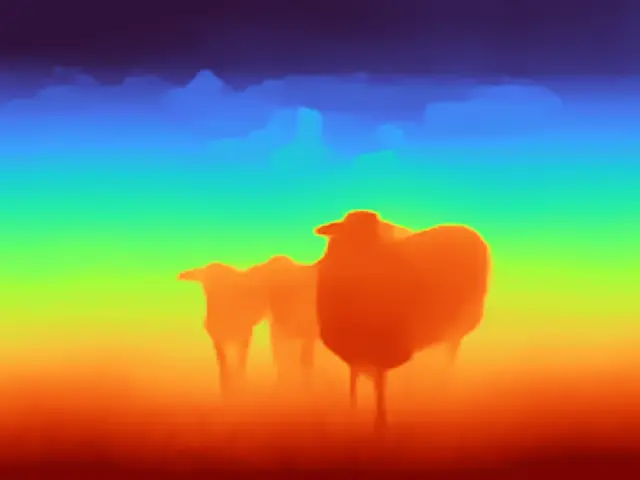 sheep-meadow-lambs
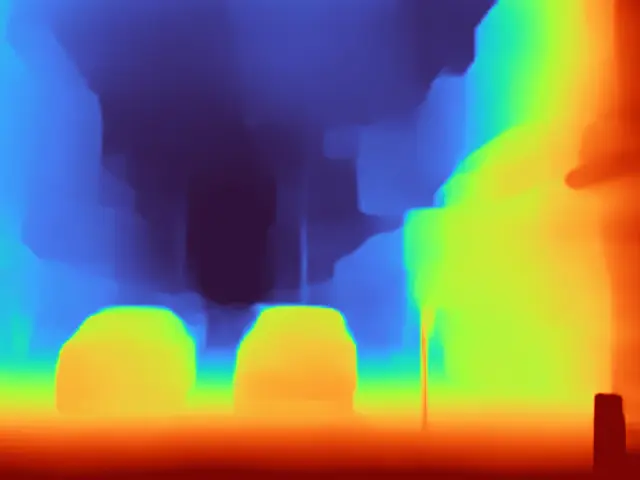 street-night-chinatown
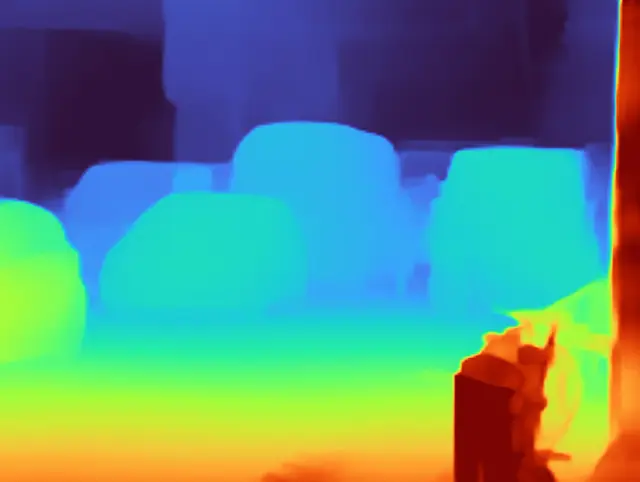 tokyo-street-cyclists
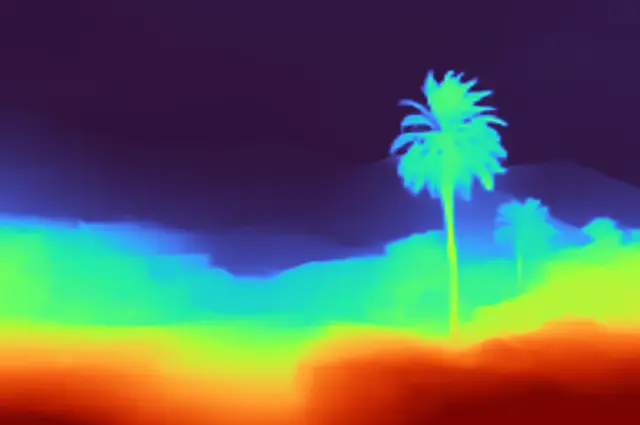 valley-landscape
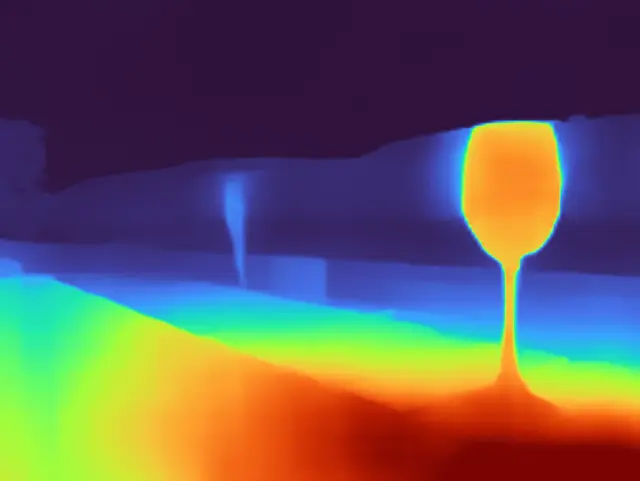 wine-glass-river
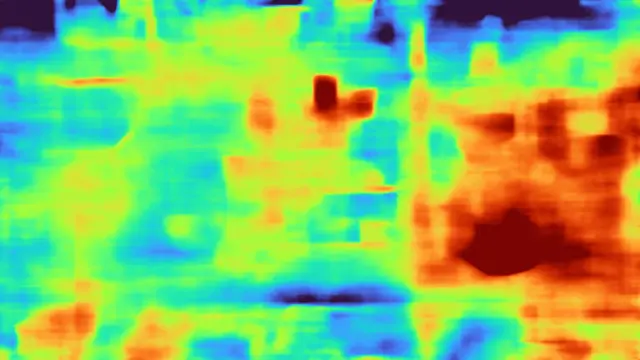
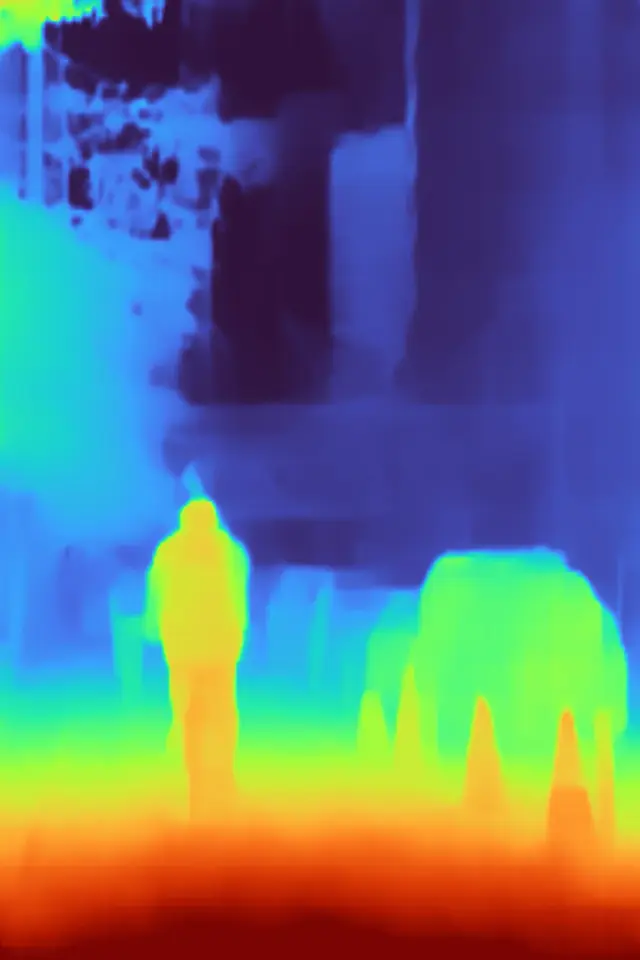
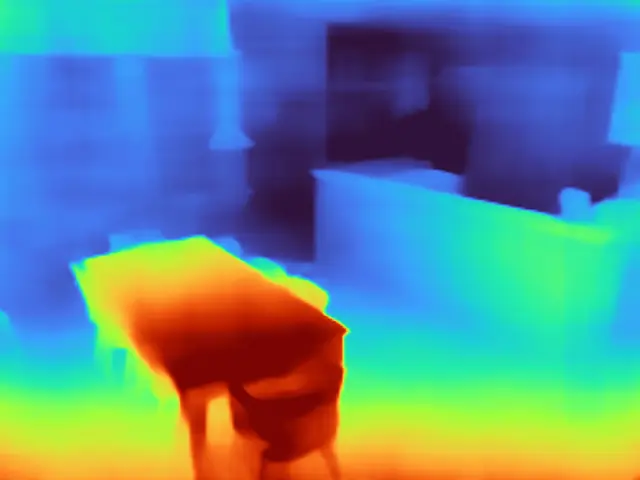
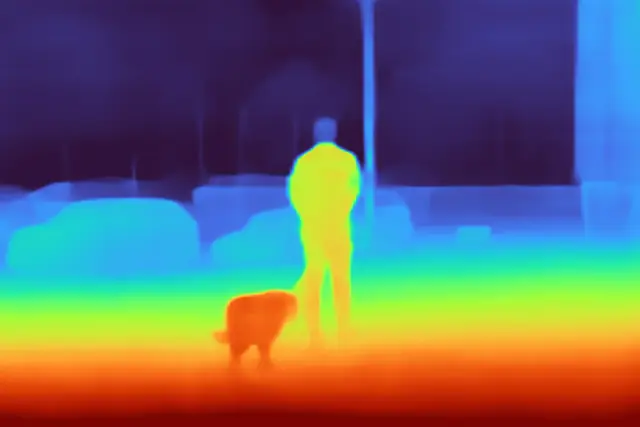
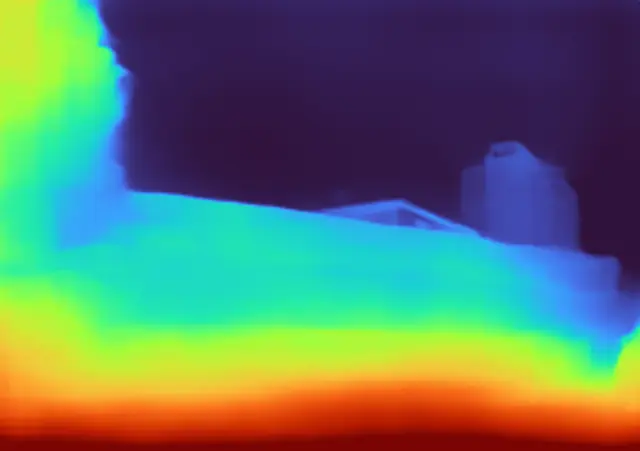
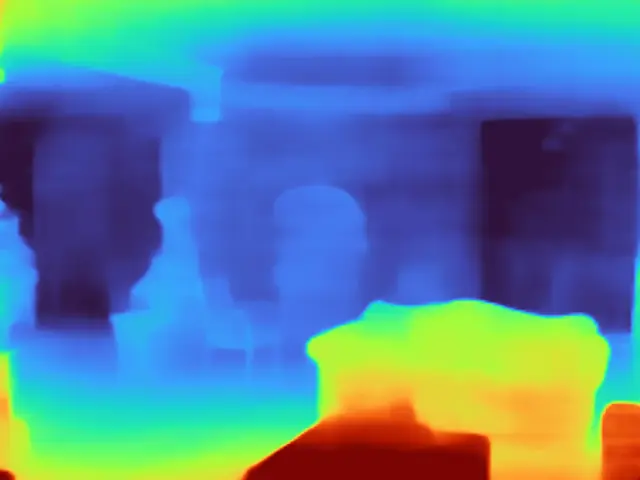
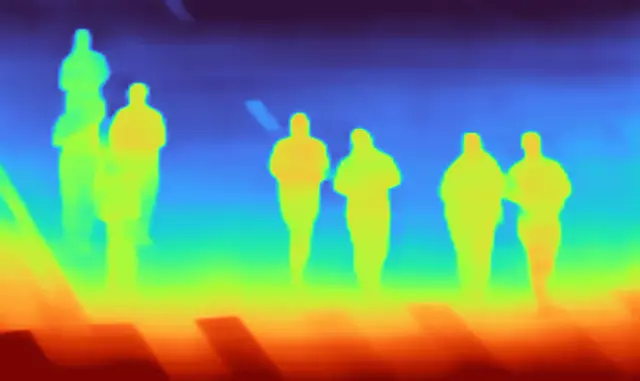
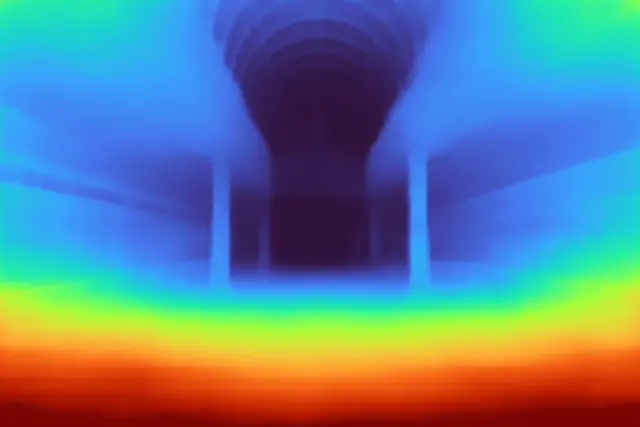
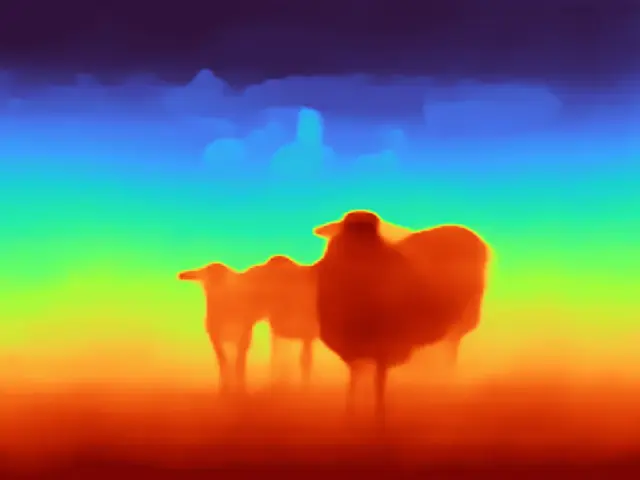
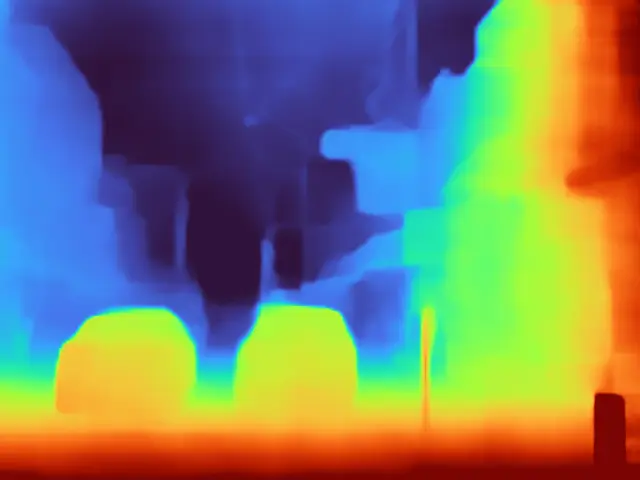
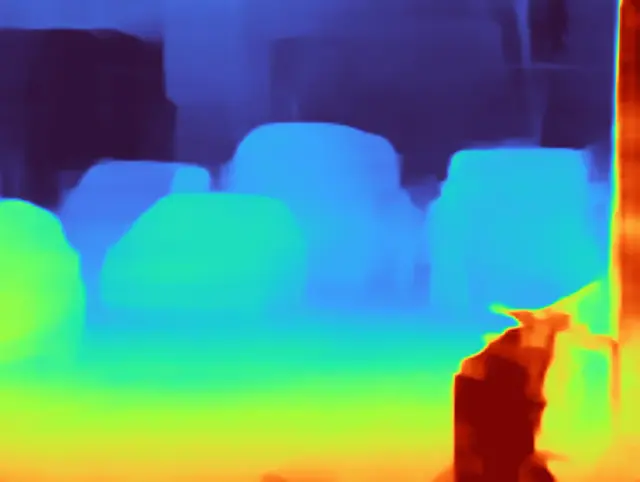
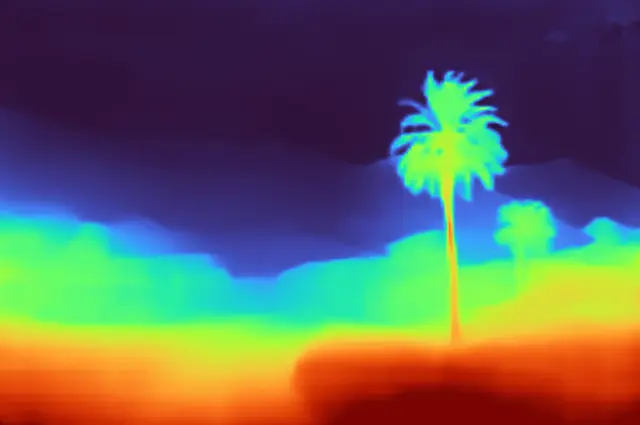
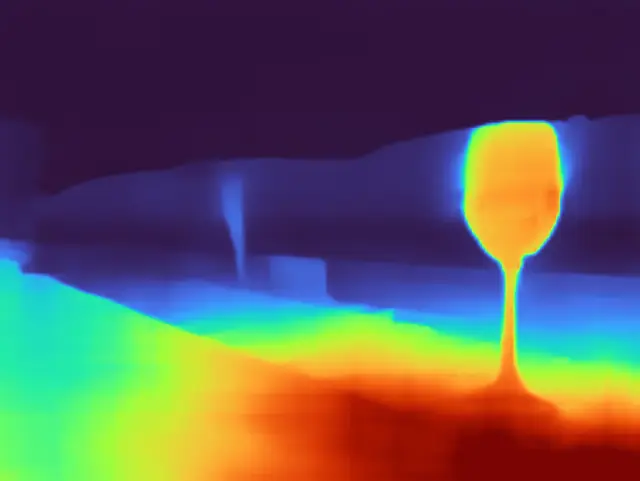
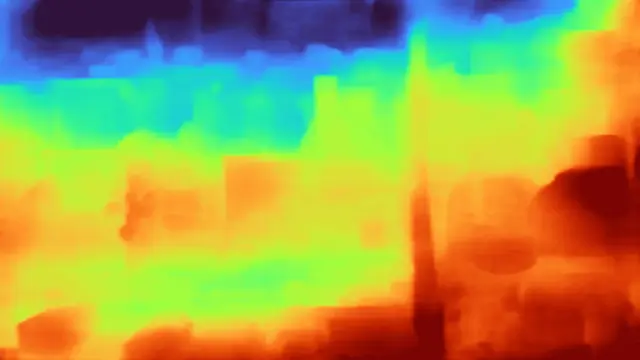 drone-city-blockFails: top-down view melts into a blur; parking lot drawn nearer than the tallest building
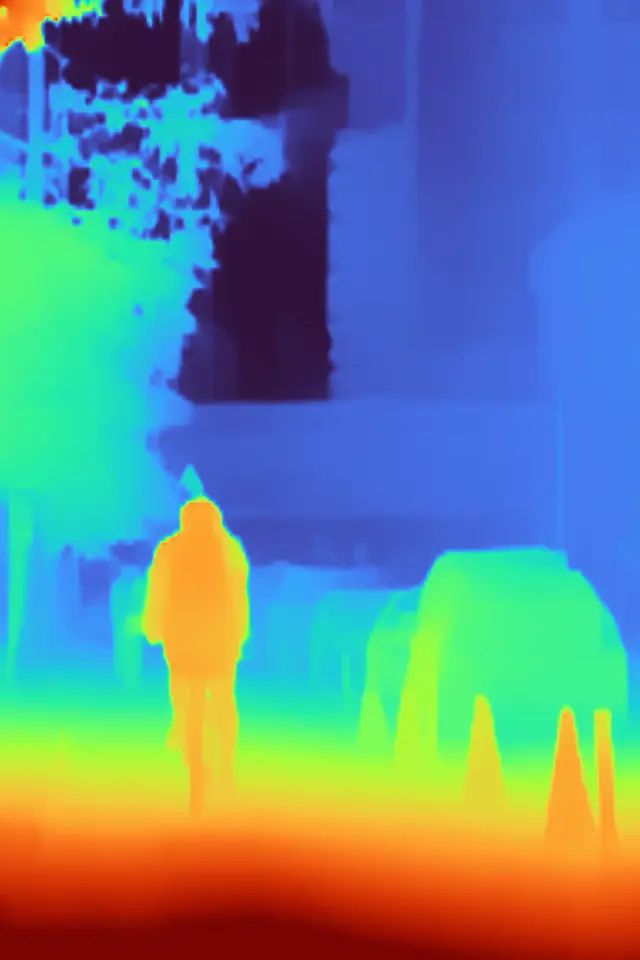 cyclist-bike-lane
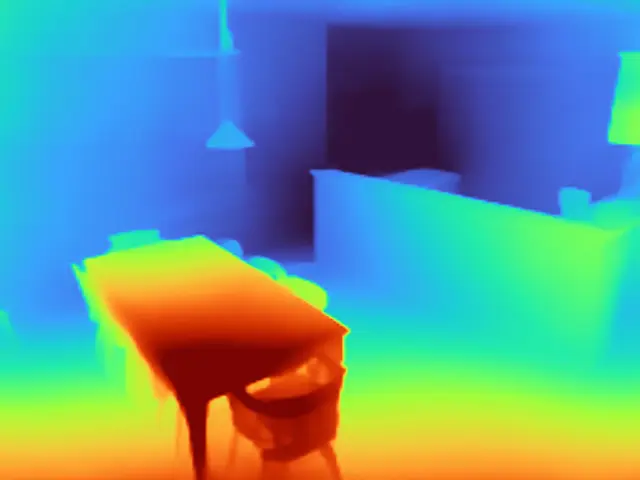 dining-room-kitchen
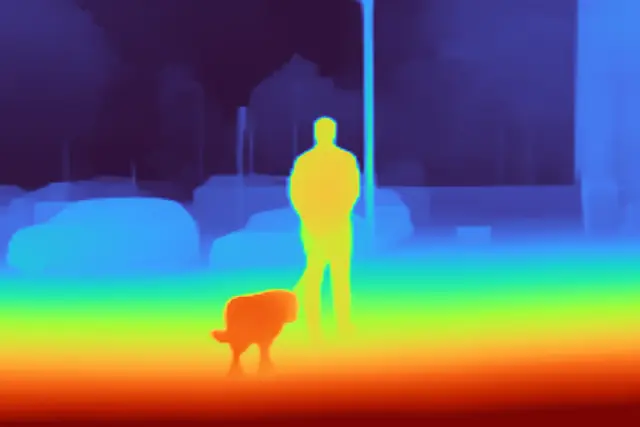 dog-walk-square
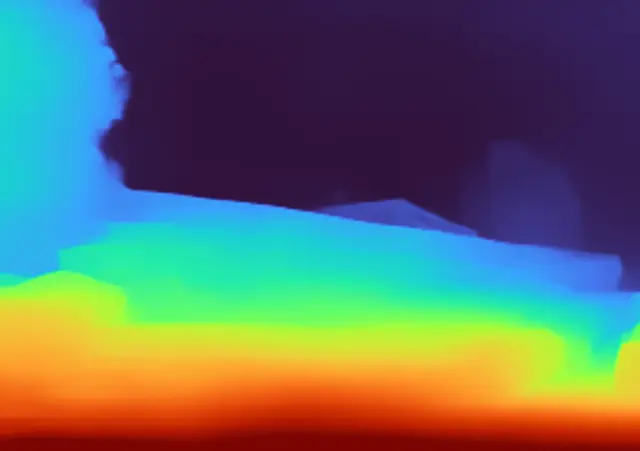 fire-engine-blur
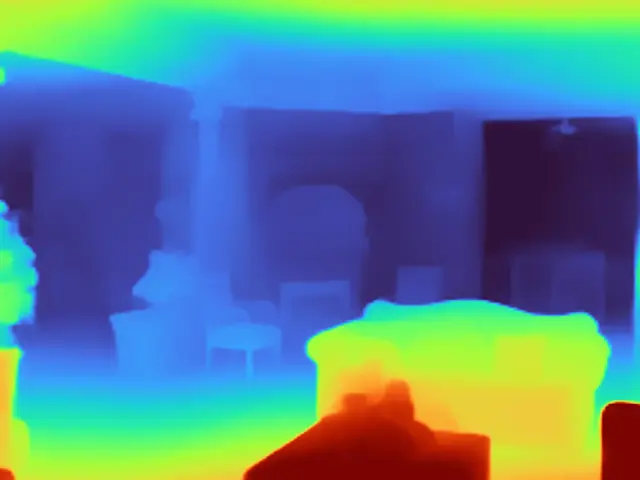 living-room-couch
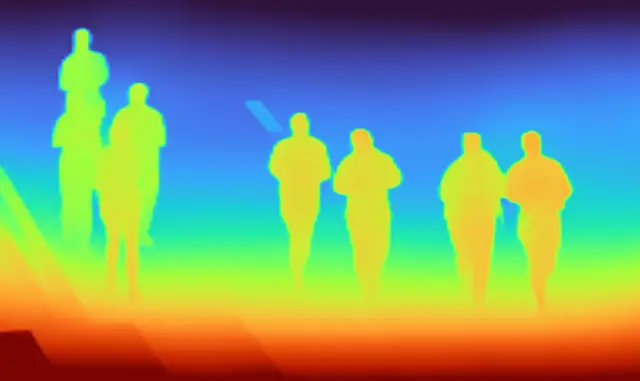 marathon-crossing
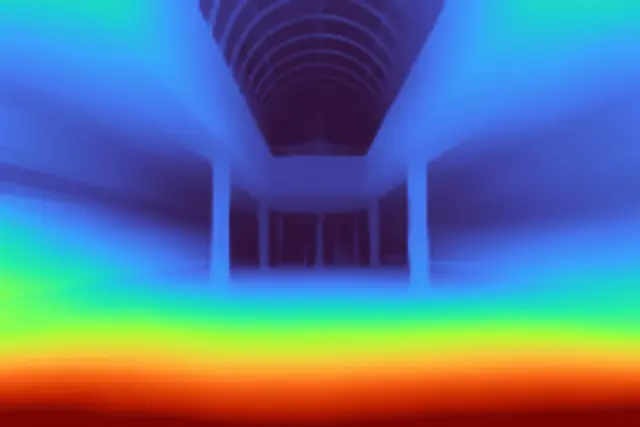 metro-platform
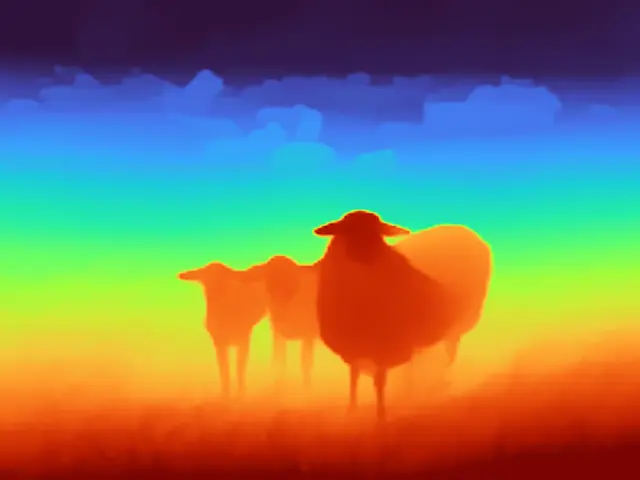 sheep-meadow-lambs
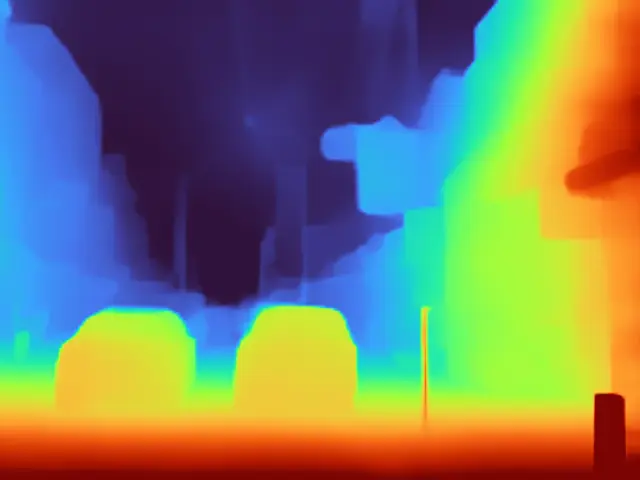 street-night-chinatown
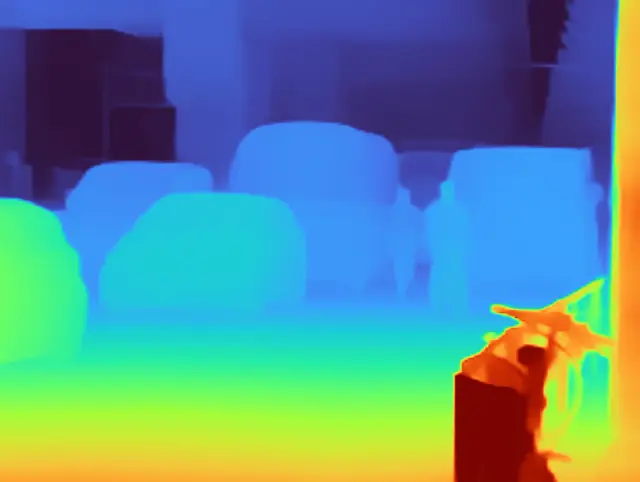 tokyo-street-cyclists
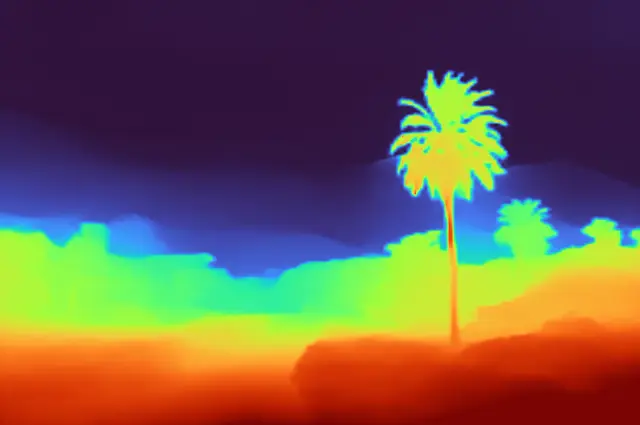 valley-landscape
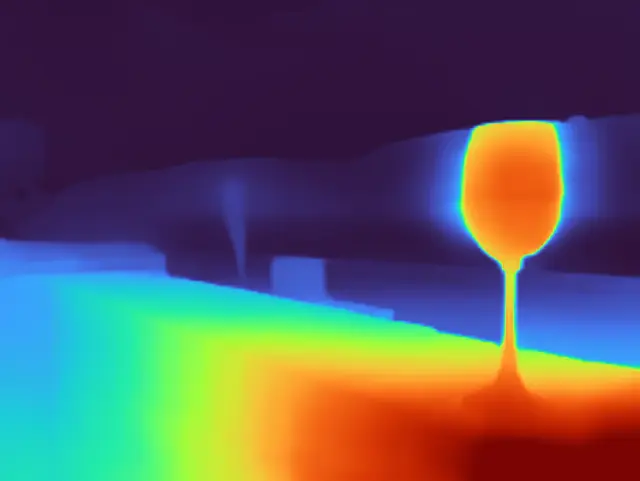 wine-glass-river
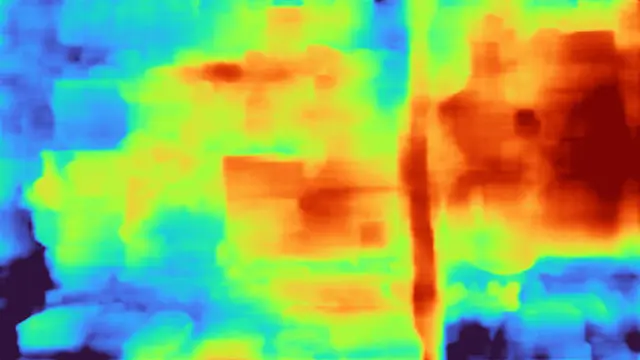 drone-city-blockFails: right half drawn near; street and parking lot as near as the tallest building
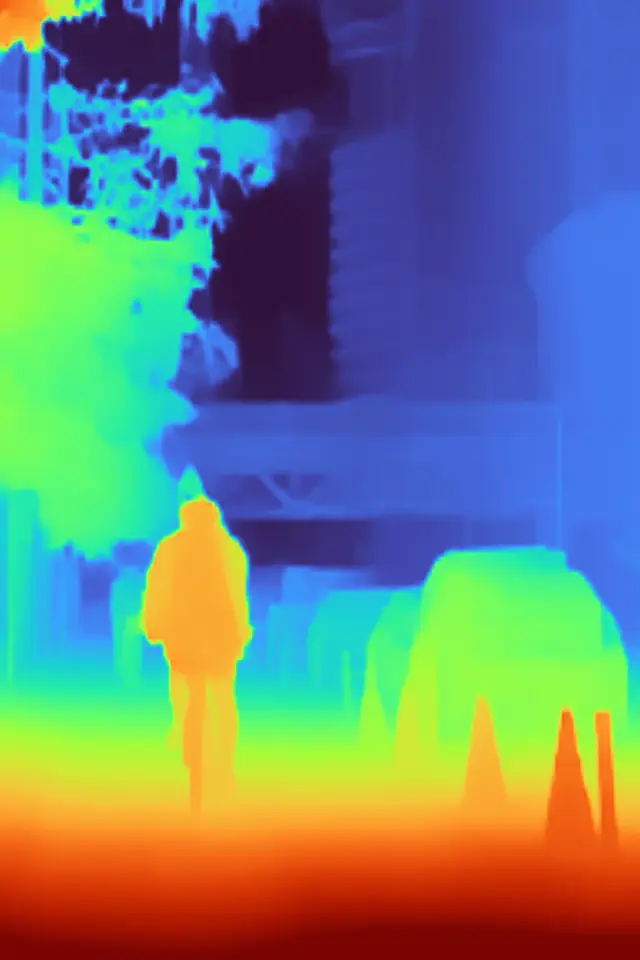 cyclist-bike-lane
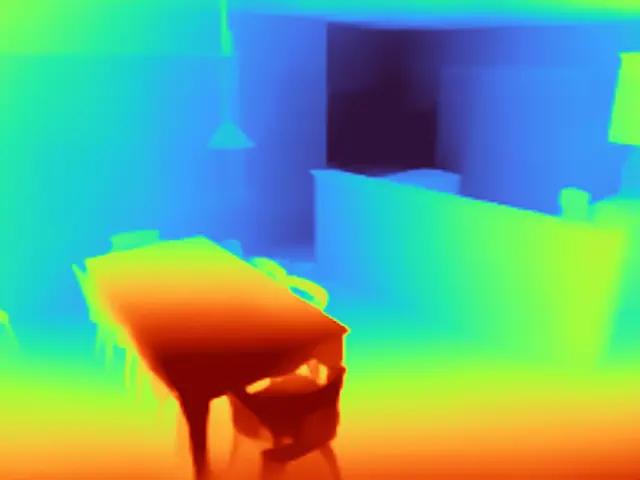 dining-room-kitchen
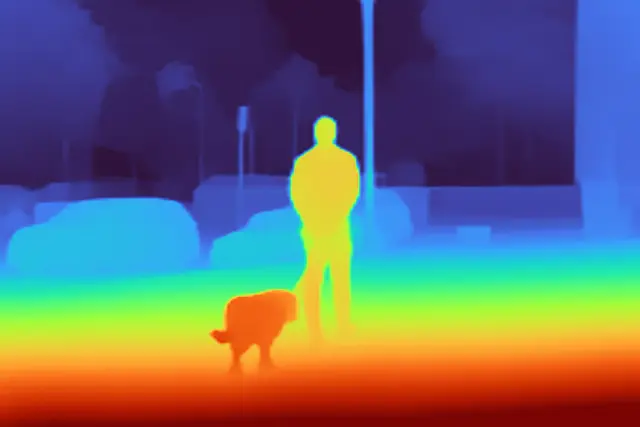 dog-walk-square
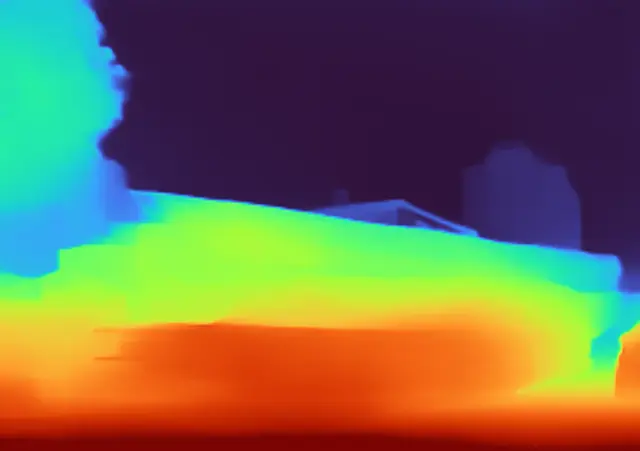 fire-engine-blur
 living-room-couch
 marathon-crossing
 metro-platform
 sheep-meadow-lambs
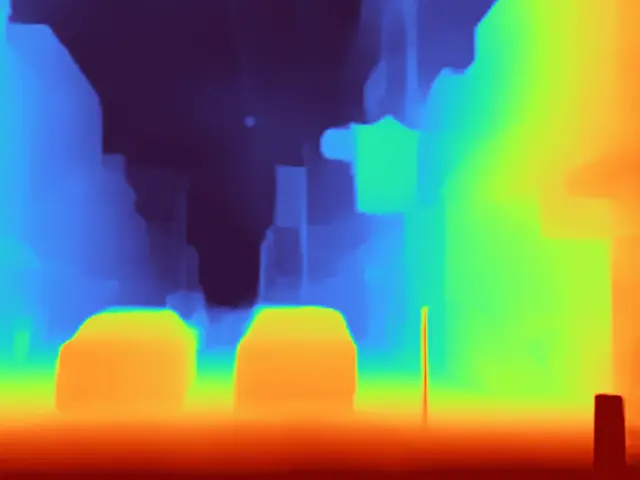 street-night-chinatown
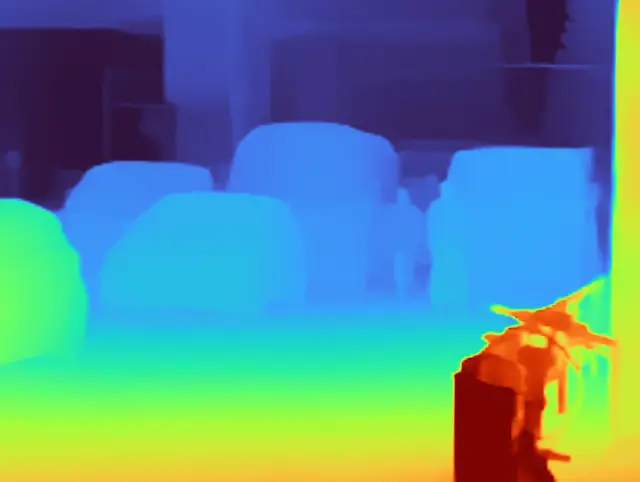 tokyo-street-cyclists
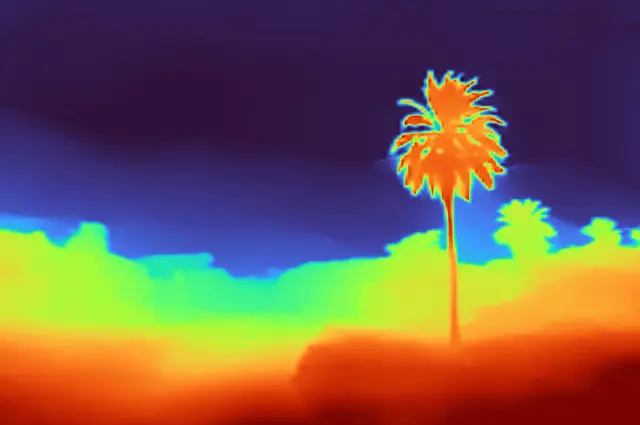 valley-landscape
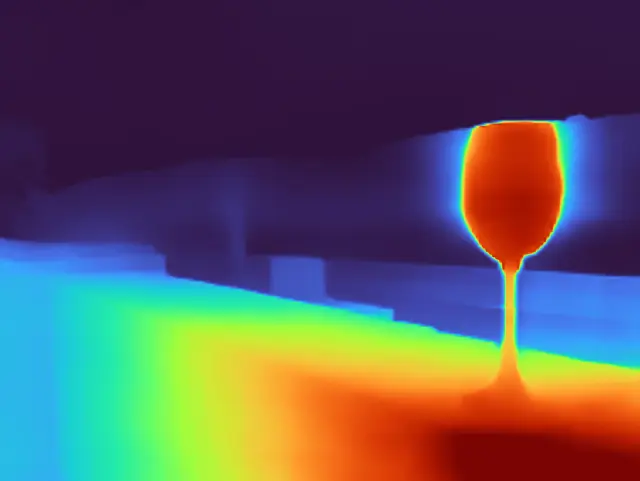 wine-glass-river
Use it when
You need depth in meters fast: at 12 to 17 ms a call it was the quickest metric depth model here, through Ultralytics' API.
Avoid it when
You need a license without copyleft (AGPL-3.0), or overhead views: on our drone photo every size drew the street or parking lot about as near as the tallest building.
Sizes
| Size | Latency | VRAM | Accuracy | Weights | Runs | License |
|---|---|---|---|---|---|---|
| n | 11.9 ms768x768 | 673 MiB | Not yet scored | 12 MB | As is | Conditional |
| s | 12.0 ms768x768 | 715 MiB | Not yet scored | 26 MB | As is | Conditional |
| m | 12.9 ms768x768 | 806 MiB | Not yet scored | 45 MB | As is | Conditional |
| l | 16.6 ms768x768 | 835 MiB | Not yet scored | 53 MB | As is | Conditional |
| x | 16.5 ms768x768 | 1.2 GiB | Not yet scored | 109 MB | As is | Conditional |
Estimated on other GPUs
Estimate, not measured. Worked out from our RTX 4090 run and NVIDIA's spec sheets. Each kind of GPU work is scaled by that GPU's peak for it: tensor cores at the precision the kernels used, CUDA cores, or memory bandwidth. The CPU's part of each call is kept at what it took on our Intel Core i7-10700K. How we estimate
Where a call's time goes on our RTX 4090: CPU and kernel launches 85%, memory-bound 7%, tensor cores, FP16 (FP32 accumulate) 7%, host–device copies 1%.
GeForce (13)
| GPU | Fits | Latency |
|---|---|---|
| GeForce RTX 5090Blackwell, 32 GB GDDR7 | Yes | ≈ 11–12 ms |
| GeForce RTX 5080Blackwell, 16 GB GDDR7 | Yes | ≈ 12 ms |
| GeForce RTX 5070 TiBlackwell, 16 GB GDDR7 | Yes | ≈ 12–13 ms |
| GeForce RTX 5070Blackwell, 12 GB GDDR7 | Yes | ≈ 13–14 ms |
| GeForce RTX 5060 Ti 16GBBlackwell, 16 GB GDDR7 | Yes | ≈ 14–15 ms |
| GeForce RTX 5060Blackwell, 8 GB GDDR7 | Yes | ≈ 14–16 ms |
| GeForce RTX 4080Ada Lovelace, 16 GB GDDR6X | Yes | ≈ 12–13 ms |
| GeForce RTX 4070 TiAda Lovelace, 12 GB GDDR6X | Yes | ≈ 13–14 ms |
| GeForce RTX 4070Ada Lovelace, 12 GB GDDR6X | Yes | ≈ 13–14 ms |
| GeForce RTX 3090Ampere, 24 GB GDDR6X | Yes | ≈ 13 ms |
| GeForce RTX 3080Ampere, 10 GB GDDR6X | Yes | ≈ 13–14 ms |
| GeForce RTX 3070 TiAmpere, 8 GB GDDR6X | Yes | ≈ 14–15 ms |
| GeForce RTX 3070Ampere, 8 GB GDDR6 | Yes | ≈ 14–15 ms |
Workstation (4)
| GPU | Fits | Latency |
|---|---|---|
| RTX PRO 6000 Blackwell Workstation EditionBlackwell, 96 GB GDDR7 | Yes | ≈ 11 ms |
| RTX PRO 6000 Blackwell Max-Q Workstation EditionBlackwell, 96 GB GDDR7 | Yes | ≈ 11 ms |
| RTX 6000 Ada GenerationAda Lovelace, 48 GB GDDR6 | Yes | ≈ 12 ms |
| RTX A6000Ampere, 48 GB GDDR6 | Yes | ≈ 12 ms |
Data center (6)
| GPU | Fits | Latency |
|---|---|---|
| B200 (HGX, one GPU)Blackwell, 180 GB HBM3E | Yes | ≈ 10–11 ms |
| H200 SXMHopper, 141 GB HBM3e | Yes | ≈ 11 ms |
| H100 SXMHopper, 80 GB HBM3 | Yes | ≈ 11 ms |
| A100 SXM 80GBAmpere, 80 GB HBM2e | Yes | ≈ 11–12 ms |
| L40SAda Lovelace, 48 GB GDDR6 | Yes | ≈ 12 ms |
| L4Ada Lovelace, 24 GB GDDR6 | Yes | ≈ 13–14 ms |
Where a call's time goes on our RTX 4090: CPU and kernel launches 82%, tensor cores, FP16 (FP32 accumulate) 9%, memory-bound 8%, host–device copies 1%.
GeForce (13)
| GPU | Fits | Latency |
|---|---|---|
| GeForce RTX 5090Blackwell, 32 GB GDDR7 | Yes | ≈ 11–12 ms |
| GeForce RTX 5080Blackwell, 16 GB GDDR7 | Yes | ≈ 12–13 ms |
| GeForce RTX 5070 TiBlackwell, 16 GB GDDR7 | Yes | ≈ 13 ms |
| GeForce RTX 5070Blackwell, 12 GB GDDR7 | Yes | ≈ 13–14 ms |
| GeForce RTX 5060 Ti 16GBBlackwell, 16 GB GDDR7 | Yes | ≈ 14–16 ms |
| GeForce RTX 5060Blackwell, 8 GB GDDR7 | Yes | ≈ 15–17 ms |
| GeForce RTX 4080Ada Lovelace, 16 GB GDDR6X | Yes | ≈ 13 ms |
| GeForce RTX 4070 TiAda Lovelace, 12 GB GDDR6X | Yes | ≈ 13–14 ms |
| GeForce RTX 4070Ada Lovelace, 12 GB GDDR6X | Yes | ≈ 14–15 ms |
| GeForce RTX 3090Ampere, 24 GB GDDR6X | Yes | ≈ 13 ms |
| GeForce RTX 3080Ampere, 10 GB GDDR6X | Yes | ≈ 13–14 ms |
| GeForce RTX 3070 TiAmpere, 8 GB GDDR6X | Yes | ≈ 14–16 ms |
| GeForce RTX 3070Ampere, 8 GB GDDR6 | Yes | ≈ 15–16 ms |
Workstation (4)
| GPU | Fits | Latency |
|---|---|---|
| RTX PRO 6000 Blackwell Workstation EditionBlackwell, 96 GB GDDR7 | Yes | ≈ 11 ms |
| RTX PRO 6000 Blackwell Max-Q Workstation EditionBlackwell, 96 GB GDDR7 | Yes | ≈ 11 ms |
| RTX 6000 Ada GenerationAda Lovelace, 48 GB GDDR6 | Yes | ≈ 11–12 ms |
| RTX A6000Ampere, 48 GB GDDR6 | Yes | ≈ 12 ms |
Data center (6)
| GPU | Fits | Latency |
|---|---|---|
| B200 (HGX, one GPU)Blackwell, 180 GB HBM3E | Yes | ≈ 10–11 ms |
| H200 SXMHopper, 141 GB HBM3e | Yes | ≈ 10–11 ms |
| H100 SXMHopper, 80 GB HBM3 | Yes | ≈ 11 ms |
| A100 SXM 80GBAmpere, 80 GB HBM2e | Yes | ≈ 11–12 ms |
| L40SAda Lovelace, 48 GB GDDR6 | Yes | ≈ 12 ms |
| L4Ada Lovelace, 24 GB GDDR6 | Yes | ≈ 13–15 ms |
Where a call's time goes on our RTX 4090: CPU and kernel launches 76%, tensor cores, FP16 (FP32 accumulate) 13%, memory-bound 10%, host–device copies 1%.
GeForce (13)
| GPU | Fits | Latency |
|---|---|---|
| GeForce RTX 5090Blackwell, 32 GB GDDR7 | Yes | ≈ 12 ms |
| GeForce RTX 5080Blackwell, 16 GB GDDR7 | Yes | ≈ 14 ms |
| GeForce RTX 5070 TiBlackwell, 16 GB GDDR7 | Yes | ≈ 14–15 ms |
| GeForce RTX 5070Blackwell, 12 GB GDDR7 | Yes | ≈ 16 ms |
| GeForce RTX 5060 Ti 16GBBlackwell, 16 GB GDDR7 | Yes | ≈ 17–19 ms |
| GeForce RTX 5060Blackwell, 8 GB GDDR7 | Yes | ≈ 18–20 ms |
| GeForce RTX 4080Ada Lovelace, 16 GB GDDR6X | Yes | ≈ 14–15 ms |
| GeForce RTX 4070 TiAda Lovelace, 12 GB GDDR6X | Yes | ≈ 15–16 ms |
| GeForce RTX 4070Ada Lovelace, 12 GB GDDR6X | Yes | ≈ 16–17 ms |
| GeForce RTX 3090Ampere, 24 GB GDDR6X | Yes | ≈ 15 ms |
| GeForce RTX 3080Ampere, 10 GB GDDR6X | Yes | ≈ 16 ms |
| GeForce RTX 3070 TiAmpere, 8 GB GDDR6X | Yes | ≈ 17–18 ms |
| GeForce RTX 3070Ampere, 8 GB GDDR6 | Yes | ≈ 18–20 ms |
Workstation (4)
| GPU | Fits | Latency |
|---|---|---|
| RTX PRO 6000 Blackwell Workstation EditionBlackwell, 96 GB GDDR7 | Yes | ≈ 11–12 ms |
| RTX PRO 6000 Blackwell Max-Q Workstation EditionBlackwell, 96 GB GDDR7 | Yes | ≈ 11–12 ms |
| RTX 6000 Ada GenerationAda Lovelace, 48 GB GDDR6 | Yes | ≈ 12 ms |
| RTX A6000Ampere, 48 GB GDDR6 | Yes | ≈ 13 ms |
Data center (6)
| GPU | Fits | Latency |
|---|---|---|
| B200 (HGX, one GPU)Blackwell, 180 GB HBM3E | Yes | ≈ 10–11 ms |
| H200 SXMHopper, 141 GB HBM3e | Yes | ≈ 11 ms |
| H100 SXMHopper, 80 GB HBM3 | Yes | ≈ 11 ms |
| A100 SXM 80GBAmpere, 80 GB HBM2e | Yes | ≈ 12 ms |
| L40SAda Lovelace, 48 GB GDDR6 | Yes | ≈ 12 ms |
| L4Ada Lovelace, 24 GB GDDR6 | Yes | ≈ 15–17 ms |
Where a call's time goes on our RTX 4090: CPU and kernel launches 76%, tensor cores, FP16 (FP32 accumulate) 13%, memory-bound 10%.
GeForce (13)
| GPU | Fits | Latency |
|---|---|---|
| GeForce RTX 5090Blackwell, 32 GB GDDR7 | Yes | ≈ 15–16 ms |
| GeForce RTX 5080Blackwell, 16 GB GDDR7 | Yes | ≈ 17–18 ms |
| GeForce RTX 5070 TiBlackwell, 16 GB GDDR7 | Yes | ≈ 18–19 ms |
| GeForce RTX 5070Blackwell, 12 GB GDDR7 | Yes | ≈ 20–21 ms |
| GeForce RTX 5060 Ti 16GBBlackwell, 16 GB GDDR7 | Yes | ≈ 21–24 ms |
| GeForce RTX 5060Blackwell, 8 GB GDDR7 | Yes | ≈ 23–26 ms |
| GeForce RTX 4080Ada Lovelace, 16 GB GDDR6X | Yes | ≈ 18–19 ms |
| GeForce RTX 4070 TiAda Lovelace, 12 GB GDDR6X | Yes | ≈ 19–21 ms |
| GeForce RTX 4070Ada Lovelace, 12 GB GDDR6X | Yes | ≈ 20–22 ms |
| GeForce RTX 3090Ampere, 24 GB GDDR6X | Yes | ≈ 19–20 ms |
| GeForce RTX 3080Ampere, 10 GB GDDR6X | Yes | ≈ 20–21 ms |
| GeForce RTX 3070 TiAmpere, 8 GB GDDR6X | Yes | ≈ 22–24 ms |
| GeForce RTX 3070Ampere, 8 GB GDDR6 | Yes | ≈ 22–25 ms |
Workstation (4)
| GPU | Fits | Latency |
|---|---|---|
| RTX PRO 6000 Blackwell Workstation EditionBlackwell, 96 GB GDDR7 | Yes | ≈ 14–15 ms |
| RTX PRO 6000 Blackwell Max-Q Workstation EditionBlackwell, 96 GB GDDR7 | Yes | ≈ 15 ms |
| RTX 6000 Ada GenerationAda Lovelace, 48 GB GDDR6 | Yes | ≈ 16 ms |
| RTX A6000Ampere, 48 GB GDDR6 | Yes | ≈ 17 ms |
Data center (6)
| GPU | Fits | Latency |
|---|---|---|
| B200 (HGX, one GPU)Blackwell, 180 GB HBM3E | Yes | ≈ 13–15 ms |
| H200 SXMHopper, 141 GB HBM3e | Yes | ≈ 13–15 ms |
| H100 SXMHopper, 80 GB HBM3 | Yes | ≈ 14–15 ms |
| A100 SXM 80GBAmpere, 80 GB HBM2e | Yes | ≈ 15–16 ms |
| L40SAda Lovelace, 48 GB GDDR6 | Yes | ≈ 16 ms |
| L4Ada Lovelace, 24 GB GDDR6 | Yes | ≈ 18–21 ms |
Where a call's time goes on our RTX 4090: CPU and kernel launches 66%, tensor cores, FP16 (FP32 accumulate) 20%, memory-bound 13%.
GeForce (13)
| GPU | Fits | Latency |
|---|---|---|
| GeForce RTX 5090Blackwell, 32 GB GDDR7 | Yes | ≈ 15–16 ms |
| GeForce RTX 5080Blackwell, 16 GB GDDR7 | Yes | ≈ 18 ms |
| GeForce RTX 5070 TiBlackwell, 16 GB GDDR7 | Yes | ≈ 19–20 ms |
| GeForce RTX 5070Blackwell, 12 GB GDDR7 | Yes | ≈ 22–23 ms |
| GeForce RTX 5060 Ti 16GBBlackwell, 16 GB GDDR7 | Yes | ≈ 25–27 ms |
| GeForce RTX 5060Blackwell, 8 GB GDDR7 | Yes | ≈ 27–30 ms |
| GeForce RTX 4080Ada Lovelace, 16 GB GDDR6X | Yes | ≈ 19–20 ms |
| GeForce RTX 4070 TiAda Lovelace, 12 GB GDDR6X | Yes | ≈ 21–22 ms |
| GeForce RTX 4070Ada Lovelace, 12 GB GDDR6X | Yes | ≈ 23–25 ms |
| GeForce RTX 3090Ampere, 24 GB GDDR6X | Yes | ≈ 21 ms |
| GeForce RTX 3080Ampere, 10 GB GDDR6X | Yes | ≈ 22–23 ms |
| GeForce RTX 3070 TiAmpere, 8 GB GDDR6X | Yes | ≈ 25–27 ms |
| GeForce RTX 3070Ampere, 8 GB GDDR6 | Yes | ≈ 27–29 ms |
Workstation (4)
| GPU | Fits | Latency |
|---|---|---|
| RTX PRO 6000 Blackwell Workstation EditionBlackwell, 96 GB GDDR7 | Yes | ≈ 13–14 ms |
| RTX PRO 6000 Blackwell Max-Q Workstation EditionBlackwell, 96 GB GDDR7 | Yes | ≈ 14 ms |
| RTX 6000 Ada GenerationAda Lovelace, 48 GB GDDR6 | Yes | ≈ 15 ms |
| RTX A6000Ampere, 48 GB GDDR6 | Yes | ≈ 17 ms |
Data center (6)
| GPU | Fits | Latency |
|---|---|---|
| B200 (HGX, one GPU)Blackwell, 180 GB HBM3E | Yes | ≈ 12–13 ms |
| H200 SXMHopper, 141 GB HBM3e | Yes | ≈ 12–13 ms |
| H100 SXMHopper, 80 GB HBM3 | Yes | ≈ 12–13 ms |
| A100 SXM 80GBAmpere, 80 GB HBM2e | Yes | ≈ 14–15 ms |
| L40SAda Lovelace, 48 GB GDDR6 | Yes | ≈ 15 ms |
| L4Ada Lovelace, 24 GB GDDR6 | Yes | ≈ 20–23 ms |
CPU only
Measured by us with no GPU on an Intel(R) Core(TM) i7-10700K CPU @ 3.80GHz, 8 cores, 94.2 GiB of memory: the same official code with the GPU hidden, in fp32 on 8 threads. Before it was timed, its output on the timing input was checked against the GPU's. These numbers say what to expect without a GPU. They aren't compared with any GPU's, here or in the charts. How we measure on a CPU
| Size | Runtime | Latency on the CPU | RAM peak |
|---|---|---|---|
| n | PyTorch2.14.1 · fp32 · 8 threads | 112 ms768x768 | 939 MiB |
| n | ONNX Runtime1.31.1 · fp32 · 8 threads | 101 ms768x768 | 997 MiB |
| s | PyTorch2.14.1 · fp32 · 8 threads | 161 ms768x768 | 1022 MiB |
| s | ONNX Runtime1.31.1 · fp32 · 8 threads | 134 ms768x768 | 1.2 GiB |
| m | PyTorch2.14.1 · fp32 · 8 threads | 310 ms768x768 | 1.1 GiB |
| m | ONNX Runtime1.31.1 · fp32 · 8 threads | 260 ms768x768 | 1.4 GiB |
| l | PyTorch2.14.1 · fp32 · 8 threads | 380 ms768x768 | 1.2 GiB |
| l | ONNX Runtime1.31.1 · fp32 · 8 threads | 307 ms768x768 | 1.4 GiB |
| x | PyTorch2.14.1 · fp32 · 8 threads | 686 ms768x768 | 1.5 GiB |
| x | ONNX Runtime1.31.1 · fp32 · 8 threads | 575 ms768x768 | 1.7 GiB |
ONNX Runtime rows run the authors' own ONNX export with their own ONNX Runtime code, whose pre-processing may differ from the PyTorch code's, so their input can differ too.
Alternatives
Changes
First published . Every model's changes
Badge for a README
It says the model ran on our RTX 4090 and links to this page. It carries no number, so it never goes out of date.

[](https://modelsthatrun.dev/models/yolo26-depth/)Something wrong on this page, such as a license or a number? Email us.