Depth Anything V2 Metric
Depth Anything V2 fine-tuned for depth in meters, indoors (Hypersim, to 20 m) and outdoors (Virtual KITTI 2, to 80 m). Only Small is Apache-2.0.
Commercial use OK for size indoor-small: code Apache-2.0, weights Apache-2.0. Measured on our RTX 4090: 18.1 ms median, 869 MiB VRAM peak. safetensors weights, 95 MB.
Non-commercial for size indoor-base: code Apache-2.0, weights CC-BY-NC-4.0. Measured on our RTX 4090: 30.3 ms median, 1.3 GiB VRAM peak. safetensors weights, 372 MB.
Non-commercial for size indoor-large: code Apache-2.0, weights CC-BY-NC-4.0. Measured on our RTX 4090: 72.7 ms median, 2.7 GiB VRAM peak. safetensors weights, 1.25 GB.
Commercial use OK for size outdoor-small: code Apache-2.0, weights Apache-2.0. Measured on our RTX 4090: 18.0 ms median, 858 MiB VRAM peak. safetensors weights, 95 MB.
Non-commercial for size outdoor-base: code Apache-2.0, weights CC-BY-NC-4.0. Measured on our RTX 4090: 30.1 ms median, 1.3 GiB VRAM peak. safetensors weights, 372 MB.
Non-commercial for size outdoor-large: code Apache-2.0, weights CC-BY-NC-4.0. Measured on our RTX 4090: 73.3 ms median, 2.7 GiB VRAM peak. safetensors weights, 1.25 GB.
License
Commercial use OK indoor-small
Non-commercial indoor-base
Non-commercial indoor-large
Commercial use OK outdoor-small
Non-commercial outdoor-base
Non-commercial outdoor-large
- Code
- Apache-2.0checked 21 Nov 2026
- Weights indoor-small
- Apache-2.0 Commercial OKchecked 21 Nov 2026
- Weights indoor-base
- CC-BY-NC-4.0 Non-commercialchecked 21 Nov 2026
- Weights indoor-large
- CC-BY-NC-4.0 Non-commercialchecked 21 Nov 2026
- Weights outdoor-small
- Apache-2.0 Commercial OKchecked 21 Nov 2026
- Weights outdoor-base
- CC-BY-NC-4.0 Non-commercialchecked 21 Nov 2026
- Weights outdoor-large
- CC-BY-NC-4.0 Non-commercialchecked 21 Nov 2026
CC BY-NC 4.0 by the authors' README; the Hugging Face port's card doesn't say so. Only the Small sizes allow commercial use.
CC BY-NC 4.0 by the authors' README; the Hugging Face port's card doesn't say so. Only the Small sizes allow commercial use.
CC BY-NC 4.0 by the authors' README; the Hugging Face port's card doesn't say so. Only the Small sizes allow commercial use.
CC BY-NC 4.0 by the authors' README; the Hugging Face port's card doesn't say so. Only the Small sizes allow commercial use.
On our RTX 4090, measured
18.1ms median
p90 19.8 ms, fp32, batch 1, 770x518
- VRAM peak
- 869 MiB
- Status
- Runs as is
Environment, 22 Nov 2026
NVIDIA GeForce RTX 4090, driver 580.173.02, CUDA 13.0, torch 2.14.1+cu130, Python 3.12.9, transformers==5.20.2. Baseline 1034 MiB. 10 warm-up + 100 timed. Scope: predict(): pre-processing, forward pass and post-processing; input file decoded beforehand.
Accuracy
Not yet scored
30.3ms median
p90 31.4 ms, fp32, batch 1, 770x518
- VRAM peak
- 1.3 GiB
- Status
- Runs as is
Environment, 22 Nov 2026
NVIDIA GeForce RTX 4090, driver 580.173.02, CUDA 13.0, torch 2.14.1+cu130, Python 3.12.9, transformers==5.20.2. Baseline 1041 MiB. 10 warm-up + 100 timed. Scope: predict(): pre-processing, forward pass and post-processing; input file decoded beforehand.
Accuracy
Not yet scored
72.7ms median
p90 74.3 ms, fp32, batch 1, 770x518
- VRAM peak
- 2.7 GiB
- Status
- Runs as is
Environment, 22 Nov 2026
NVIDIA GeForce RTX 4090, driver 580.173.02, CUDA 13.0, torch 2.14.1+cu130, Python 3.12.9, transformers==5.20.2. Baseline 1050 MiB. 10 warm-up + 100 timed. Scope: predict(): pre-processing, forward pass and post-processing; input file decoded beforehand.
Accuracy
Not yet scored
18.0ms median
p90 19.3 ms, fp32, batch 1, 770x518
- VRAM peak
- 858 MiB
- Status
- Runs as is
Environment, 22 Nov 2026
NVIDIA GeForce RTX 4090, driver 580.173.02, CUDA 13.0, torch 2.14.1+cu130, Python 3.12.9, transformers==5.20.2. Baseline 1043 MiB. 10 warm-up + 100 timed. Scope: predict(): pre-processing, forward pass and post-processing; input file decoded beforehand.
Accuracy
Not yet scored
30.1ms median
p90 31.4 ms, fp32, batch 1, 770x518
- VRAM peak
- 1.3 GiB
- Status
- Runs as is
Environment, 22 Nov 2026
NVIDIA GeForce RTX 4090, driver 580.173.02, CUDA 13.0, torch 2.14.1+cu130, Python 3.12.9, transformers==5.20.2. Baseline 1050 MiB. 10 warm-up + 100 timed. Scope: predict(): pre-processing, forward pass and post-processing; input file decoded beforehand.
Accuracy
Not yet scored
73.3ms median
p90 75.5 ms, fp32, batch 1, 770x518
- VRAM peak
- 2.7 GiB
- Status
- Runs as is
Environment, 22 Nov 2026
NVIDIA GeForce RTX 4090, driver 580.173.02, CUDA 13.0, torch 2.14.1+cu130, Python 3.12.9, transformers==5.20.2. Baseline 1033 MiB. 10 warm-up + 100 timed. Scope: predict(): pre-processing, forward pass and post-processing; input file decoded beforehand.
Accuracy
Not yet scored
Weights
safetensors
- Size
- 95 MB
- sha256
e990eb82fbf11b05b7813261196a2b841bdcf5a05f64396724a8987fa90504a3
safetensors
- Size
- 372 MB
- sha256
8b902f5d9a8c8a9520f3a8c6a00afe442b464eff5aaf0cb405d1da721cd9f79f
safetensors
- Size
- 1.25 GB
- sha256
04d3295ff4f9cbee72b8998a85930fe870b45ba4431e7af47415fbded02388ca
safetensors
- Size
- 95 MB
- sha256
ad065c77a7421ca55159a1f0db9433397a607690f2d76bb8a6fc54b1be7a3124
safetensors
- Size
- 372 MB
- sha256
1f2e9ed13ee39126686994669f8d1bfd9cd8f093a4d2a0891e5a0e5263b480c9
safetensors
- Size
- 1.25 GB
- sha256
15f7de4b22f1b1194847ea694ee9ed6395563ba5cd52b70b87901f183c232c9a
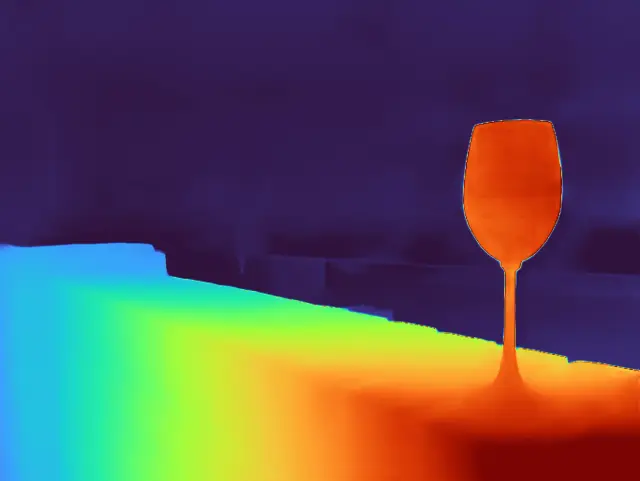
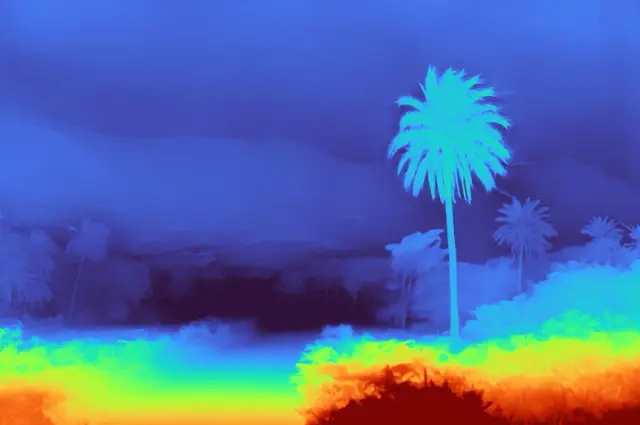
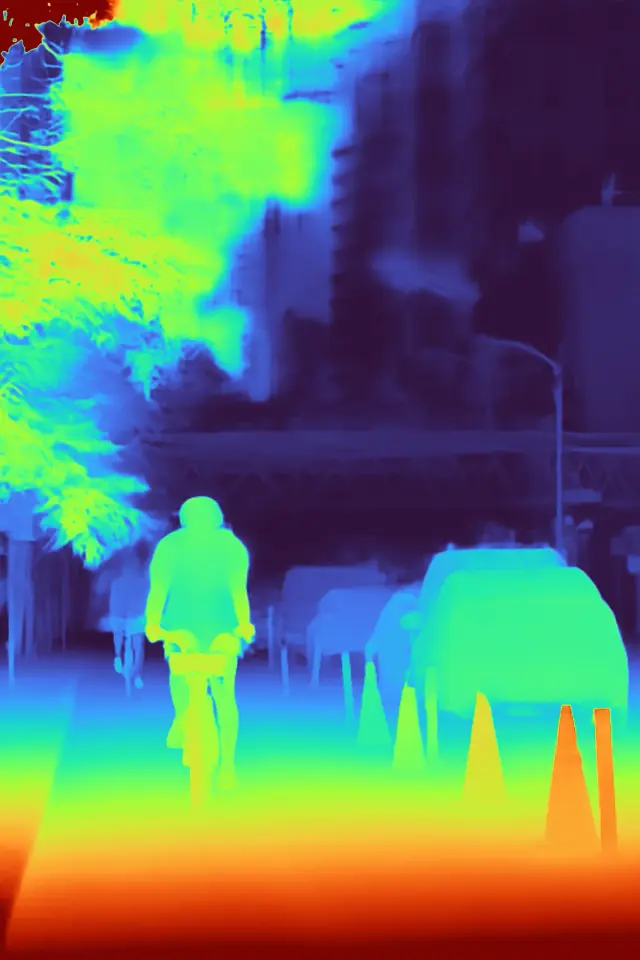
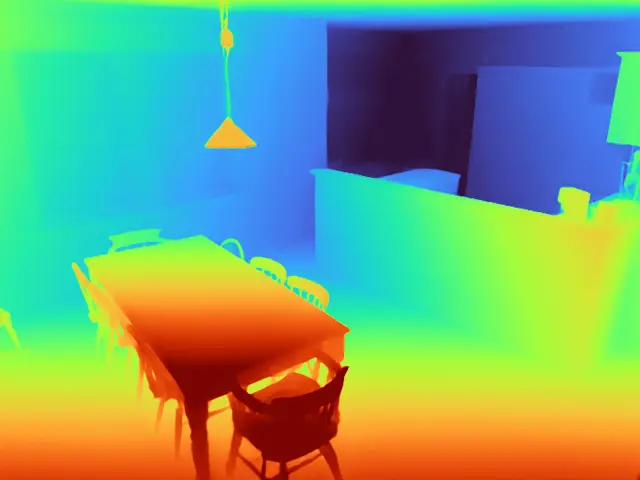
Outputs on the shared test photos
Same photos and one score threshold for every model of this task. Failures are marked.
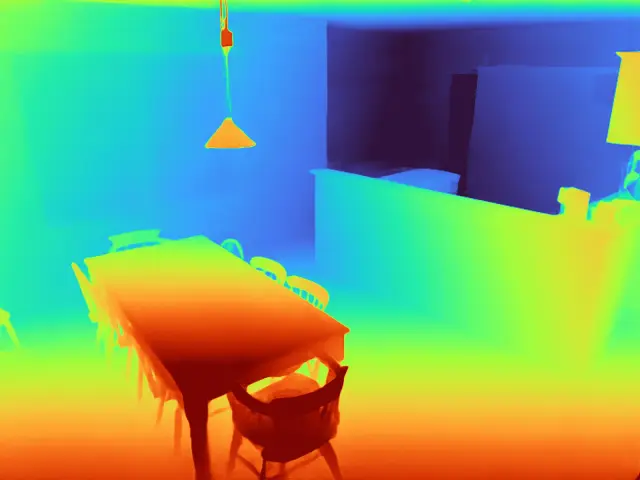
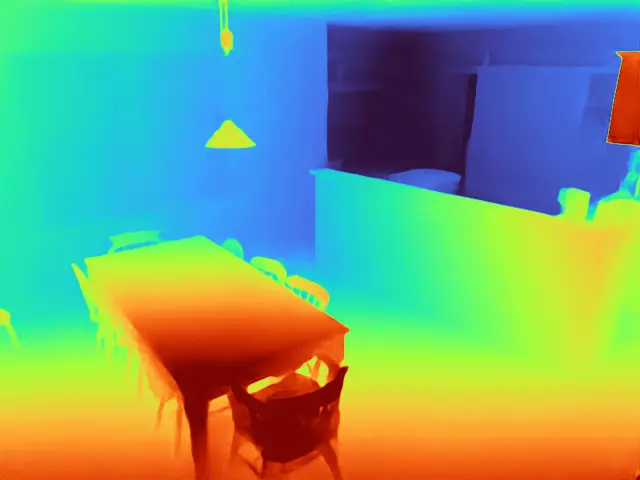 dining-room-kitchenFails: wall cabinet shown as near as table
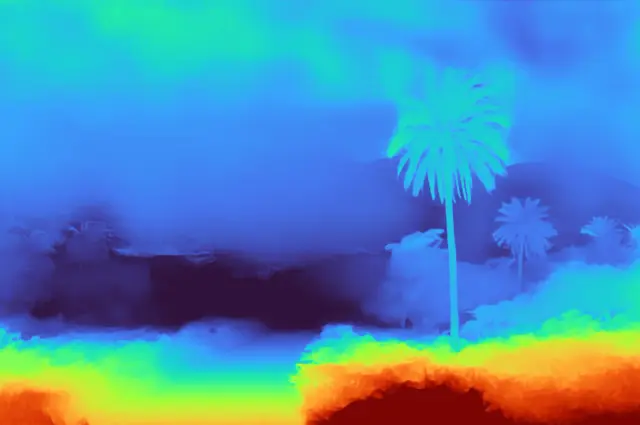
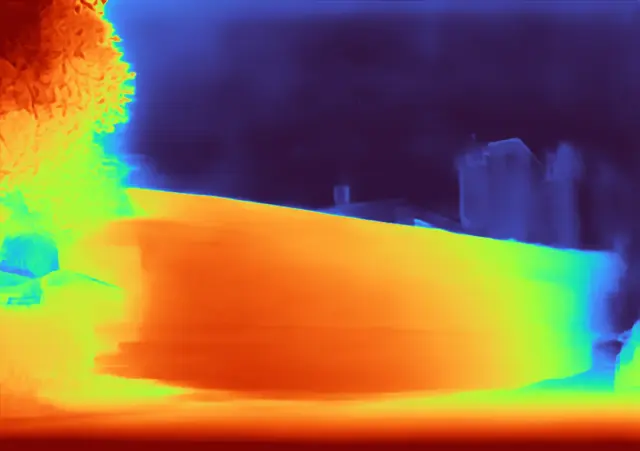
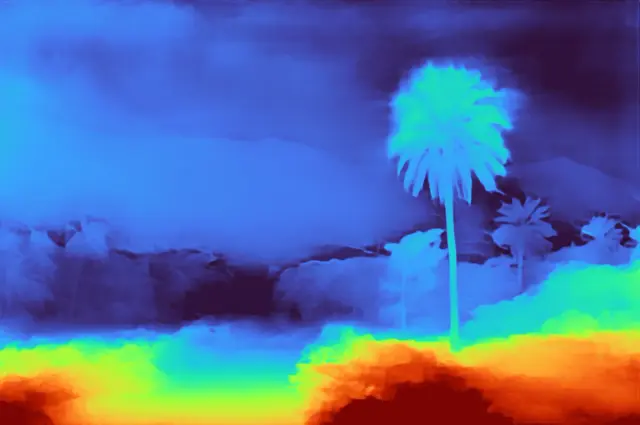 valley-landscapeFails: treeline drawn farther than the mountains behind it
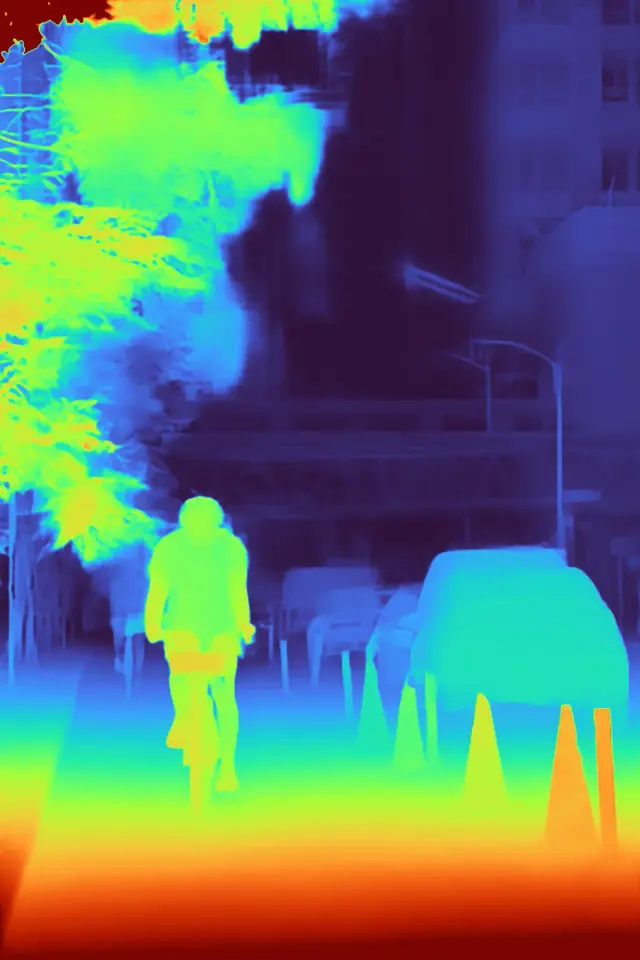
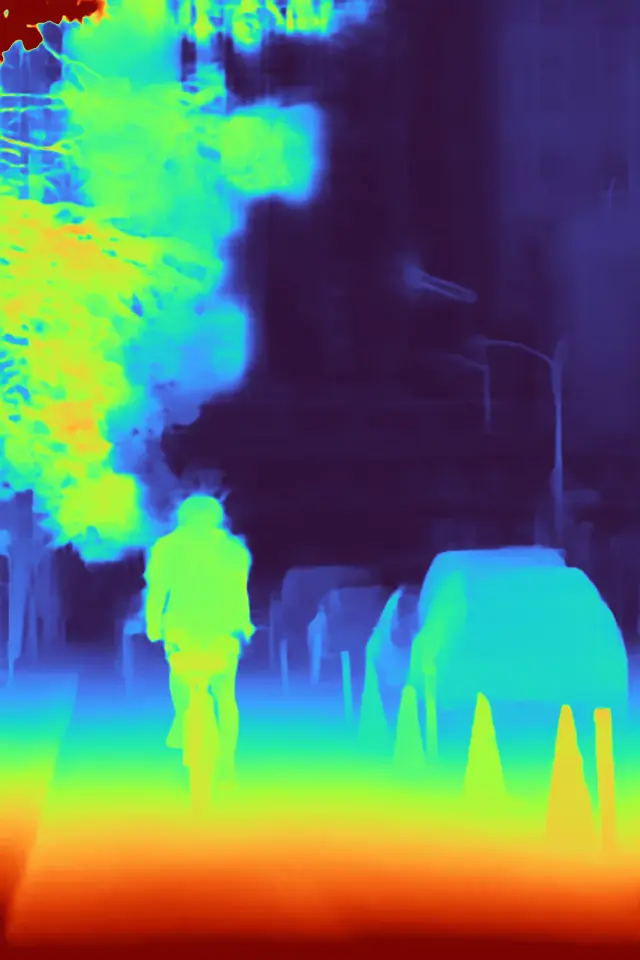 cyclist-bike-lane
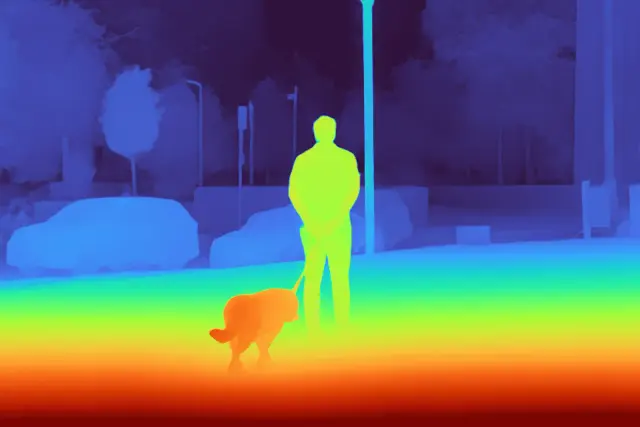
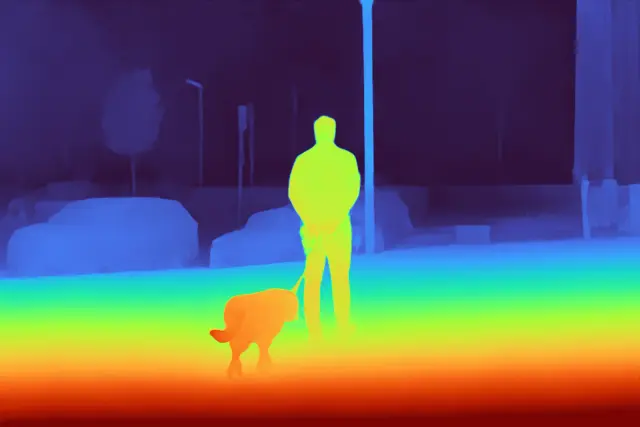 dog-walk-square
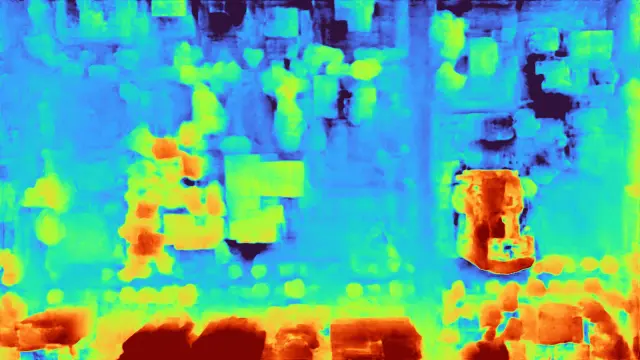 drone-city-block
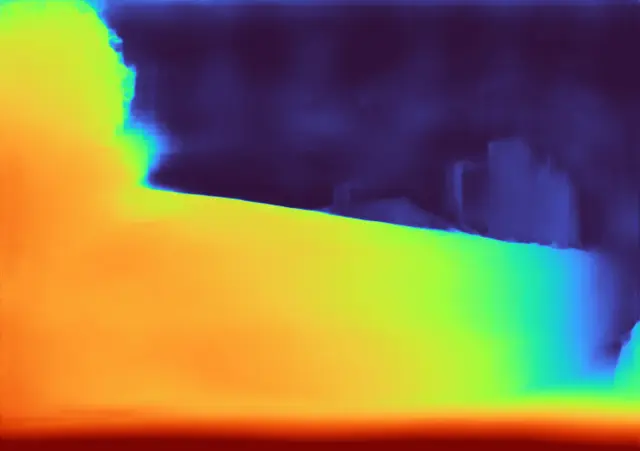 fire-engine-blur
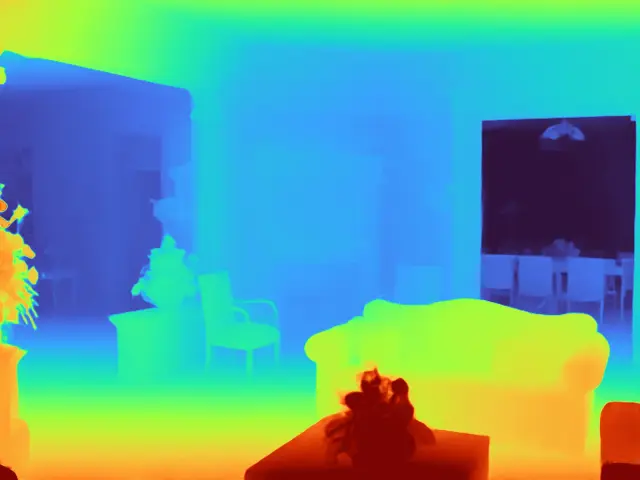
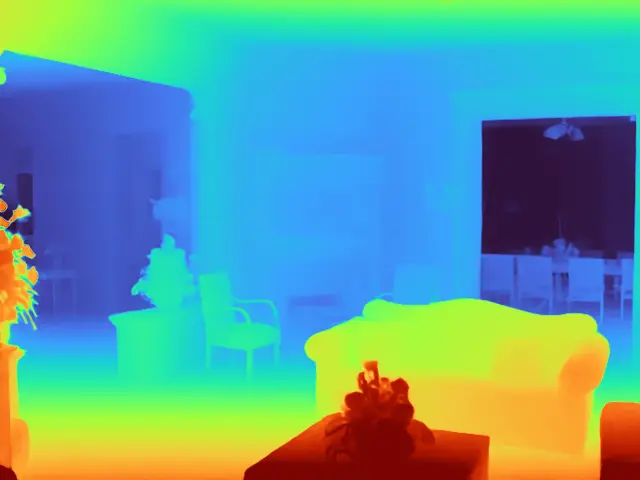
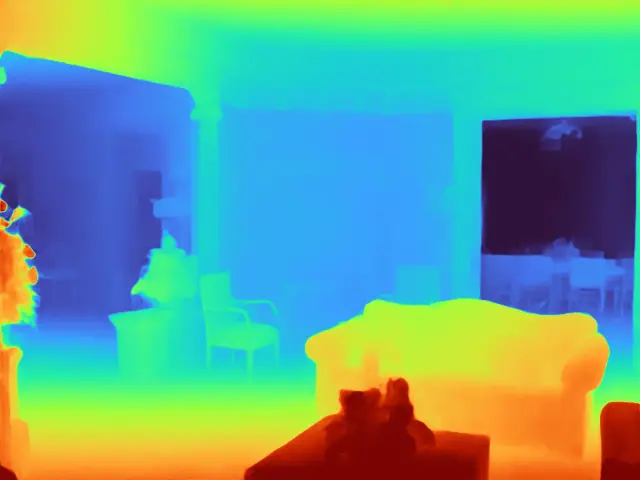 living-room-couch
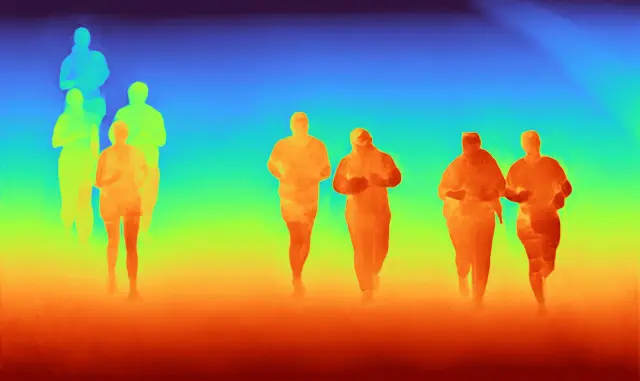 marathon-crossing
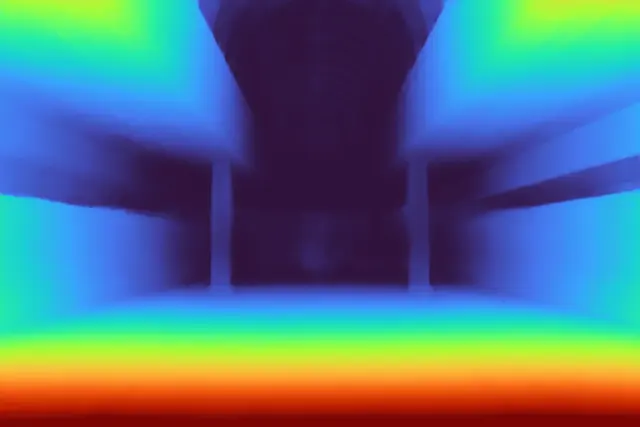 metro-platform
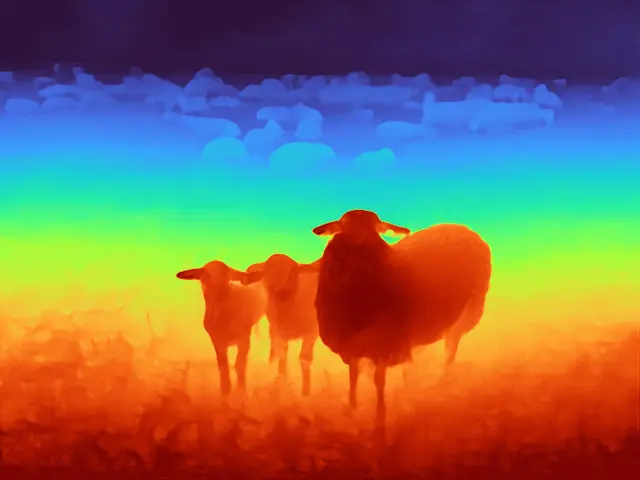 sheep-meadow-lambs
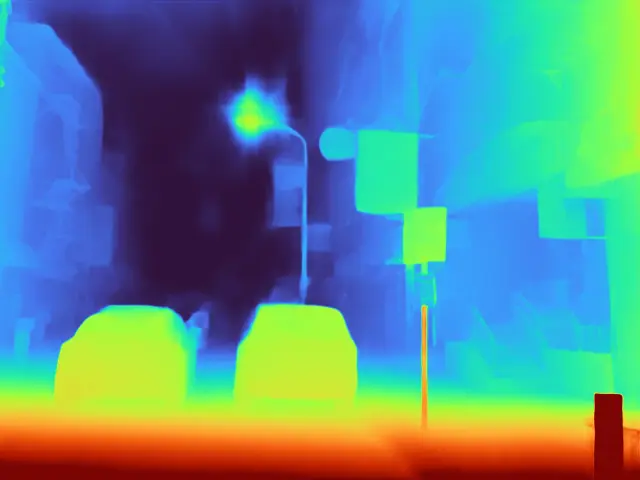 street-night-chinatown
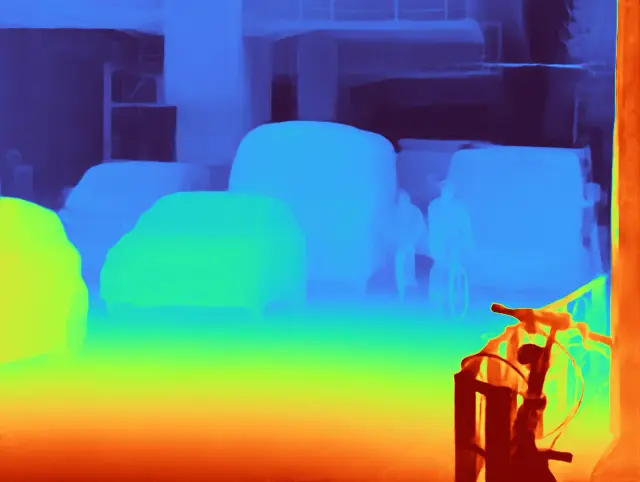 tokyo-street-cyclists
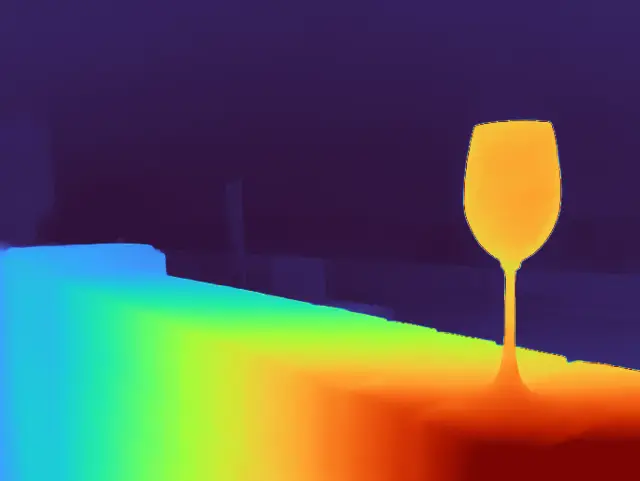
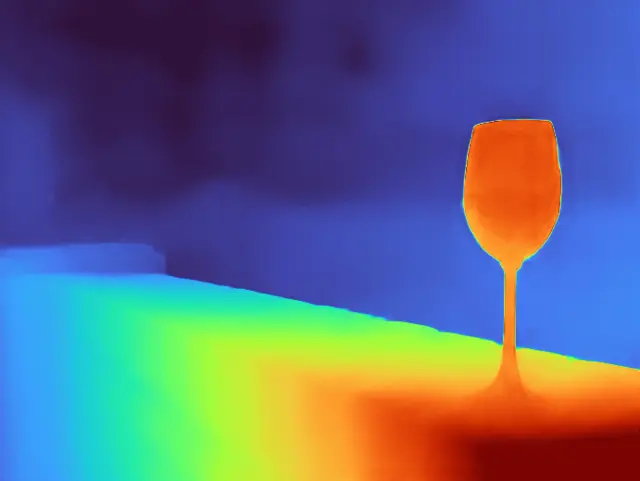 wine-glass-river
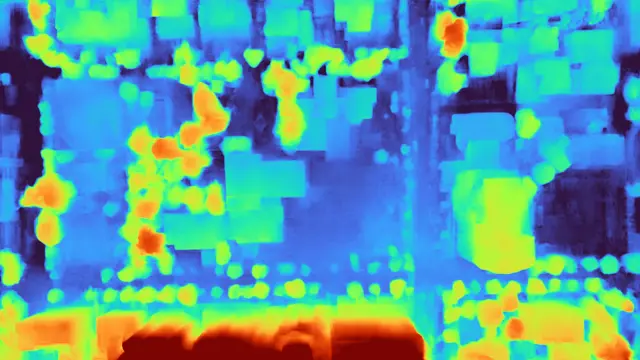
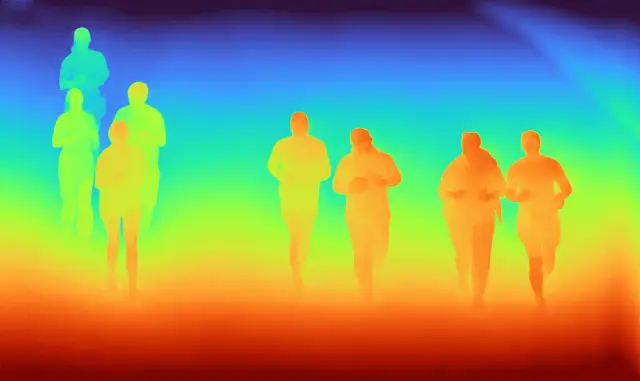
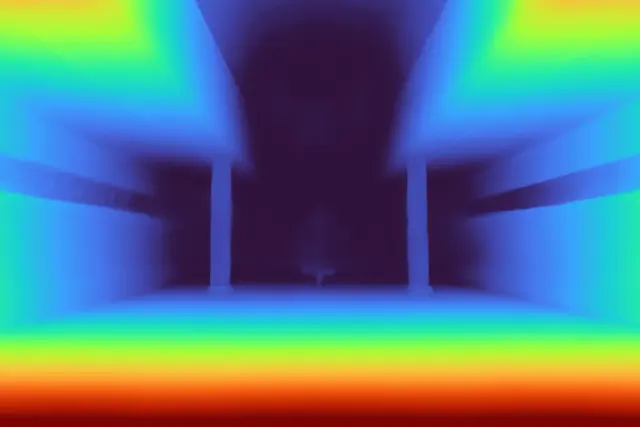

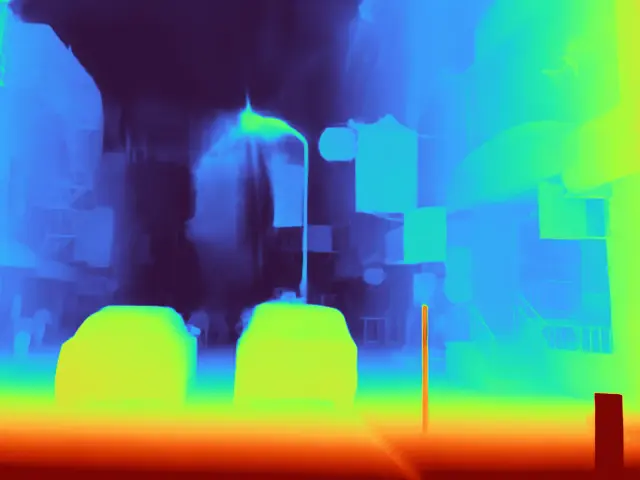
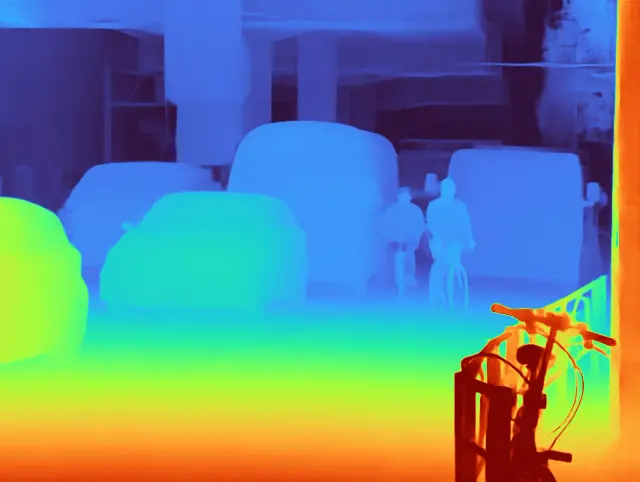
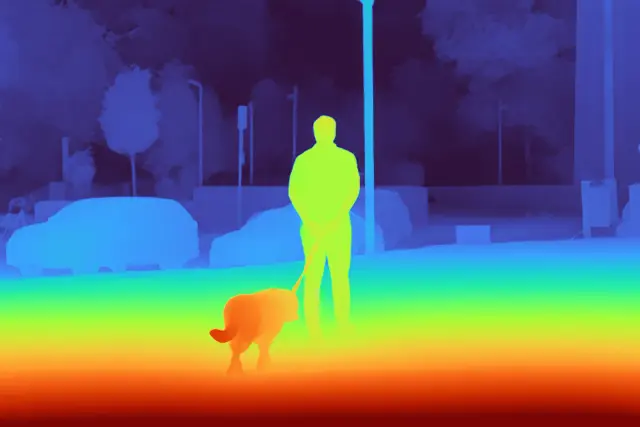
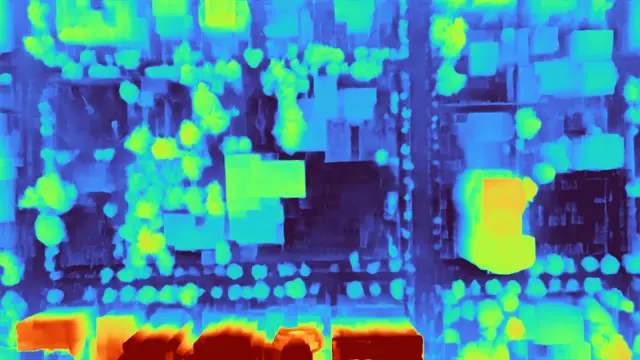
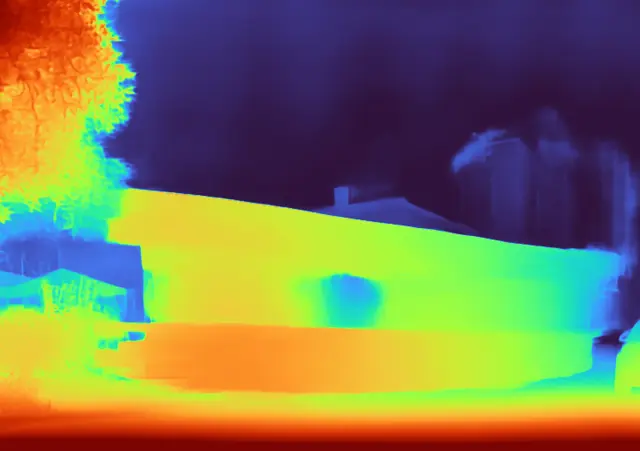
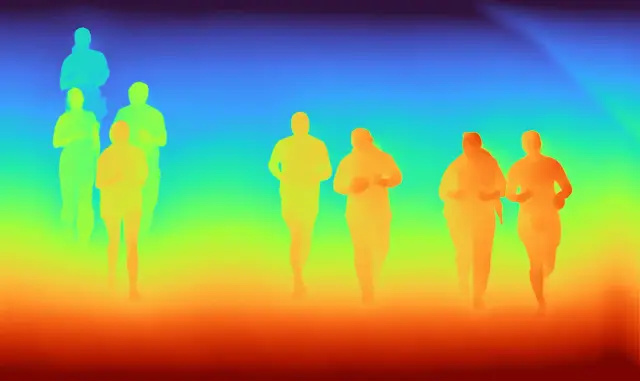
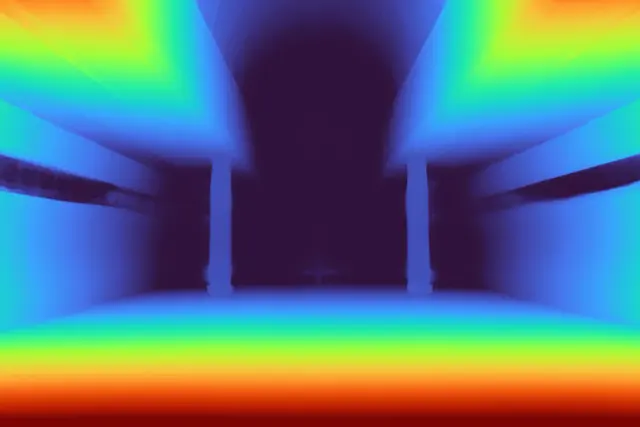

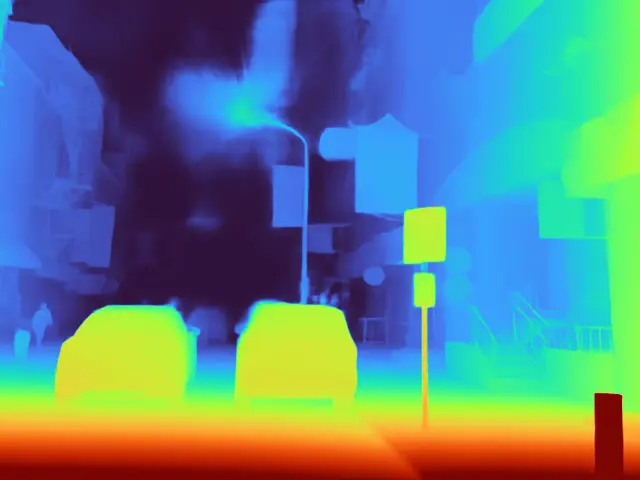
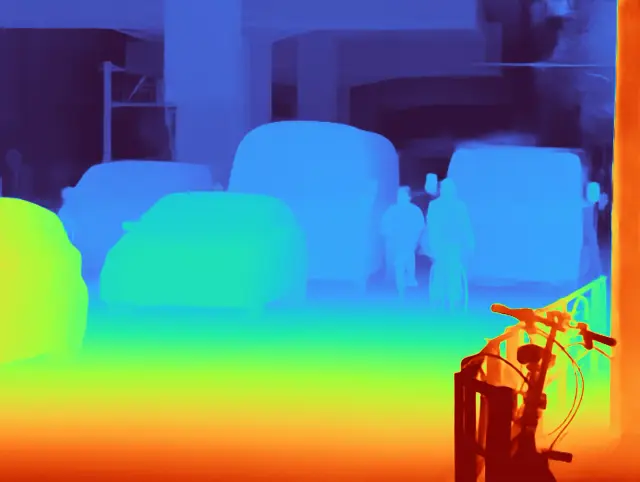
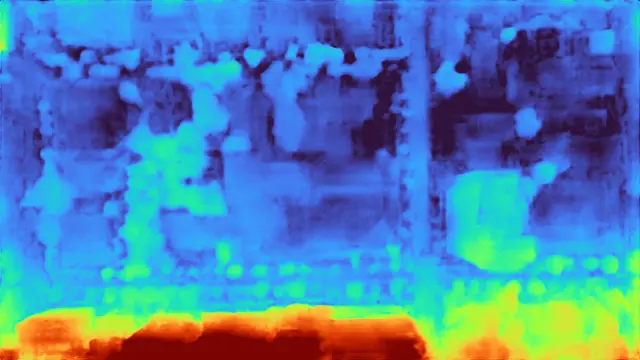 drone-city-blockFails: top-down view comes out flat and muddy; buildings barely separate
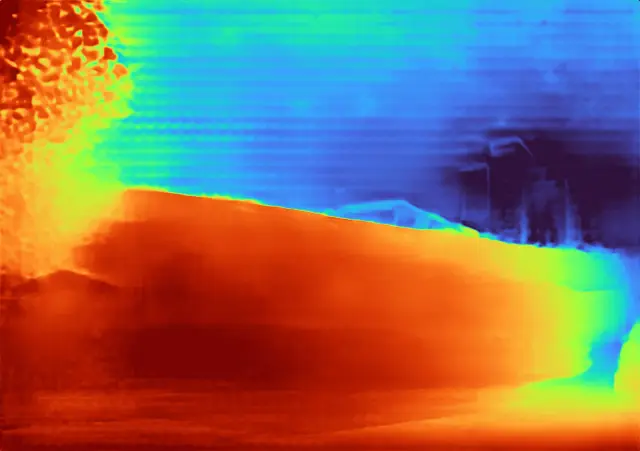 fire-engine-blurFails: night sky drawn nearer than the buildings below it
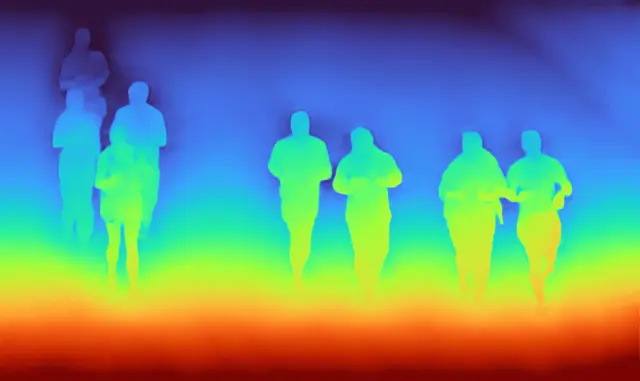 marathon-crossingFails: runner at the back melts into the road
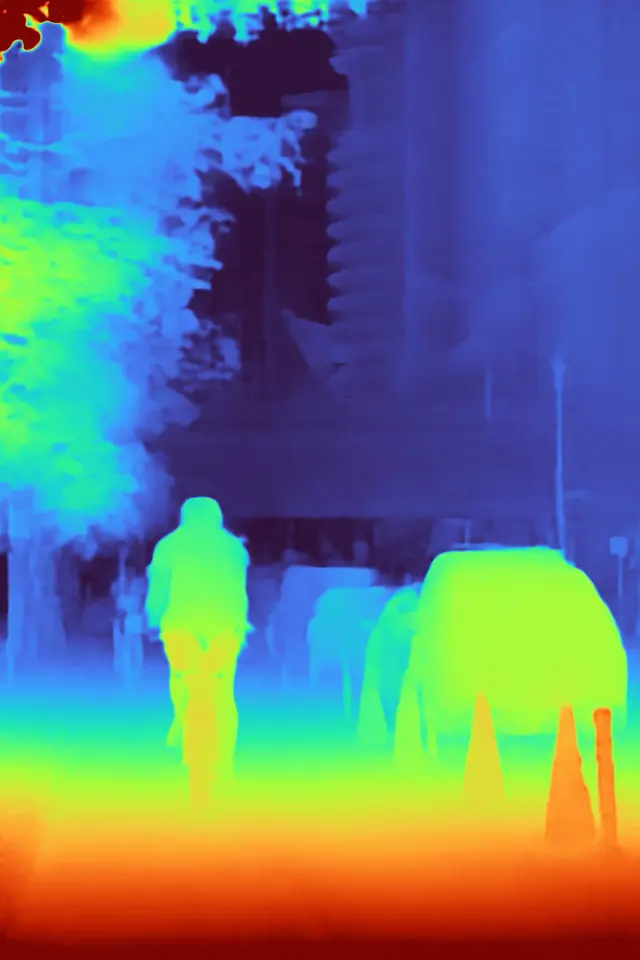 cyclist-bike-lane
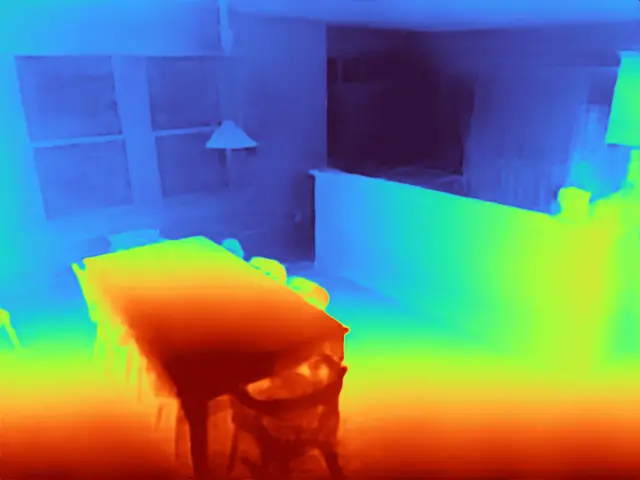 dining-room-kitchen
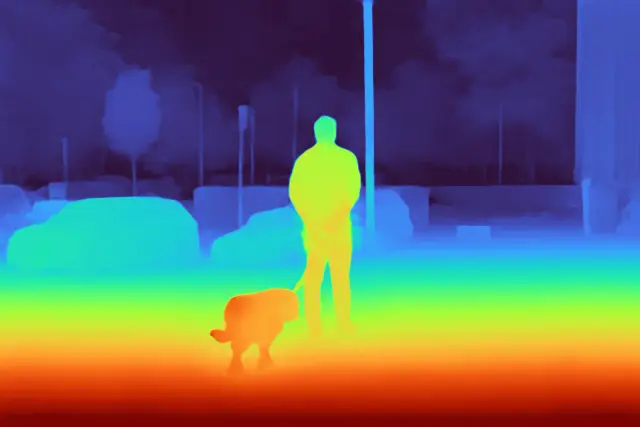 dog-walk-square
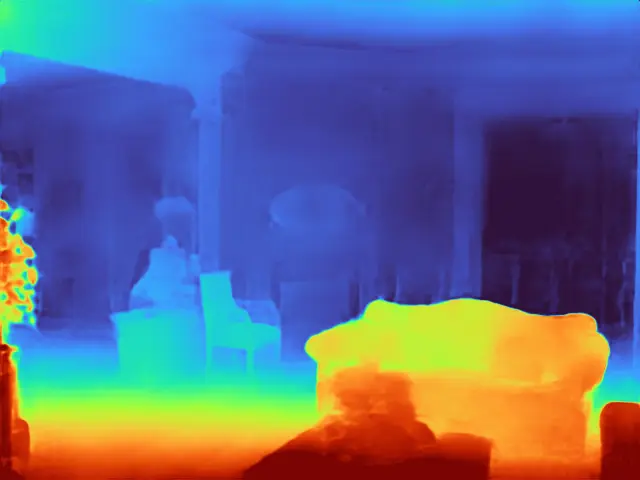 living-room-couch
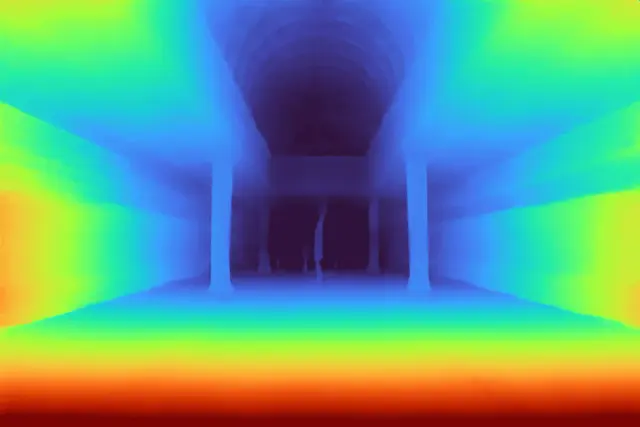 metro-platform
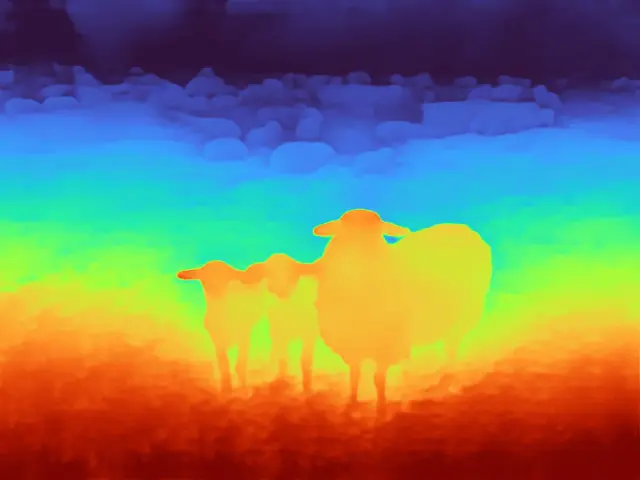 sheep-meadow-lambs
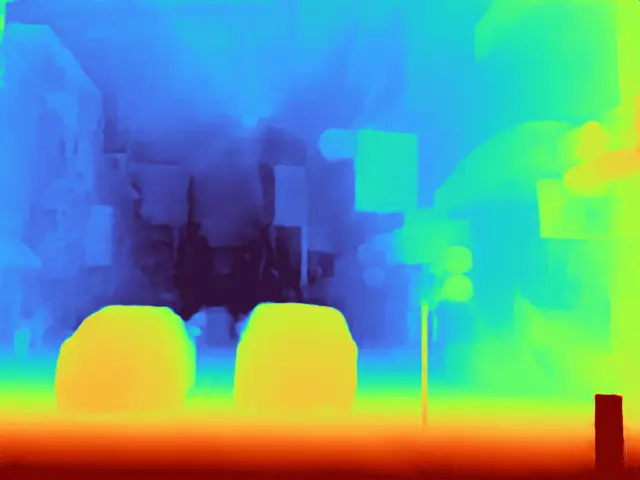 street-night-chinatown
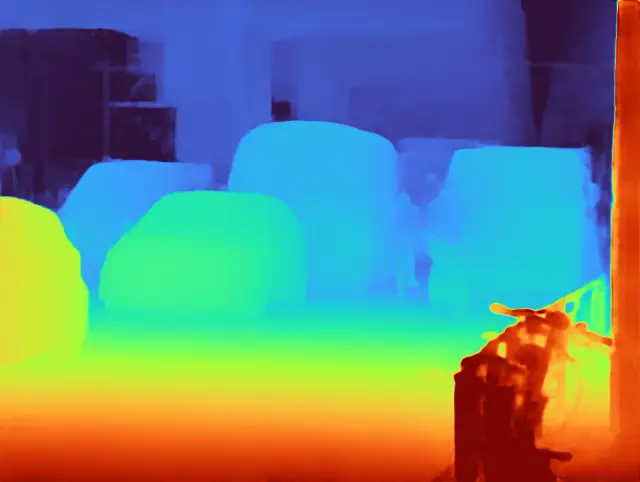 tokyo-street-cyclists
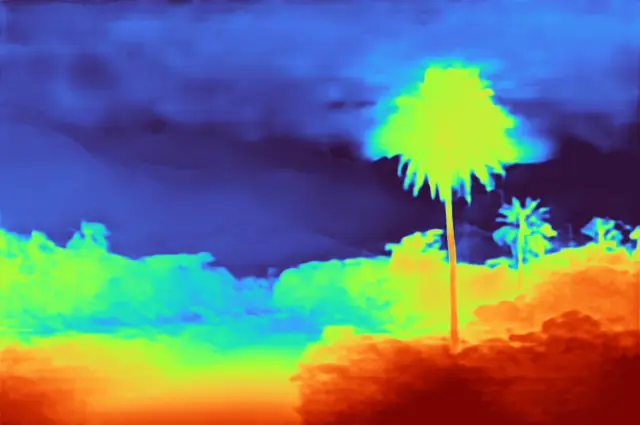 valley-landscape
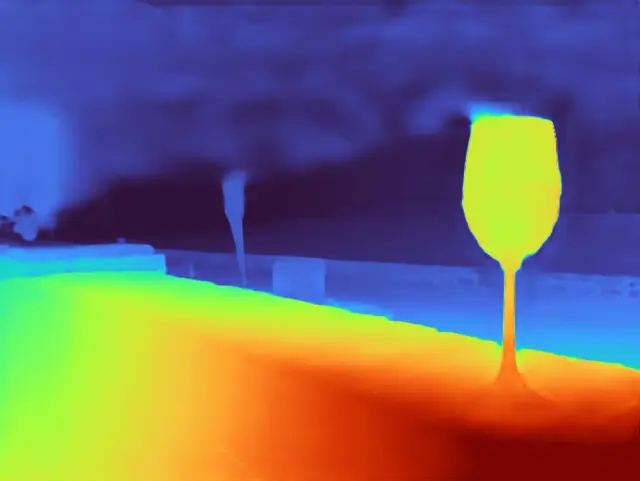 wine-glass-river
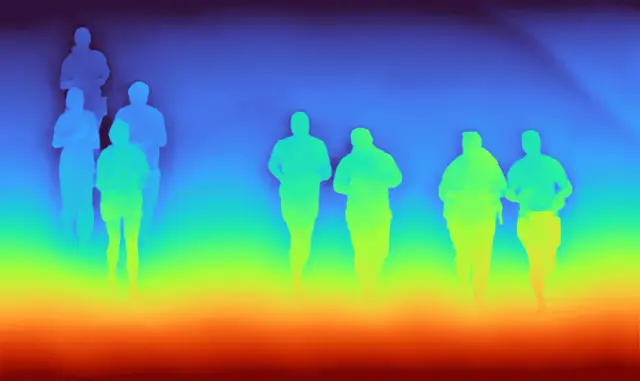
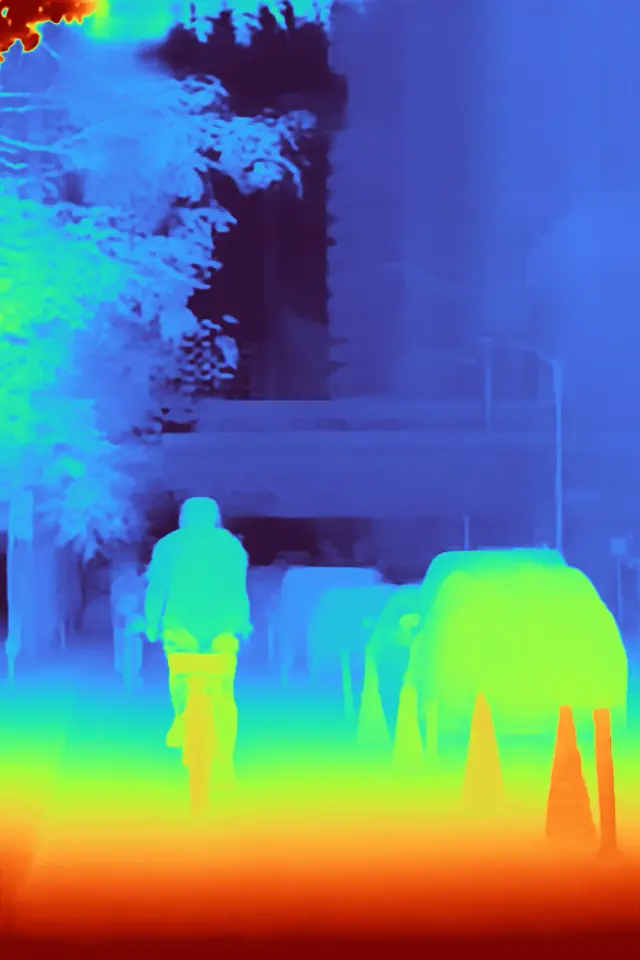
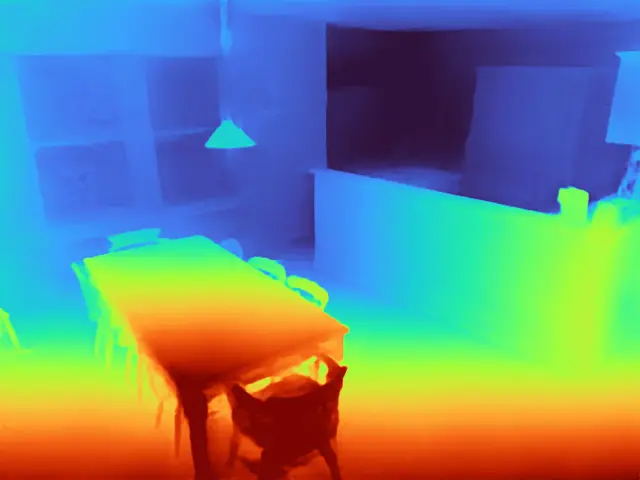
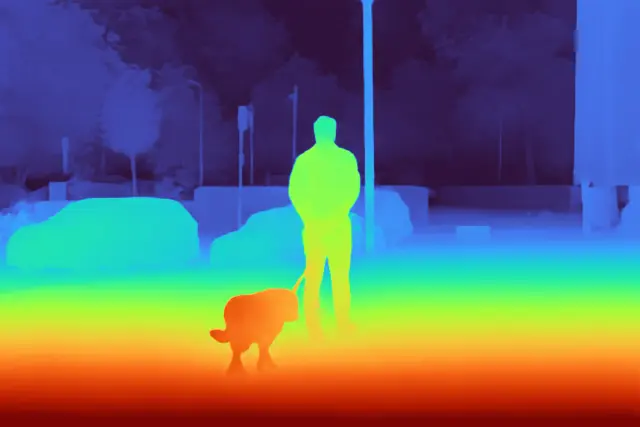
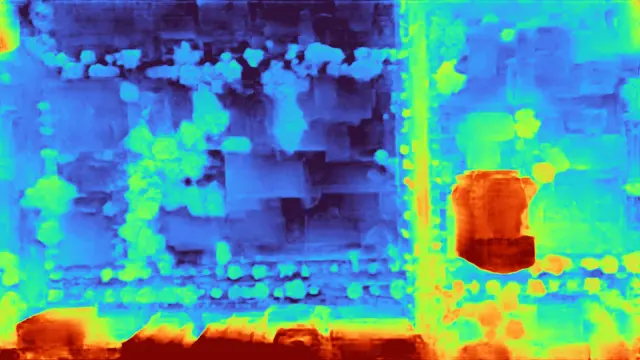
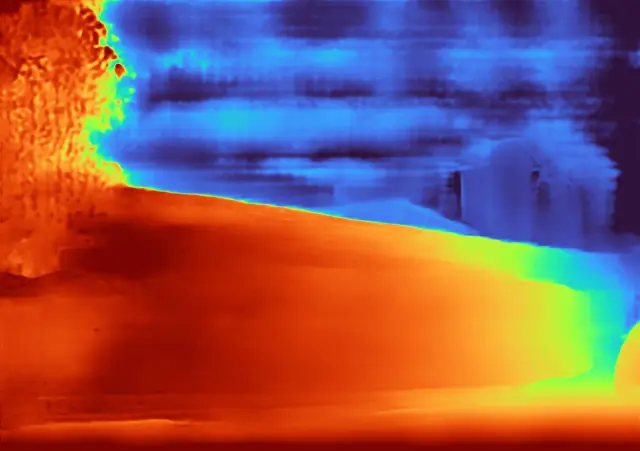
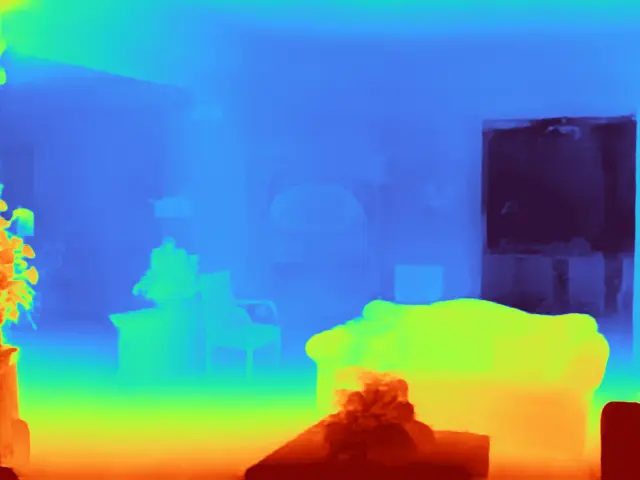
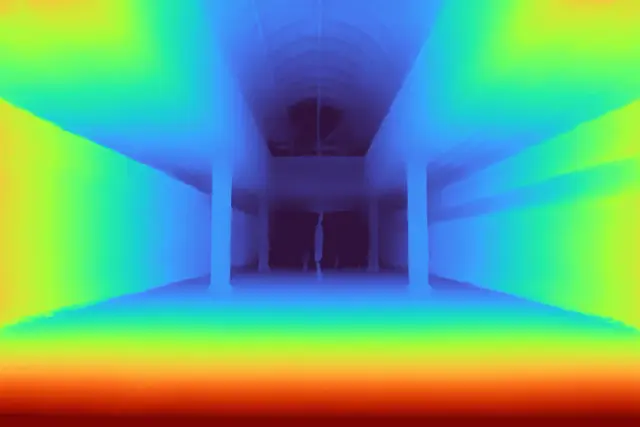
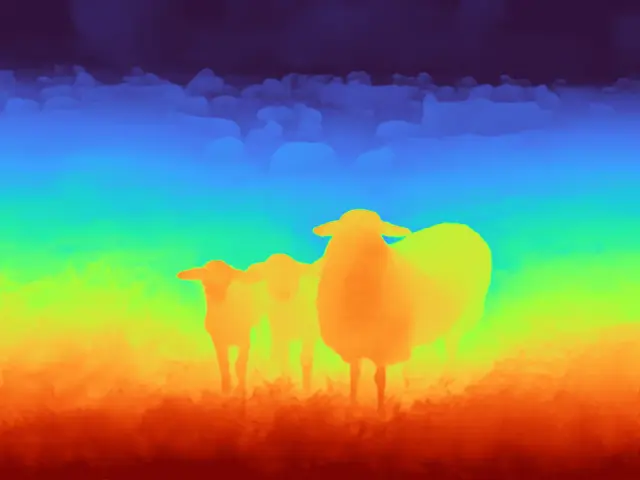
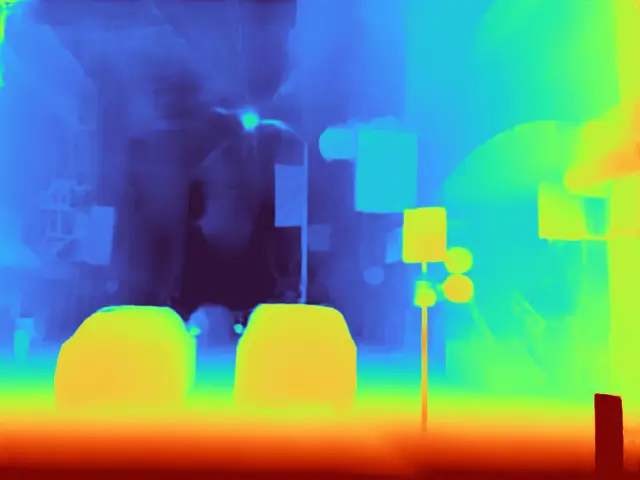
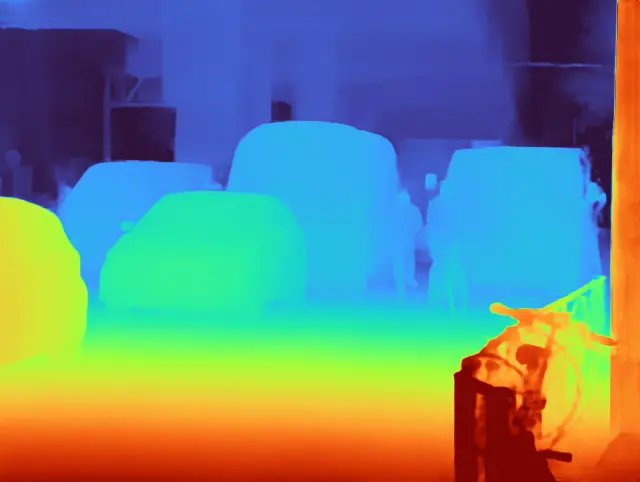
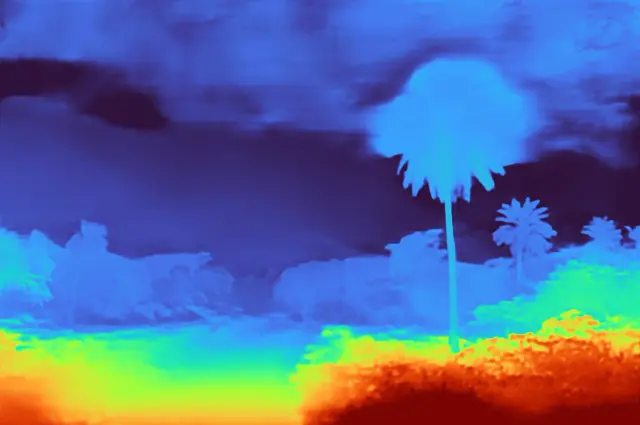
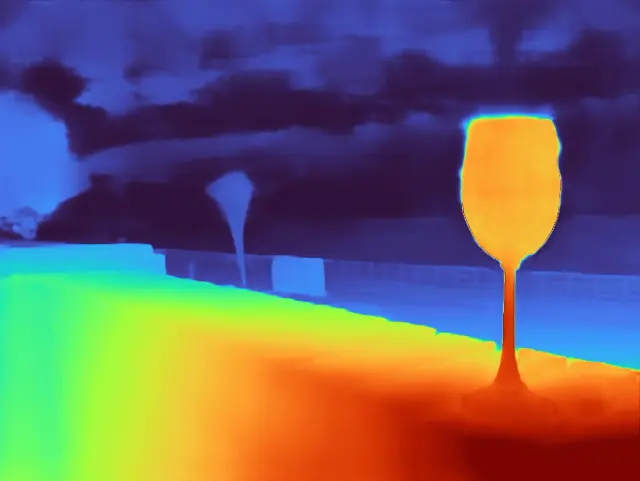
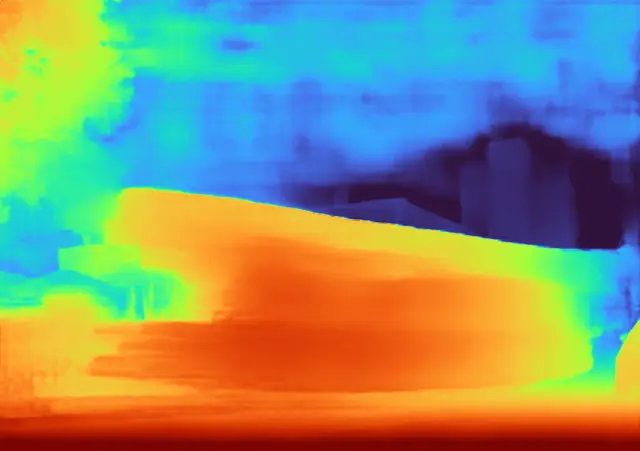 fire-engine-blurFails: night sky drawn nearer than the buildings below it
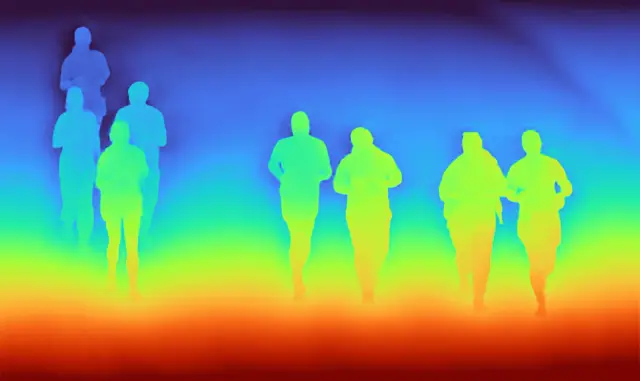 marathon-crossingFails: runner at the back melts into the road
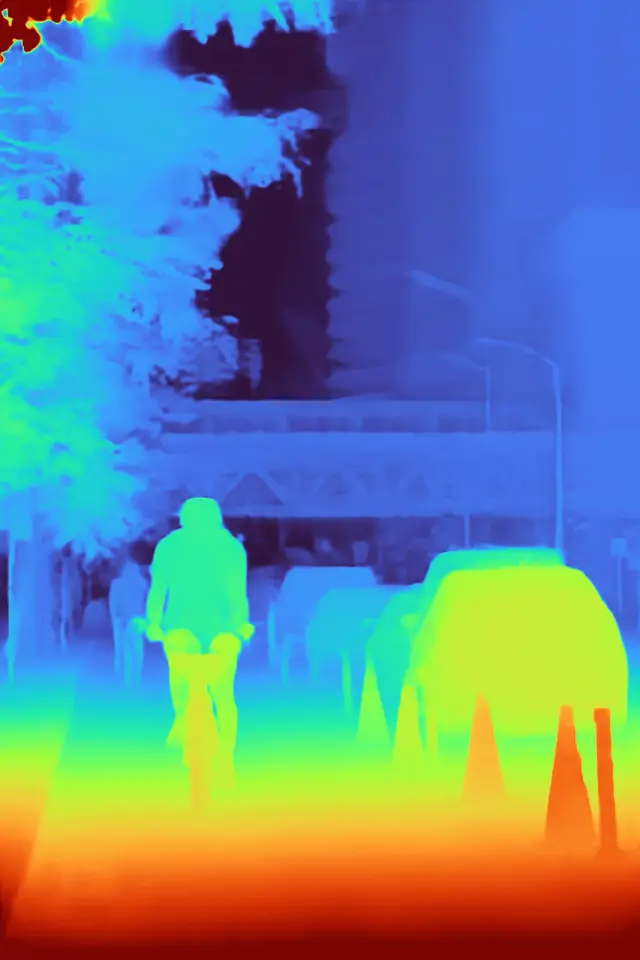 cyclist-bike-lane
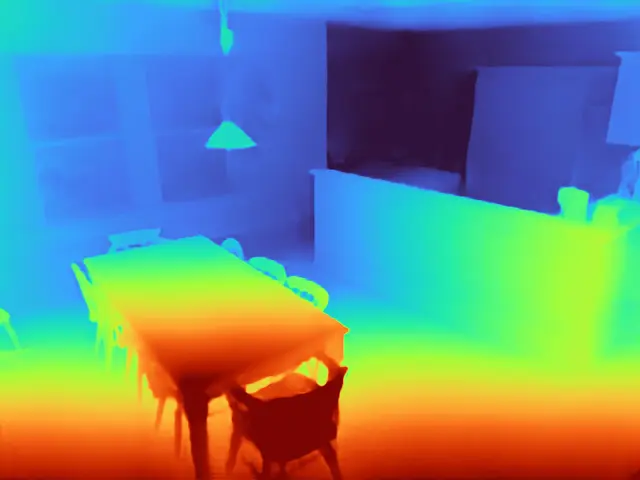 dining-room-kitchen
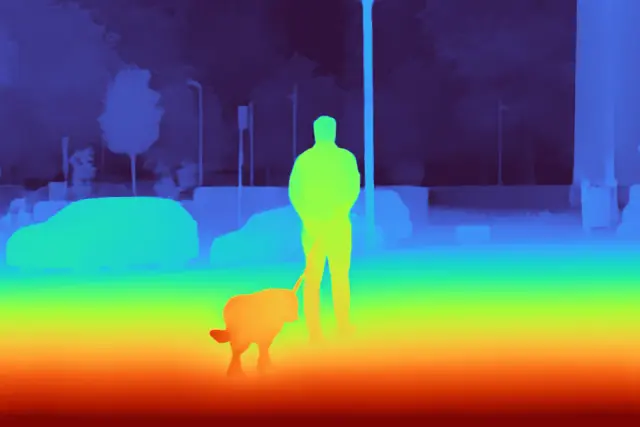 dog-walk-square
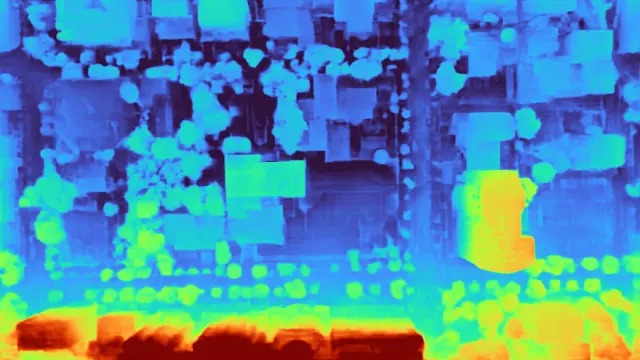 drone-city-block
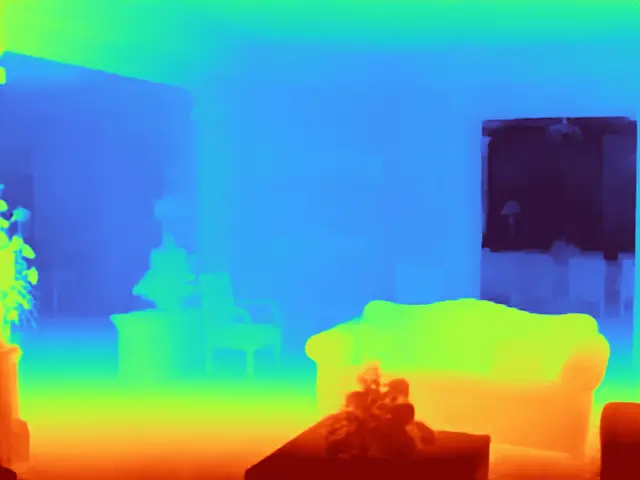 living-room-couch
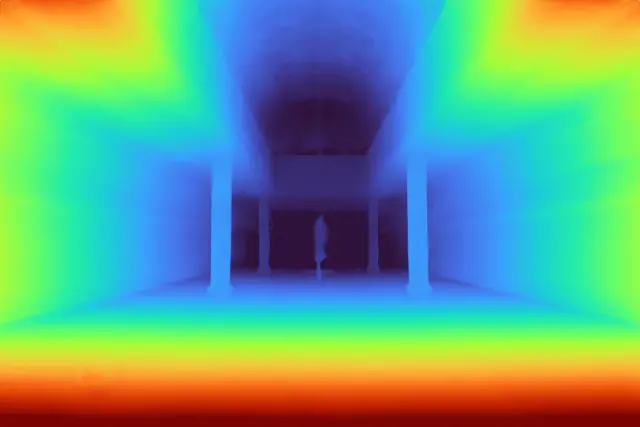 metro-platform
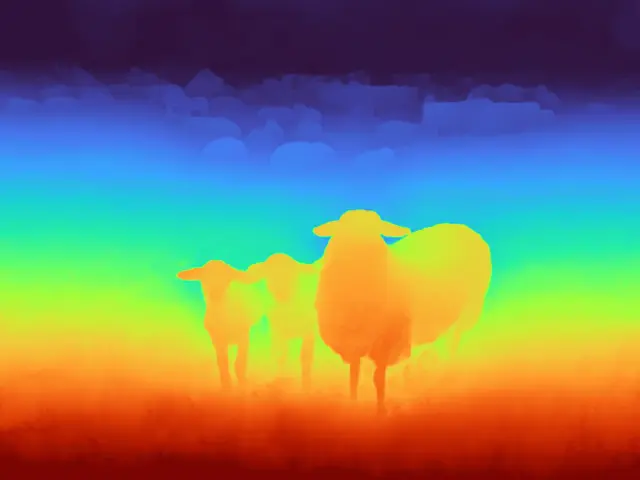 sheep-meadow-lambs
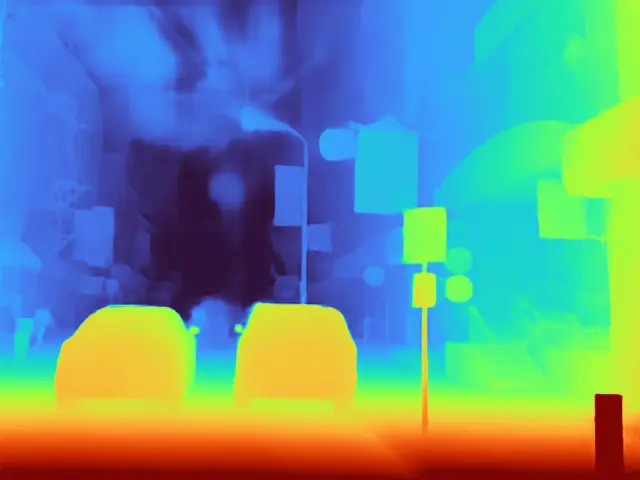 street-night-chinatown
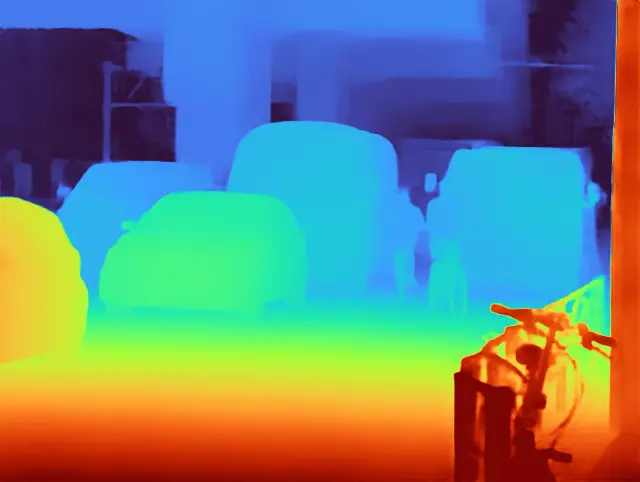 tokyo-street-cyclists
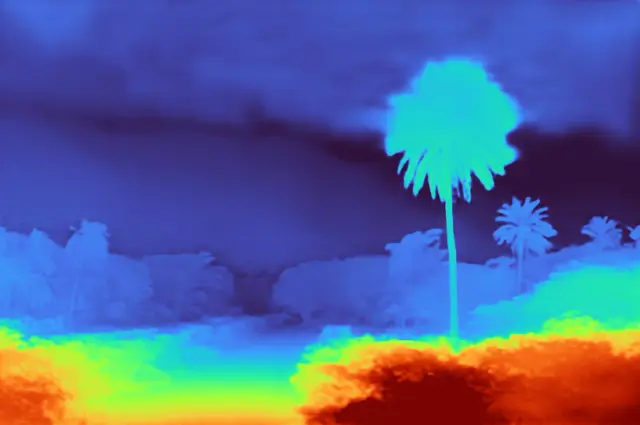 valley-landscape
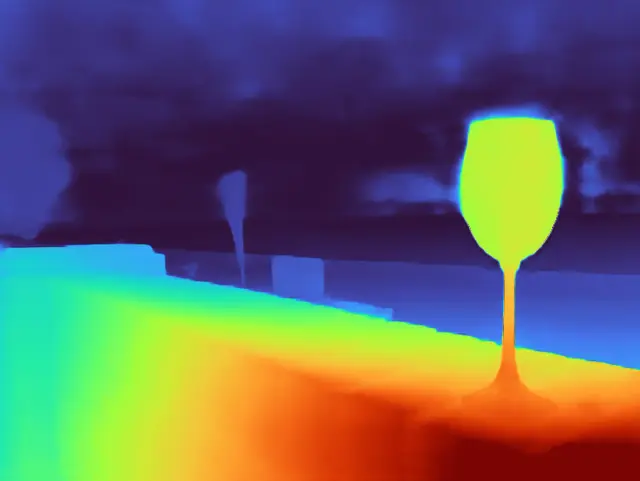 wine-glass-river
Use it when
You need depth in meters and know your scenes: the indoor checkpoints are trained to 20 m, the outdoor ones to 80 m. Small is Apache-2.0 and took 18 ms a call.
Avoid it when
You need Base or Large commercially (CC BY-NC 4.0), or one checkpoint for every scene: the indoor Small and Base put the treeline behind the mountains in our valley photo, and every outdoor size lost the runner at the back of our marathon photo into the road.
Sizes
| Size | Latency | VRAM | Accuracy | Weights | Runs | License |
|---|---|---|---|---|---|---|
| indoor-small | 18.1 ms770x518 | 869 MiB | Not yet scored | 95 MB | As is | Commercial OK |
| indoor-base | 30.3 ms770x518 | 1.3 GiB | Not yet scored | 372 MB | As is | Non-commercial |
| indoor-large | 72.7 ms770x518 | 2.7 GiB | Not yet scored | 1.25 GB | As is | Non-commercial |
| outdoor-small | 18.0 ms770x518 | 858 MiB | Not yet scored | 95 MB | As is | Commercial OK |
| outdoor-base | 30.1 ms770x518 | 1.3 GiB | Not yet scored | 372 MB | As is | Non-commercial |
| outdoor-large | 73.3 ms770x518 | 2.7 GiB | Not yet scored | 1.25 GB | As is | Non-commercial |
Estimated on other GPUs
Estimate, not measured. Worked out from our RTX 4090 run and NVIDIA's spec sheets. Each kind of GPU work is scaled by that GPU's peak for it: tensor cores at the precision the kernels used, CUDA cores, or memory bandwidth. The CPU's part of each call is kept at what it took on our Intel Core i7-10700K. How we estimate
Where a call's time goes on our RTX 4090: CUDA cores, FP32 44%, CPU and kernel launches 38%, host–device copies 8%, memory-bound 7%, tensor cores, TF32 3%.
GeForce (13)
| GPU | Fits | Latency |
|---|---|---|
| GeForce RTX 5090Blackwell, 32 GB GDDR7 | Yes | ≈ 16 ms |
| GeForce RTX 5080Blackwell, 16 GB GDDR7 | Yes | ≈ 22 ms |
| GeForce RTX 5070 TiBlackwell, 16 GB GDDR7 | Yes | ≈ 25–26 ms |
| GeForce RTX 5070Blackwell, 12 GB GDDR7 | Yes | ≈ 32–33 ms |
| GeForce RTX 5060 Ti 16GBBlackwell, 16 GB GDDR7 | Yes | ≈ 38–41 ms |
| GeForce RTX 5060Blackwell, 8 GB GDDR7 | Yes | ≈ 45–48 ms |
| GeForce RTX 4080Ada Lovelace, 16 GB GDDR6X | Yes | ≈ 24 ms |
| GeForce RTX 4070 TiAda Lovelace, 12 GB GDDR6X | Yes | ≈ 27–28 ms |
| GeForce RTX 4070Ada Lovelace, 12 GB GDDR6X | Yes | ≈ 33–35 ms |
| GeForce RTX 3090Ampere, 24 GB GDDR6X | Yes | ≈ 28–29 ms |
| GeForce RTX 3080Ampere, 10 GB GDDR6X | Yes | ≈ 32–34 ms |
| GeForce RTX 3070 TiAmpere, 8 GB GDDR6X | Yes | ≈ 41–43 ms |
| GeForce RTX 3070Ampere, 8 GB GDDR6 | Yes | ≈ 43–46 ms |
Workstation (4)
| GPU | Fits | Latency |
|---|---|---|
| RTX PRO 6000 Blackwell Workstation EditionBlackwell, 96 GB GDDR7 | Yes | ≈ 14–15 ms |
| RTX PRO 6000 Blackwell Max-Q Workstation EditionBlackwell, 96 GB GDDR7 | Yes | ≈ 15–16 ms |
| RTX 6000 Ada GenerationAda Lovelace, 48 GB GDDR6 | Yes | ≈ 17 ms |
| RTX A6000Ampere, 48 GB GDDR6 | Yes | ≈ 27–28 ms |
Data center (6)
| GPU | Fits | Latency |
|---|---|---|
| B200 (HGX, one GPU)Blackwell, 180 GB HBM3E | Yes | ≈ 17–18 ms |
| H200 SXMHopper, 141 GB HBM3e | Yes | ≈ 19 ms |
| H100 SXMHopper, 80 GB HBM3 | Yes | ≈ 19 ms |
| A100 SXM 80GBAmpere, 80 GB HBM2e | Yes | ≈ 42–43 ms |
| L40SAda Lovelace, 48 GB GDDR6 | Yes | ≈ 17 ms |
| L4Ada Lovelace, 24 GB GDDR6 | Yes | ≈ 33–35 ms |
Where a call's time goes on our RTX 4090: CUDA cores, FP32 60%, CPU and kernel launches 23%, memory-bound 8%, tensor cores, TF32 5%, host–device copies 4%.
GeForce (13)
| GPU | Fits | Latency |
|---|---|---|
| GeForce RTX 5090Blackwell, 32 GB GDDR7 | Yes | ≈ 25 ms |
| GeForce RTX 5080Blackwell, 16 GB GDDR7 | Yes | ≈ 39–40 ms |
| GeForce RTX 5070 TiBlackwell, 16 GB GDDR7 | Yes | ≈ 48 ms |
| GeForce RTX 5070Blackwell, 12 GB GDDR7 | Yes | ≈ 64 ms |
| GeForce RTX 5060 Ti 16GBBlackwell, 16 GB GDDR7 | Yes | ≈ 81–82 ms |
| GeForce RTX 5060Blackwell, 8 GB GDDR7 | Yes | ≈ 97–98 ms |
| GeForce RTX 4080Ada Lovelace, 16 GB GDDR6X | Yes | ≈ 45 ms |
| GeForce RTX 4070 TiAda Lovelace, 12 GB GDDR6X | Yes | ≈ 53 ms |
| GeForce RTX 4070Ada Lovelace, 12 GB GDDR6X | Yes | ≈ 68–69 ms |
| GeForce RTX 3090Ampere, 24 GB GDDR6X | Yes | ≈ 56 ms |
| GeForce RTX 3080Ampere, 10 GB GDDR6X | Yes | ≈ 65–66 ms |
| GeForce RTX 3070 TiAmpere, 8 GB GDDR6X | Yes | ≈ 86–87 ms |
| GeForce RTX 3070Ampere, 8 GB GDDR6 | Yes | ≈ 93 ms |
Workstation (4)
| GPU | Fits | Latency |
|---|---|---|
| RTX PRO 6000 Blackwell Workstation EditionBlackwell, 96 GB GDDR7 | Yes | ≈ 22 ms |
| RTX PRO 6000 Blackwell Max-Q Workstation EditionBlackwell, 96 GB GDDR7 | Yes | ≈ 24 ms |
| RTX 6000 Ada GenerationAda Lovelace, 48 GB GDDR6 | Yes | ≈ 28 ms |
| RTX A6000Ampere, 48 GB GDDR6 | Yes | ≈ 52 ms |
Data center (6)
| GPU | Fits | Latency |
|---|---|---|
| B200 (HGX, one GPU)Blackwell, 180 GB HBM3E | Yes | ≈ 29 ms |
| H200 SXMHopper, 141 GB HBM3e | Yes | ≈ 31 ms |
| H100 SXMHopper, 80 GB HBM3 | Yes | ≈ 32 ms |
| A100 SXM 80GBAmpere, 80 GB HBM2e | Yes | ≈ 87 ms |
| L40SAda Lovelace, 48 GB GDDR6 | Yes | ≈ 28 ms |
| L4Ada Lovelace, 24 GB GDDR6 | Yes | ≈ 67–68 ms |
Where a call's time goes on our RTX 4090: CUDA cores, FP32 71%, CPU and kernel launches 11%, memory-bound 8%, tensor cores, TF32 8%, host–device copies 2%.
GeForce (13)
| GPU | Fits | Latency |
|---|---|---|
| GeForce RTX 5090Blackwell, 32 GB GDDR7 | Yes | ≈ 58 ms |
| GeForce RTX 5080Blackwell, 16 GB GDDR7 | Yes | ≈ 100 ms |
| GeForce RTX 5070 TiBlackwell, 16 GB GDDR7 | Yes | ≈ 120 ms |
| GeForce RTX 5070Blackwell, 12 GB GDDR7 | Yes | ≈ 170 ms |
| GeForce RTX 5060 Ti 16GBBlackwell, 16 GB GDDR7 | Yes | ≈ 220 ms |
| GeForce RTX 5060Blackwell, 8 GB GDDR7 | Yes | ≈ 270 ms |
| GeForce RTX 4080Ada Lovelace, 16 GB GDDR6X | Yes | ≈ 120 ms |
| GeForce RTX 4070 TiAda Lovelace, 12 GB GDDR6X | Yes | ≈ 140 ms |
| GeForce RTX 4070Ada Lovelace, 12 GB GDDR6X | Yes | ≈ 180 ms |
| GeForce RTX 3090Ampere, 24 GB GDDR6X | Yes | ≈ 150 ms |
| GeForce RTX 3080Ampere, 10 GB GDDR6X | Yes | ≈ 180 ms |
| GeForce RTX 3070 TiAmpere, 8 GB GDDR6X | Yes | ≈ 240 ms |
| GeForce RTX 3070Ampere, 8 GB GDDR6 | Yes | ≈ 260 ms |
Workstation (4)
| GPU | Fits | Latency |
|---|---|---|
| RTX PRO 6000 Blackwell Workstation EditionBlackwell, 96 GB GDDR7 | Yes | ≈ 48 ms |
| RTX PRO 6000 Blackwell Max-Q Workstation EditionBlackwell, 96 GB GDDR7 | Yes | ≈ 54 ms |
| RTX 6000 Ada GenerationAda Lovelace, 48 GB GDDR6 | Yes | ≈ 65 ms |
| RTX A6000Ampere, 48 GB GDDR6 | Yes | ≈ 130 ms |
Data center (6)
| GPU | Fits | Latency |
|---|---|---|
| B200 (HGX, one GPU)Blackwell, 180 GB HBM3E | Yes | ≈ 67–68 ms |
| H200 SXMHopper, 141 GB HBM3e | Yes | ≈ 75 ms |
| H100 SXMHopper, 80 GB HBM3 | Yes | ≈ 76 ms |
| A100 SXM 80GBAmpere, 80 GB HBM2e | Yes | ≈ 230 ms |
| L40SAda Lovelace, 48 GB GDDR6 | Yes | ≈ 65 ms |
| L4Ada Lovelace, 24 GB GDDR6 | Yes | ≈ 180 ms |
Where a call's time goes on our RTX 4090: CUDA cores, FP32 45%, CPU and kernel launches 39%, memory-bound 7%, host–device copies 7%, tensor cores, TF32 3%.
GeForce (13)
| GPU | Fits | Latency |
|---|---|---|
| GeForce RTX 5090Blackwell, 32 GB GDDR7 | Yes | ≈ 16 ms |
| GeForce RTX 5080Blackwell, 16 GB GDDR7 | Yes | ≈ 22 ms |
| GeForce RTX 5070 TiBlackwell, 16 GB GDDR7 | Yes | ≈ 25–26 ms |
| GeForce RTX 5070Blackwell, 12 GB GDDR7 | Yes | ≈ 32–33 ms |
| GeForce RTX 5060 Ti 16GBBlackwell, 16 GB GDDR7 | Yes | ≈ 39–41 ms |
| GeForce RTX 5060Blackwell, 8 GB GDDR7 | Yes | ≈ 45–48 ms |
| GeForce RTX 4080Ada Lovelace, 16 GB GDDR6X | Yes | ≈ 24 ms |
| GeForce RTX 4070 TiAda Lovelace, 12 GB GDDR6X | Yes | ≈ 27–28 ms |
| GeForce RTX 4070Ada Lovelace, 12 GB GDDR6X | Yes | ≈ 33–35 ms |
| GeForce RTX 3090Ampere, 24 GB GDDR6X | Yes | ≈ 29 ms |
| GeForce RTX 3080Ampere, 10 GB GDDR6X | Yes | ≈ 32–33 ms |
| GeForce RTX 3070 TiAmpere, 8 GB GDDR6X | Yes | ≈ 41–43 ms |
| GeForce RTX 3070Ampere, 8 GB GDDR6 | Yes | ≈ 43–46 ms |
Workstation (4)
| GPU | Fits | Latency |
|---|---|---|
| RTX PRO 6000 Blackwell Workstation EditionBlackwell, 96 GB GDDR7 | Yes | ≈ 14–15 ms |
| RTX PRO 6000 Blackwell Max-Q Workstation EditionBlackwell, 96 GB GDDR7 | Yes | ≈ 15–16 ms |
| RTX 6000 Ada GenerationAda Lovelace, 48 GB GDDR6 | Yes | ≈ 17 ms |
| RTX A6000Ampere, 48 GB GDDR6 | Yes | ≈ 27 ms |
Data center (6)
| GPU | Fits | Latency |
|---|---|---|
| B200 (HGX, one GPU)Blackwell, 180 GB HBM3E | Yes | ≈ 17–18 ms |
| H200 SXMHopper, 141 GB HBM3e | Yes | ≈ 18–19 ms |
| H100 SXMHopper, 80 GB HBM3 | Yes | ≈ 19 ms |
| A100 SXM 80GBAmpere, 80 GB HBM2e | Yes | ≈ 42–43 ms |
| L40SAda Lovelace, 48 GB GDDR6 | Yes | ≈ 17 ms |
| L4Ada Lovelace, 24 GB GDDR6 | Yes | ≈ 33–35 ms |
Where a call's time goes on our RTX 4090: CUDA cores, FP32 61%, CPU and kernel launches 22%, memory-bound 8%, tensor cores, TF32 5%, host–device copies 4%.
GeForce (13)
| GPU | Fits | Latency |
|---|---|---|
| GeForce RTX 5090Blackwell, 32 GB GDDR7 | Yes | ≈ 25 ms |
| GeForce RTX 5080Blackwell, 16 GB GDDR7 | Yes | ≈ 39–40 ms |
| GeForce RTX 5070 TiBlackwell, 16 GB GDDR7 | Yes | ≈ 48 ms |
| GeForce RTX 5070Blackwell, 12 GB GDDR7 | Yes | ≈ 64–65 ms |
| GeForce RTX 5060 Ti 16GBBlackwell, 16 GB GDDR7 | Yes | ≈ 82–83 ms |
| GeForce RTX 5060Blackwell, 8 GB GDDR7 | Yes | ≈ 98–99 ms |
| GeForce RTX 4080Ada Lovelace, 16 GB GDDR6X | Yes | ≈ 45 ms |
| GeForce RTX 4070 TiAda Lovelace, 12 GB GDDR6X | Yes | ≈ 53–54 ms |
| GeForce RTX 4070Ada Lovelace, 12 GB GDDR6X | Yes | ≈ 69 ms |
| GeForce RTX 3090Ampere, 24 GB GDDR6X | Yes | ≈ 56–57 ms |
| GeForce RTX 3080Ampere, 10 GB GDDR6X | Yes | ≈ 66 ms |
| GeForce RTX 3070 TiAmpere, 8 GB GDDR6X | Yes | ≈ 87–88 ms |
| GeForce RTX 3070Ampere, 8 GB GDDR6 | Yes | ≈ 94 ms |
Workstation (4)
| GPU | Fits | Latency |
|---|---|---|
| RTX PRO 6000 Blackwell Workstation EditionBlackwell, 96 GB GDDR7 | Yes | ≈ 22 ms |
| RTX PRO 6000 Blackwell Max-Q Workstation EditionBlackwell, 96 GB GDDR7 | Yes | ≈ 24 ms |
| RTX 6000 Ada GenerationAda Lovelace, 48 GB GDDR6 | Yes | ≈ 28 ms |
| RTX A6000Ampere, 48 GB GDDR6 | Yes | ≈ 52 ms |
Data center (6)
| GPU | Fits | Latency |
|---|---|---|
| B200 (HGX, one GPU)Blackwell, 180 GB HBM3E | Yes | ≈ 29 ms |
| H200 SXMHopper, 141 GB HBM3e | Yes | ≈ 31 ms |
| H100 SXMHopper, 80 GB HBM3 | Yes | ≈ 32 ms |
| A100 SXM 80GBAmpere, 80 GB HBM2e | Yes | ≈ 88 ms |
| L40SAda Lovelace, 48 GB GDDR6 | Yes | ≈ 28 ms |
| L4Ada Lovelace, 24 GB GDDR6 | Yes | ≈ 68 ms |
Where a call's time goes on our RTX 4090: CUDA cores, FP32 71%, CPU and kernel launches 11%, memory-bound 8%, tensor cores, TF32 8%, host–device copies 2%.
GeForce (13)
| GPU | Fits | Latency |
|---|---|---|
| GeForce RTX 5090Blackwell, 32 GB GDDR7 | Yes | ≈ 58 ms |
| GeForce RTX 5080Blackwell, 16 GB GDDR7 | Yes | ≈ 100 ms |
| GeForce RTX 5070 TiBlackwell, 16 GB GDDR7 | Yes | ≈ 130 ms |
| GeForce RTX 5070Blackwell, 12 GB GDDR7 | Yes | ≈ 170 ms |
| GeForce RTX 5060 Ti 16GBBlackwell, 16 GB GDDR7 | Yes | ≈ 220–230 ms |
| GeForce RTX 5060Blackwell, 8 GB GDDR7 | Yes | ≈ 270 ms |
| GeForce RTX 4080Ada Lovelace, 16 GB GDDR6X | Yes | ≈ 120 ms |
| GeForce RTX 4070 TiAda Lovelace, 12 GB GDDR6X | Yes | ≈ 140 ms |
| GeForce RTX 4070Ada Lovelace, 12 GB GDDR6X | Yes | ≈ 190 ms |
| GeForce RTX 3090Ampere, 24 GB GDDR6X | Yes | ≈ 150 ms |
| GeForce RTX 3080Ampere, 10 GB GDDR6X | Yes | ≈ 180 ms |
| GeForce RTX 3070 TiAmpere, 8 GB GDDR6X | Yes | ≈ 240 ms |
| GeForce RTX 3070Ampere, 8 GB GDDR6 | Yes | ≈ 260 ms |
Workstation (4)
| GPU | Fits | Latency |
|---|---|---|
| RTX PRO 6000 Blackwell Workstation EditionBlackwell, 96 GB GDDR7 | Yes | ≈ 49 ms |
| RTX PRO 6000 Blackwell Max-Q Workstation EditionBlackwell, 96 GB GDDR7 | Yes | ≈ 54 ms |
| RTX 6000 Ada GenerationAda Lovelace, 48 GB GDDR6 | Yes | ≈ 66 ms |
| RTX A6000Ampere, 48 GB GDDR6 | Yes | ≈ 130 ms |
Data center (6)
| GPU | Fits | Latency |
|---|---|---|
| B200 (HGX, one GPU)Blackwell, 180 GB HBM3E | Yes | ≈ 68 ms |
| H200 SXMHopper, 141 GB HBM3e | Yes | ≈ 76 ms |
| H100 SXMHopper, 80 GB HBM3 | Yes | ≈ 76–77 ms |
| A100 SXM 80GBAmpere, 80 GB HBM2e | Yes | ≈ 240 ms |
| L40SAda Lovelace, 48 GB GDDR6 | Yes | ≈ 66 ms |
| L4Ada Lovelace, 24 GB GDDR6 | Yes | ≈ 180 ms |
CPU only
Measured by us with no GPU on an Intel(R) Core(TM) i7-10700K CPU @ 3.80GHz, 8 cores, 94.2 GiB of memory: the same official code with the GPU hidden, in fp32 on 8 threads. Before it was timed, its output on the timing input was checked against the GPU's. These numbers say what to expect without a GPU. They aren't compared with any GPU's, here or in the charts. How we measure on a CPU
| Size | Runtime | Latency on the CPU | RAM peak |
|---|---|---|---|
| indoor-small | PyTorch2.14.1 · fp32 · 8 threads | 461 ms770x518 | 1.2 GiB |
| indoor-base | PyTorch2.14.1 · fp32 · 8 threads | 1278 ms770x518 | 1.7 GiB |
| indoor-large | PyTorch2.14.1 · fp32 · 8 threads | 4200 ms770x518 | 3.1 GiB |
| outdoor-small | PyTorch2.14.1 · fp32 · 8 threads | 526 ms770x518 | 1.2 GiB |
| outdoor-base | PyTorch2.14.1 · fp32 · 8 threads | 1165 ms770x518 | 1.7 GiB |
| outdoor-large | PyTorch2.14.1 · fp32 · 8 threads | 4157 ms770x518 | 3.0 GiB |

Alternatives
Changes
First published . Every model's changes
Badge for a README
It says the model ran on our RTX 4090 and links to this page. It carries no number, so it never goes out of date.

[](https://modelsthatrun.dev/models/depth-anything-v2-metric/)Something wrong on this page, such as a license or a number? Email us.