OmDet-Turbo
Om AI Lab's real-time open-vocabulary detector: boxes for the class names you give it. One tiny Swin-T size, Apache-2.0, through transformers.
Commercial use OK: code Apache-2.0, weights Apache-2.0. Measured on our RTX 4090: 42.9 ms median, 1.3 GiB VRAM peak. We scored it 38.7 box AP on COCO val2017. safetensors weights, 440 MB.
License
Commercial use OK
- Code
- Apache-2.0checked 21 Nov 2026
- Weights
- Apache-2.0all sizes, checked 21 Nov 2026
On our RTX 4090, measured
42.9ms median
p90 46.5 ms, fp32, batch 1, 640x640
- VRAM peak
- 1.3 GiB
- Status
- Runs as is
Environment, 22 Nov 2026
NVIDIA GeForce RTX 4090, driver 580.173.02, CUDA 13.0, torch 2.14.1+cu130, Python 3.12.9, transformers==5.20.2. Baseline 1065 MiB. 10 warm-up + 100 timed. Scope: predict(): pre-processing, forward pass and post-processing; input file decoded beforehand.
Accuracy
38.7box APmeasured
COCO val2017, box AP, 5,000 images, fp32, pycocotools==2.0.11 · 21 Nov 2026
Reported42.5 COCO AP, zero-shot on COCOSource: README, model table (OmDet-Turbo-Tiny, O365 and GoldG pre-training); the split isn't stated
Weights
safetensors
- Size
- 440 MB
- sha256
439d1575d7e237ad565ed6969ea2a2dfcedf2086155e9ca3ac96cd6180a48cfd
Outputs on the shared test photos
Same photos and one score threshold for every model of this task. Failures are marked.
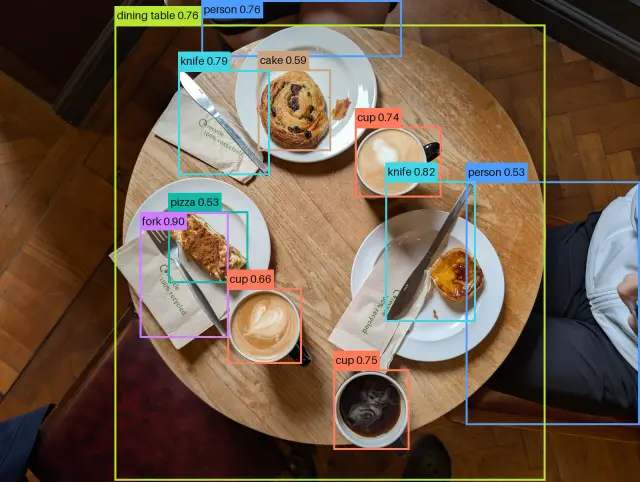 breakfast-top-downFails: labels the cake slice as pizza
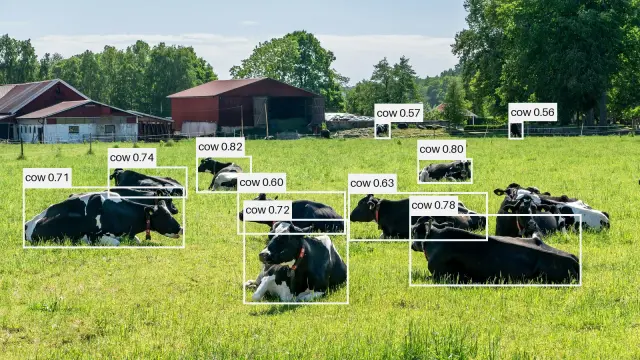 cows-pastureFails: misses the group of cows lying on the right
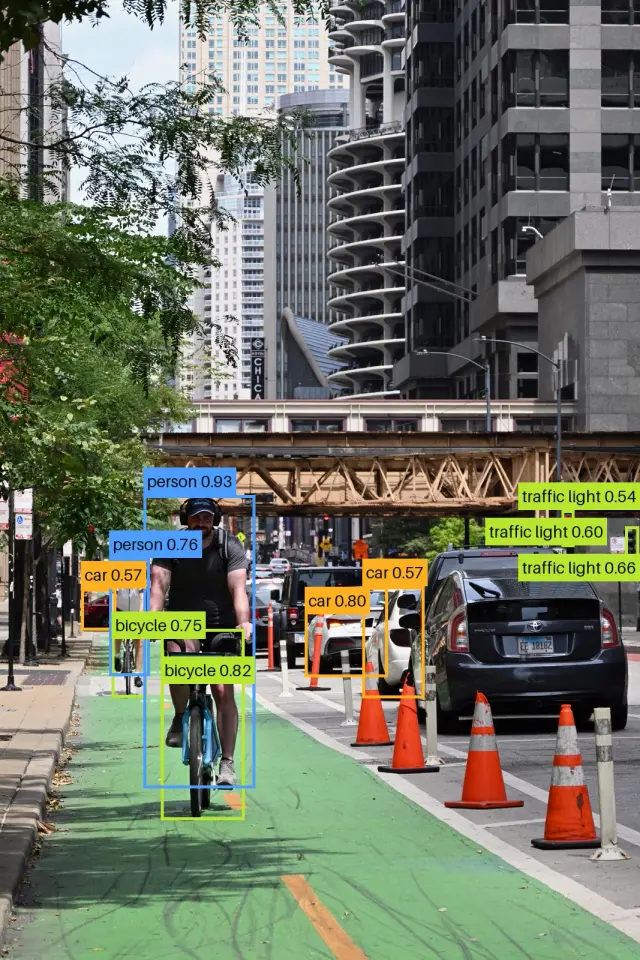 cyclist-bike-laneFails: misses the dark car beside the bike lane
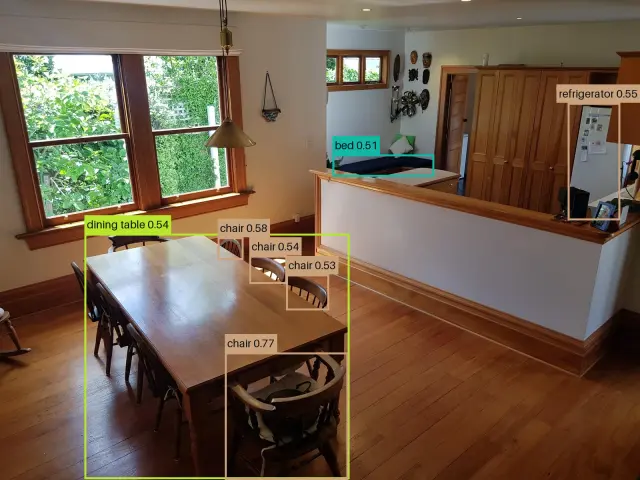 dining-room-kitchenFails: labels the window seat as a bed
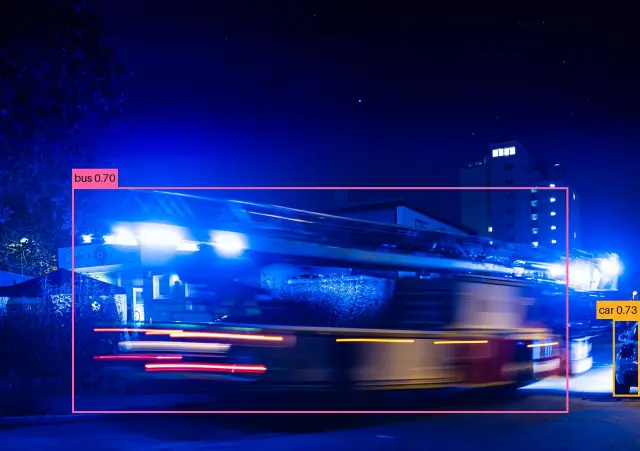 fire-engine-blurFails: labels the fire engine as a bus
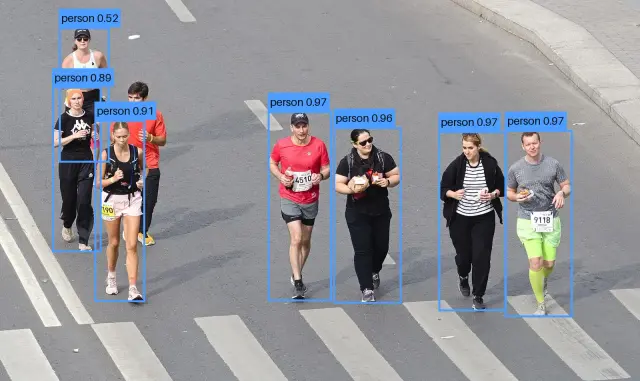 marathon-crossingFails: misses the runner in the red shirt at the back
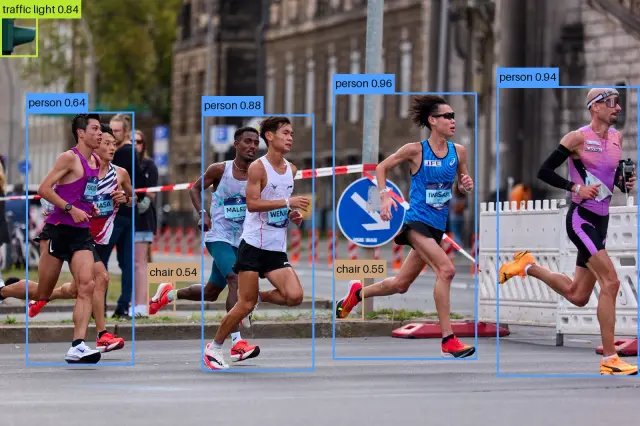 marathon-packFails: labels two running shoes as chairs, misses the runner in the striped top
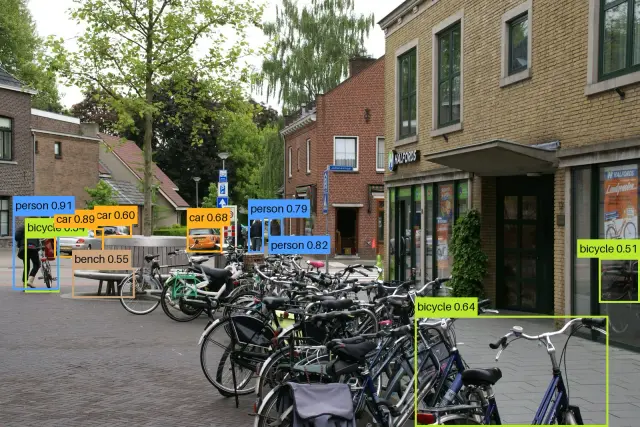 parked-bicyclesFails: misses nearly all the parked bicycles
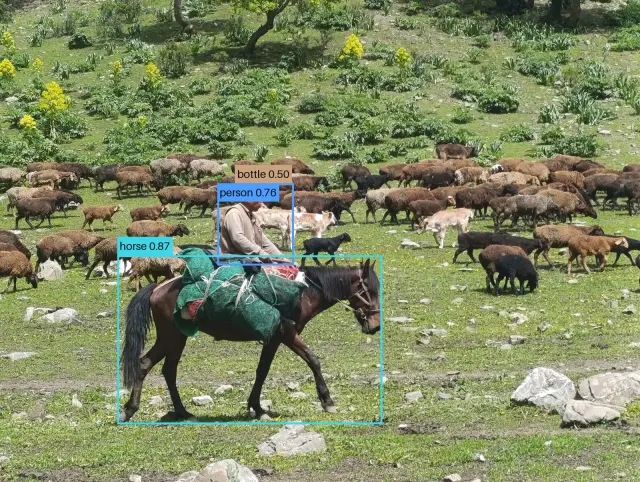 shepherd-sheepFails: misses the whole flock of sheep
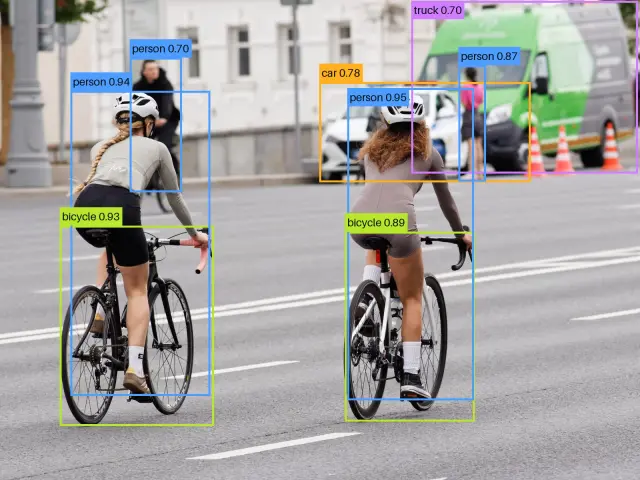 bike-parade-riders
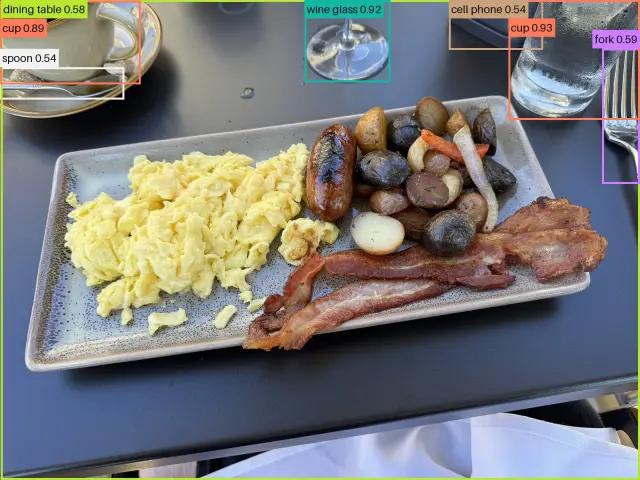 cafe-table-glasses
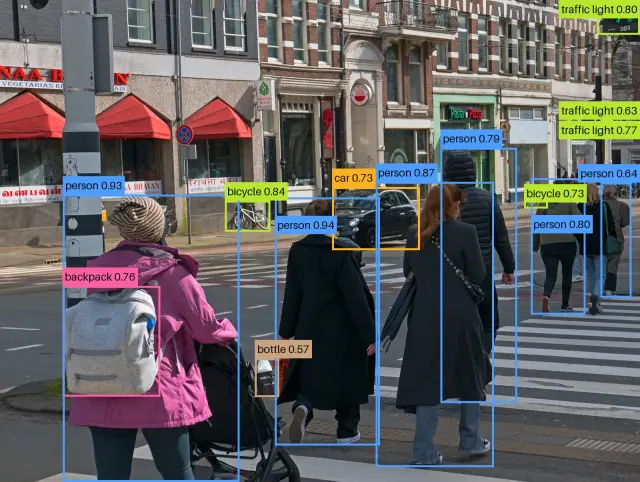 crossing-amsterdam
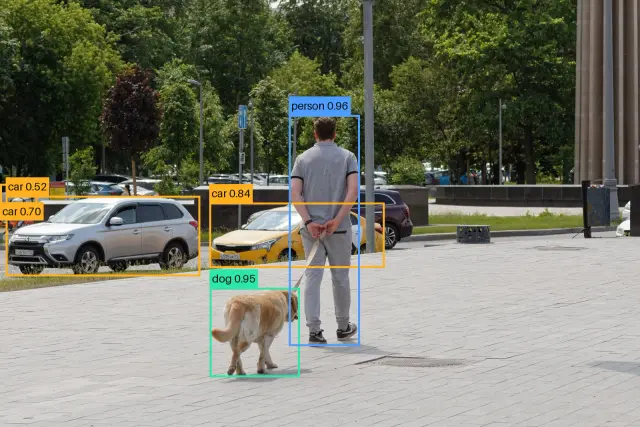 dog-walk-square
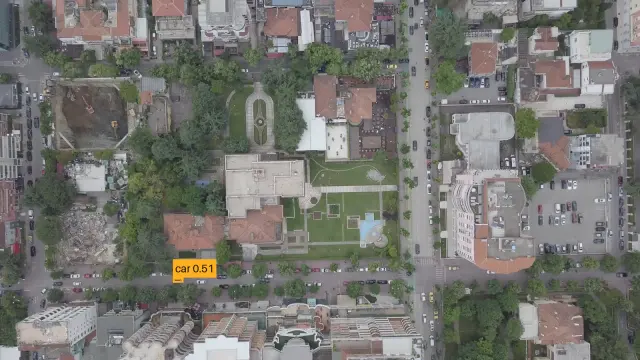 drone-city-block
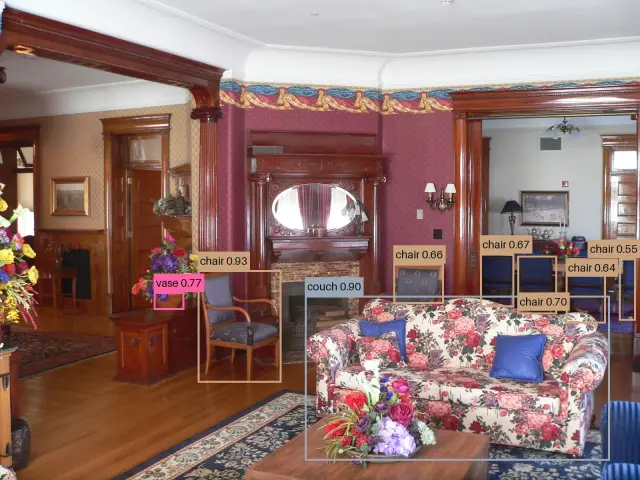 living-room-couch
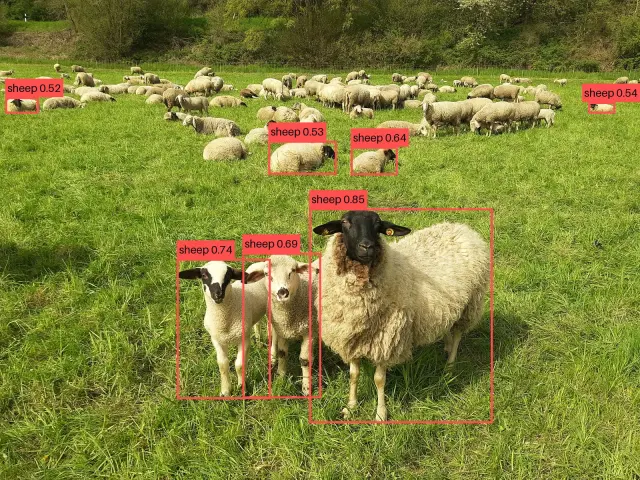 sheep-meadow-lambs
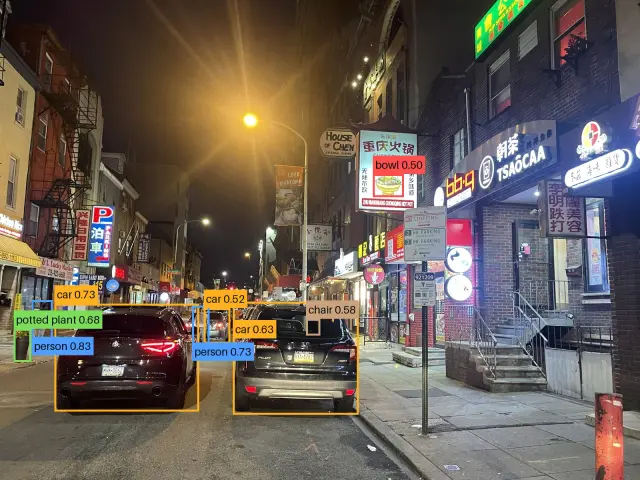 street-night-chinatown
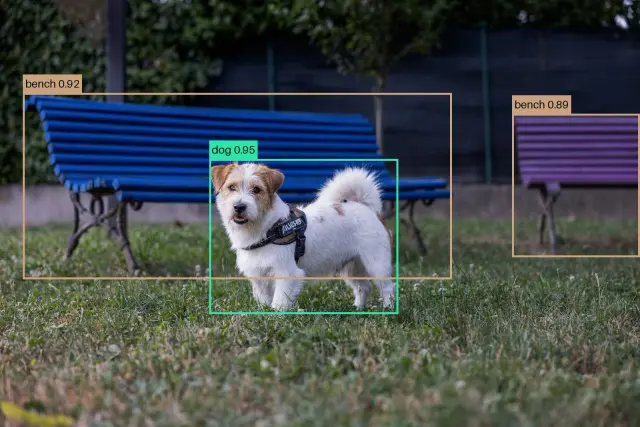 terrier-dog-park
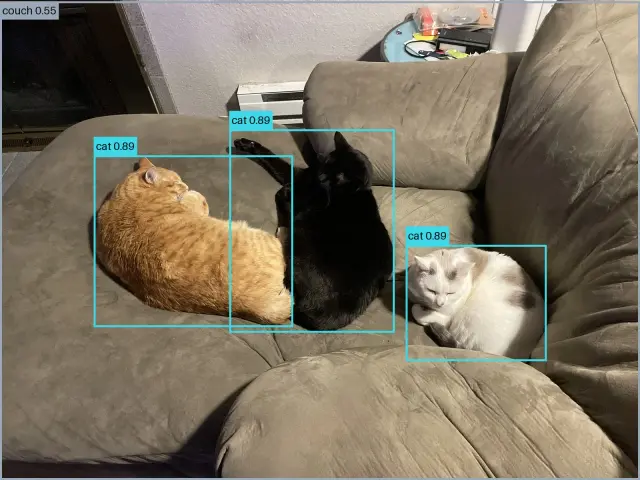 three-cats-couch
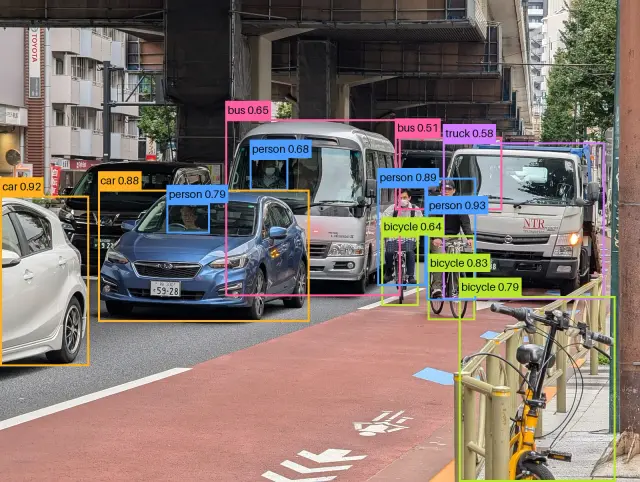 tokyo-street-cyclists
Use it when
You want open-vocabulary detection quickly, under Apache-2.0: at 43 ms a call it was the fastest open-vocabulary detector here, about 2.6 times faster than OWLv2 base.
Avoid it when
You need the accuracy of the larger open-vocabulary detectors: it scored 38.7 box AP on COCO given the 80 class names, against 46.0 to 59.1 for every size of the others here, and below its README's 42.5.
Sizes
| Size | Latency | VRAM | Accuracy | Weights | Runs | License |
|---|---|---|---|---|---|---|
| tiny | 42.9 ms640x640 | 1.3 GiB | 38.7 box AP, measured42.5 COCO AP, zero-shot paper | 440 MB | As is | Commercial OK |
Estimated on other GPUs
Estimate, not measured. Worked out from our RTX 4090 run and NVIDIA's spec sheets. Each kind of GPU work is scaled by that GPU's peak for it: tensor cores at the precision the kernels used, CUDA cores, or memory bandwidth. The CPU's part of each call is kept at what it took on our Intel Core i7-10700K. How we estimate
Where a call's time goes on our RTX 4090: CPU and kernel launches 70%, CUDA cores, FP32 15%, memory-bound 10%, tensor cores, TF32 3%, host–device copies 2%.
GeForce (13)
| GPU | Fits | Latency |
|---|---|---|
| GeForce RTX 5090Blackwell, 32 GB GDDR7 | Yes | ≈ 39–41 ms |
| GeForce RTX 5080Blackwell, 16 GB GDDR7 | Yes | ≈ 45–47 ms |
| GeForce RTX 5070 TiBlackwell, 16 GB GDDR7 | Yes | ≈ 48–50 ms |
| GeForce RTX 5070Blackwell, 12 GB GDDR7 | Yes | ≈ 52–58 ms |
| GeForce RTX 5060 Ti 16GBBlackwell, 16 GB GDDR7 | Yes | ≈ 57–68 ms |
| GeForce RTX 5060Blackwell, 8 GB GDDR7 | Yes | ≈ 62–74 ms |
| GeForce RTX 4080Ada Lovelace, 16 GB GDDR6X | Yes | ≈ 47–50 ms |
| GeForce RTX 4070 TiAda Lovelace, 12 GB GDDR6X | Yes | ≈ 50–56 ms |
| GeForce RTX 4070Ada Lovelace, 12 GB GDDR6X | Yes | ≈ 54–62 ms |
| GeForce RTX 3090Ampere, 24 GB GDDR6X | Yes | ≈ 50–53 ms |
| GeForce RTX 3080Ampere, 10 GB GDDR6X | Yes | ≈ 53–58 ms |
| GeForce RTX 3070 TiAmpere, 8 GB GDDR6X | Yes | ≈ 58–68 ms |
| GeForce RTX 3070Ampere, 8 GB GDDR6 | Yes | ≈ 60–72 ms |
Workstation (4)
| GPU | Fits | Latency |
|---|---|---|
| RTX PRO 6000 Blackwell Workstation EditionBlackwell, 96 GB GDDR7 | Yes | ≈ 38–40 ms |
| RTX PRO 6000 Blackwell Max-Q Workstation EditionBlackwell, 96 GB GDDR7 | Yes | ≈ 39–41 ms |
| RTX 6000 Ada GenerationAda Lovelace, 48 GB GDDR6 | Yes | ≈ 42 ms |
| RTX A6000Ampere, 48 GB GDDR6 | Yes | ≈ 48–52 ms |
Data center (6)
| GPU | Fits | Latency |
|---|---|---|
| B200 (HGX, one GPU)Blackwell, 180 GB HBM3E | Yes | ≈ 39–42 ms |
| H200 SXMHopper, 141 GB HBM3e | Yes | ≈ 40–42 ms |
| H100 SXMHopper, 80 GB HBM3 | Yes | ≈ 40–42 ms |
| A100 SXM 80GBAmpere, 80 GB HBM2e | Yes | ≈ 56–61 ms |
| L40SAda Lovelace, 48 GB GDDR6 | Yes | ≈ 42 ms |
| L4Ada Lovelace, 24 GB GDDR6 | Yes | ≈ 54–65 ms |
CPU only
Measured by us with no GPU on an Intel(R) Core(TM) i7-10700K CPU @ 3.80GHz, 8 cores, 94.2 GiB of memory: the same official code with the GPU hidden, in fp32 on 8 threads. Before it was timed, its output on the timing input was checked against the GPU's. These numbers say what to expect without a GPU. They aren't compared with any GPU's, here or in the charts. How we measure on a CPU
| Size | Runtime | Latency on the CPU | RAM peak |
|---|---|---|---|
| tiny | PyTorch2.14.1 · fp32 · 8 threads | 674 ms640x640 | 1.5 GiB |


Alternatives
Changes
First published . Every model's changes
Badge for a README
It says the model ran on our RTX 4090 and links to this page. It carries no number, so it never goes out of date.

[](https://modelsthatrun.dev/models/omdet-turbo/)Something wrong on this page, such as a license or a number? Email us.