YOLOv10
Tsinghua's NMS-free YOLO, six sizes from n to x on COCO's 80 classes, run through Ultralytics. AGPL-3.0.
Conditional for size n: code AGPL-3.0-only, weights AGPL-3.0-only. Measured on our RTX 4090: 11.1 ms median, 589 MiB VRAM peak. We scored it 39.1 box AP on COCO val2017. PyTorch weights, 6 MB.
Conditional for size s: code AGPL-3.0-only, weights AGPL-3.0-only. Measured on our RTX 4090: 11.6 ms median, 630 MiB VRAM peak. We scored it 46.3 box AP on COCO val2017. PyTorch weights, 16 MB.
Conditional for size m: code AGPL-3.0-only, weights AGPL-3.0-only. Measured on our RTX 4090: 13.1 ms median, 704 MiB VRAM peak. We scored it 50.8 box AP on COCO val2017. PyTorch weights, 32 MB.
Conditional for size b: code AGPL-3.0-only, weights AGPL-3.0-only. Measured on our RTX 4090: 13.9 ms median, 704 MiB VRAM peak. We scored it 52.1 box AP on COCO val2017. PyTorch weights, 40 MB.
Conditional for size l: code AGPL-3.0-only, weights AGPL-3.0-only. Measured on our RTX 4090: 16.5 ms median, 772 MiB VRAM peak. We scored it 52.8 box AP on COCO val2017. PyTorch weights, 50 MB.
Conditional for size x: code AGPL-3.0-only, weights AGPL-3.0-only. Measured on our RTX 4090: 17.3 ms median, 810 MiB VRAM peak. We scored it 53.8 box AP on COCO val2017. PyTorch weights, 61 MB.
License
Conditional
Conditional
Conditional
Conditional
Conditional
Conditional
- Code
- AGPL-3.0-onlychecked 21 Nov 2026
- Weights
- AGPL-3.0-onlyall sizes, checked 21 Nov 2026
AGPL-3.0: shipping it in a product means releasing your source, unless you buy an Ultralytics Enterprise license.
AGPL-3.0: shipping it in a product means releasing your source, unless you buy an Ultralytics Enterprise license.
AGPL-3.0: shipping it in a product means releasing your source, unless you buy an Ultralytics Enterprise license.
AGPL-3.0: shipping it in a product means releasing your source, unless you buy an Ultralytics Enterprise license.
AGPL-3.0: shipping it in a product means releasing your source, unless you buy an Ultralytics Enterprise license.
AGPL-3.0: shipping it in a product means releasing your source, unless you buy an Ultralytics Enterprise license.
On our RTX 4090, measured
11.1ms median
p90 11.7 ms, fp16, batch 1, 640x448
- VRAM peak
- 589 MiB
- Status
- Runs as is
Phases of one call
- Pre-processing
- 1.2 ms
- Network
- 6.3 ms
- Post-processing
- 1.0 ms
Split by the official package's own timer over 20 calls, with a synchronize after each phase. Its timer leaves out about 3.4 ms of the 11.8 ms call there, such as converting the input and building the result, so the phases don't add up to the median.
Environment, 22 Nov 2026
NVIDIA GeForce RTX 4090, driver 580.173.02, CUDA 13.0, torch 2.14.1+cu130, Python 3.12.9, ultralytics==8.4.189. Baseline 1032 MiB. 10 warm-up + 100 timed. Scope: predict(): pre-processing, forward pass and post-processing; input file decoded beforehand.
TensorRT fp16: 5.6 msour engine, measured
Accuracy
39.1box APmeasured
COCO val2017, box AP, 5,000 images, fp16, pycocotools==2.0.11 · 21 Nov 2026
Paper 38.5 COCO mAP50-95Ultralytics YOLOv10 docs, performance table (APval 50-95)
11.6ms median
p90 12.2 ms, fp16, batch 1, 640x448
- VRAM peak
- 630 MiB
- Status
- Runs as is
Phases of one call
- Pre-processing
- 1.2 ms
- Network
- 6.3 ms
- Post-processing
- 0.9 ms
Split by the official package's own timer over 20 calls, with a synchronize after each phase. Its timer leaves out about 3.2 ms of the 11.6 ms call there, such as converting the input and building the result, so the phases don't add up to the median.
Environment, 22 Nov 2026
NVIDIA GeForce RTX 4090, driver 580.173.02, CUDA 13.0, torch 2.14.1+cu130, Python 3.12.9, ultralytics==8.4.189. Baseline 1065 MiB. 10 warm-up + 100 timed. Scope: predict(): pre-processing, forward pass and post-processing; input file decoded beforehand.
TensorRT fp16: 5.8 msour engine, measured
Accuracy
46.3box APmeasured
COCO val2017, box AP, 5,000 images, fp16, pycocotools==2.0.11 · 21 Nov 2026
Paper 46.3 COCO mAP50-95Ultralytics YOLOv10 docs, performance table (APval 50-95)
13.1ms median
p90 13.8 ms, fp16, batch 1, 640x448
- VRAM peak
- 704 MiB
- Status
- Runs as is
Phases of one call
- Pre-processing
- 1.3 ms
- Network
- 8.7 ms
- Post-processing
- 1.0 ms
Split by the official package's own timer over 20 calls, with a synchronize after each phase. Its timer leaves out about 3.7 ms of the 14.7 ms call there, such as converting the input and building the result, so the phases don't add up to the median.
Environment, 22 Nov 2026
NVIDIA GeForce RTX 4090, driver 580.173.02, CUDA 13.0, torch 2.14.1+cu130, Python 3.12.9, ultralytics==8.4.189. Baseline 1065 MiB. 10 warm-up + 100 timed. Scope: predict(): pre-processing, forward pass and post-processing; input file decoded beforehand.
TensorRT fp16: 6.1 msour engine, measured
Accuracy
50.8box APmeasured
COCO val2017, box AP, 5,000 images, fp16, pycocotools==2.0.11 · 21 Nov 2026
Paper 51.1 COCO mAP50-95Ultralytics YOLOv10 docs, performance table (APval 50-95)
13.9ms median
p90 14.5 ms, fp16, batch 1, 640x448
- VRAM peak
- 704 MiB
- Status
- Runs as is
Phases of one call
- Pre-processing
- 1.2 ms
- Network
- 9.2 ms
- Post-processing
- 1.0 ms
Split by the official package's own timer over 20 calls, with a synchronize after each phase. Its timer leaves out about 3.3 ms of the 14.8 ms call there, such as converting the input and building the result, so the phases don't add up to the median.
Environment, 22 Nov 2026
NVIDIA GeForce RTX 4090, driver 580.173.02, CUDA 13.0, torch 2.14.1+cu130, Python 3.12.9, ultralytics==8.4.189. Baseline 1068 MiB. 10 warm-up + 100 timed. Scope: predict(): pre-processing, forward pass and post-processing; input file decoded beforehand.
TensorRT fp16: 6.7 msour engine, measured
Accuracy
52.1box APmeasured
COCO val2017, box AP, 5,000 images, fp16, pycocotools==2.0.11 · 21 Nov 2026
Paper 52.5 COCO mAP50-95Ultralytics YOLOv10 docs, performance table (APval 50-95)
16.5ms median
p90 17.0 ms, fp16, batch 1, 640x448
- VRAM peak
- 772 MiB
- Status
- Runs as is
Phases of one call
- Pre-processing
- 1.3 ms
- Network
- 11.5 ms
- Post-processing
- 1.0 ms
Split by the official package's own timer over 20 calls, with a synchronize after each phase. Its timer leaves out about 3.4 ms of the 17.1 ms call there, such as converting the input and building the result, so the phases don't add up to the median.
Environment, 22 Nov 2026
NVIDIA GeForce RTX 4090, driver 580.173.02, CUDA 13.0, torch 2.14.1+cu130, Python 3.12.9, ultralytics==8.4.189. Baseline 1068 MiB. 10 warm-up + 100 timed. Scope: predict(): pre-processing, forward pass and post-processing; input file decoded beforehand.
TensorRT fp16: 6.8 msour engine, measured
Accuracy
52.8box APmeasured
COCO val2017, box AP, 5,000 images, fp16, pycocotools==2.0.11 · 21 Nov 2026
Paper 53.2 COCO mAP50-95Ultralytics YOLOv10 docs, performance table (APval 50-95)
17.3ms median
p90 19.1 ms, fp16, batch 1, 640x448
- VRAM peak
- 810 MiB
- Status
- Runs as is
Phases of one call
- Pre-processing
- 1.1 ms
- Network
- 12.1 ms
- Post-processing
- 1.0 ms
Split by the official package's own timer over 20 calls, with a synchronize after each phase. Its timer leaves out about 2.9 ms of the 17.1 ms call there, such as converting the input and building the result, so the phases don't add up to the median.
Environment, 22 Nov 2026
NVIDIA GeForce RTX 4090, driver 580.173.02, CUDA 13.0, torch 2.14.1+cu130, Python 3.12.9, ultralytics==8.4.189. Baseline 1040 MiB. 10 warm-up + 100 timed. Scope: predict(): pre-processing, forward pass and post-processing; input file decoded beforehand.
TensorRT fp16: 7.3 msour engine, measured
Accuracy
53.8box APmeasured
COCO val2017, box AP, 5,000 images, fp16, pycocotools==2.0.11 · 21 Nov 2026
Paper 54.4 COCO mAP50-95Ultralytics YOLOv10 docs, performance table (APval 50-95)
Weights
PyTorch
- Size
- 6 MB
- sha256
11287ed0735678e7ba1ac2a9b3098c049155b3fde123992e724c1264bcc16b6f
PyTorch
- Size
- 16 MB
- sha256
65fa8332c38a7189597a268897bce6c1026f9499711b9761fb0c2c639b91d4d6
PyTorch
- Size
- 32 MB
- sha256
6dc78f7a88591cec1e8716b8f5c7e3aefa9206684f025d202be34439ccb329a0
PyTorch
- Size
- 40 MB
- sha256
31ef0baecfa8010ebb4b53b0624836f30d73702b04710c23945782dba5d258c2
PyTorch
- Size
- 50 MB
- sha256
d0685e1e597f73aba8e56bc9651b6bb939c5b2f201dff5de0b9ef2a6207ae301
PyTorch
- Size
- 61 MB
- sha256
605982e0b2c2ff070351afc8df3ecb38c54cfd7f133813acb366f454eb79b9a6
Outputs on the shared test photos
Same photos and one score threshold for every model of this task. Failures are marked.
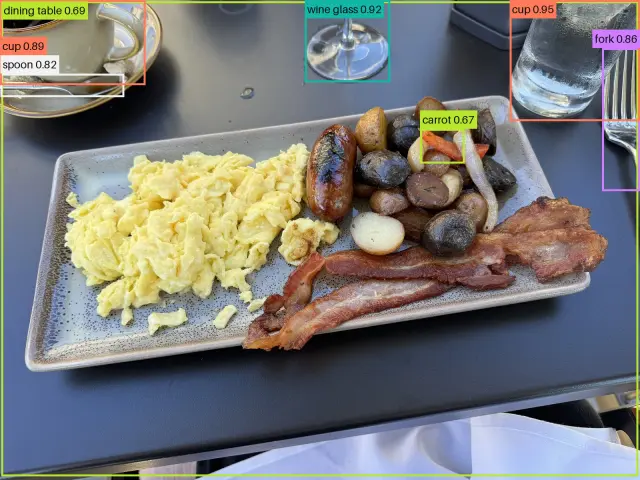
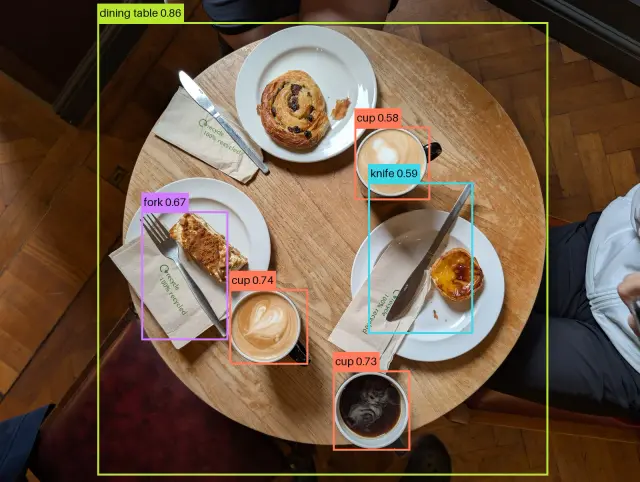 breakfast-top-downFails: misses all the pastries
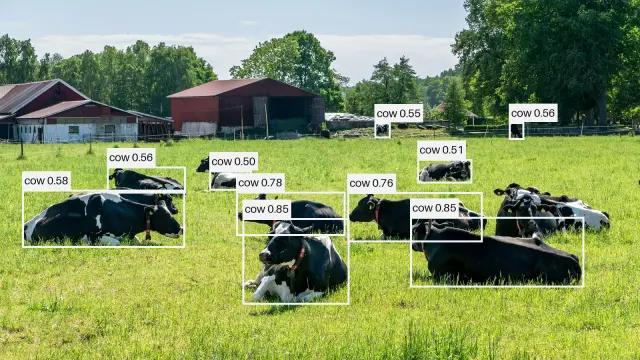 cows-pastureFails: misses the group of cows lying on the right
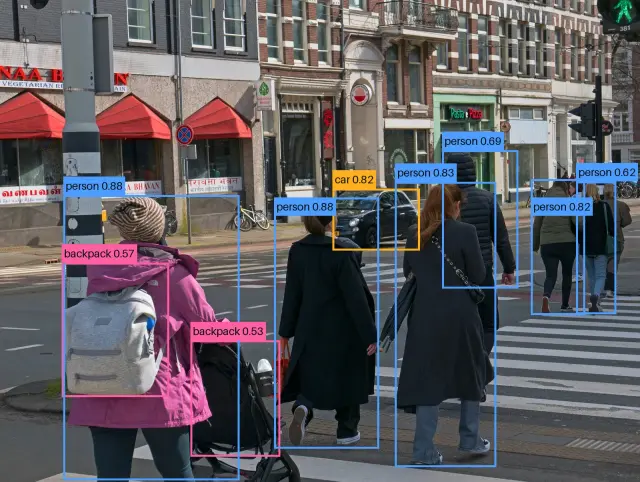 crossing-amsterdamFails: labels the stroller as a backpack
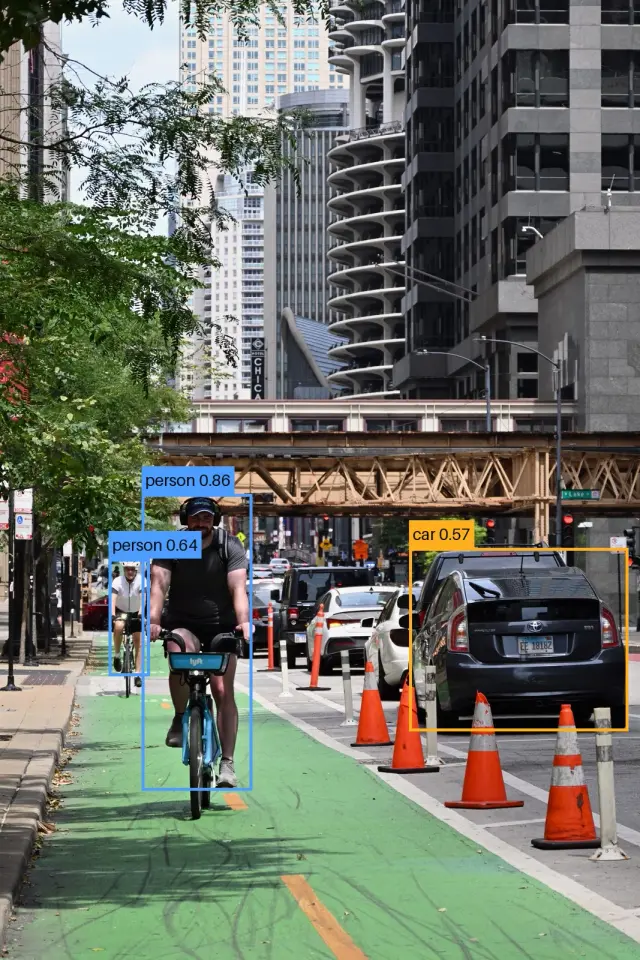 cyclist-bike-laneFails: misses the bicycle under the lead cyclist
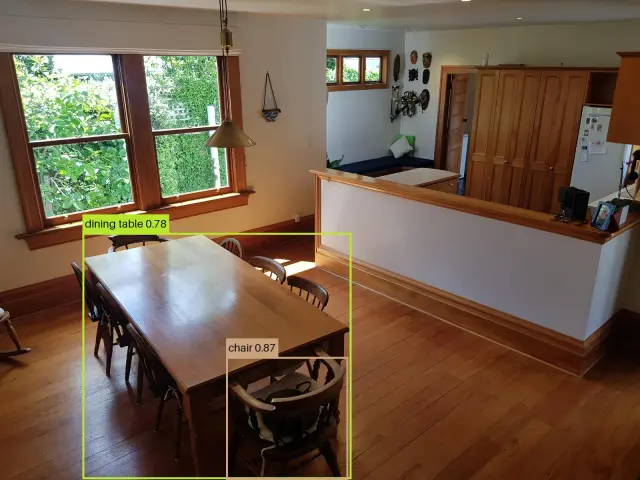 dining-room-kitchenFails: misses most of the chairs
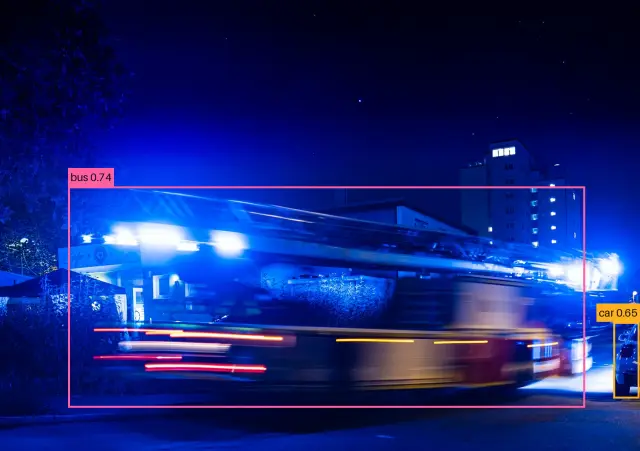 fire-engine-blurFails: labels the fire engine as a bus
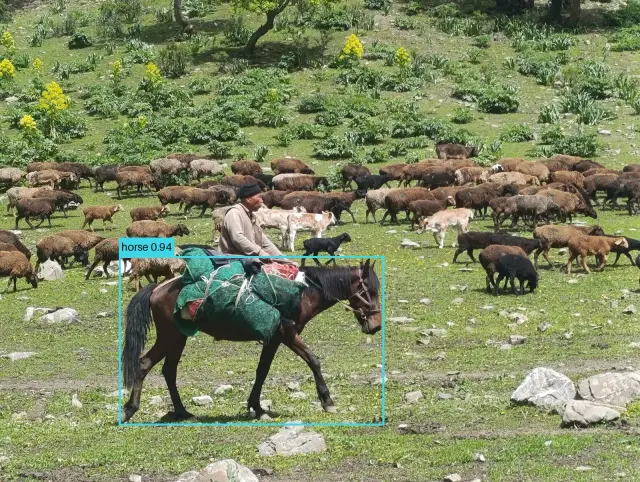 shepherd-sheepFails: misses the rider and the whole flock of sheep
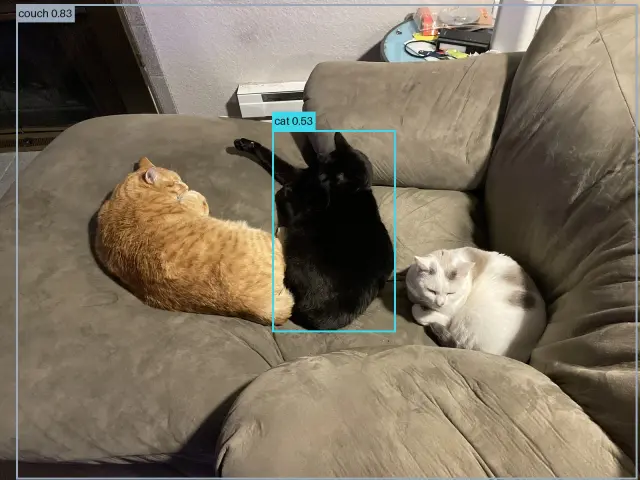 three-cats-couchFails: misses the orange cat and the white cat
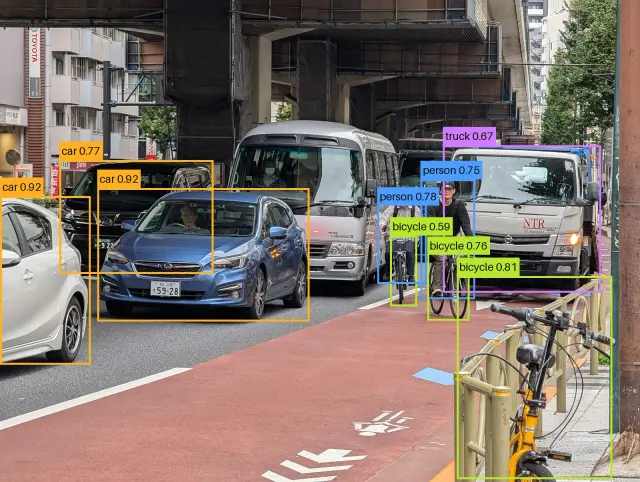 tokyo-street-cyclistsFails: misses the minibus
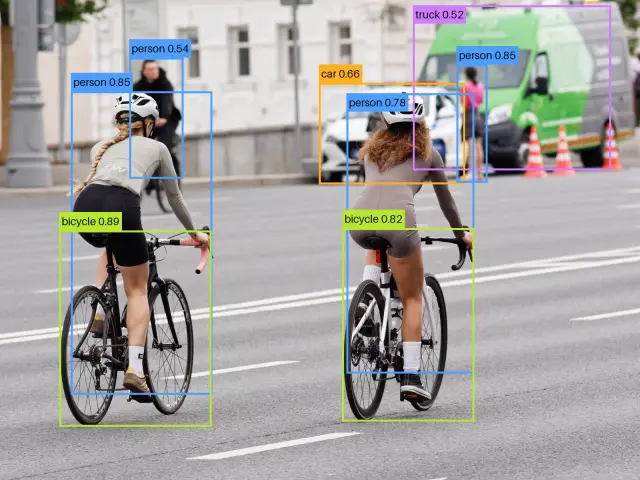 bike-parade-riders
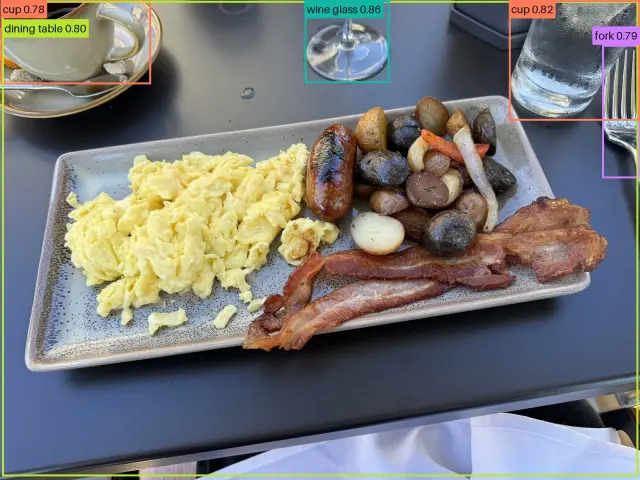 cafe-table-glasses
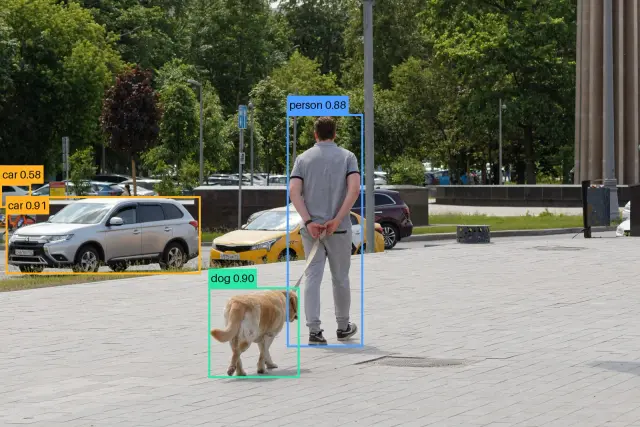 dog-walk-square
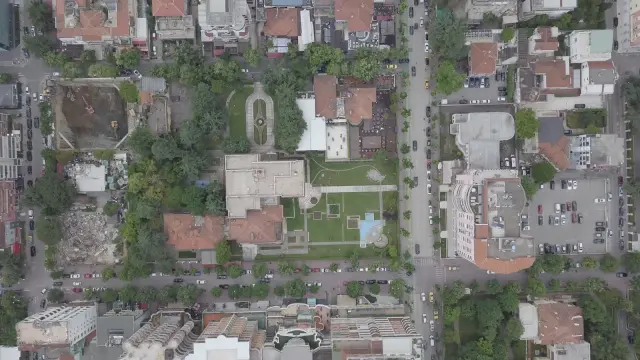 drone-city-block
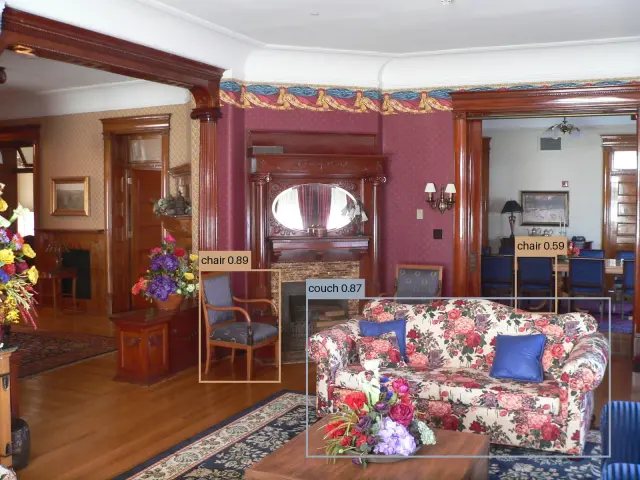 living-room-couch
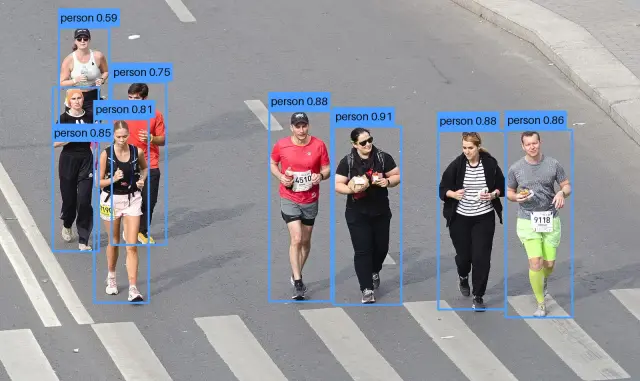 marathon-crossing
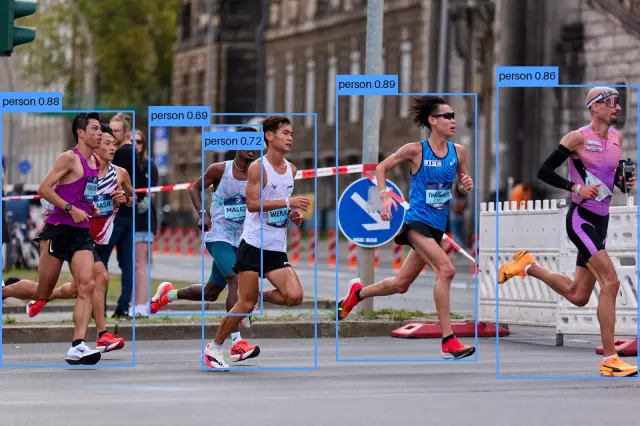 marathon-pack
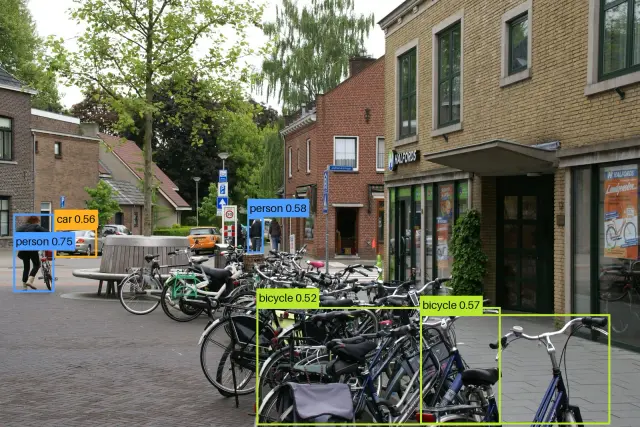 parked-bicycles
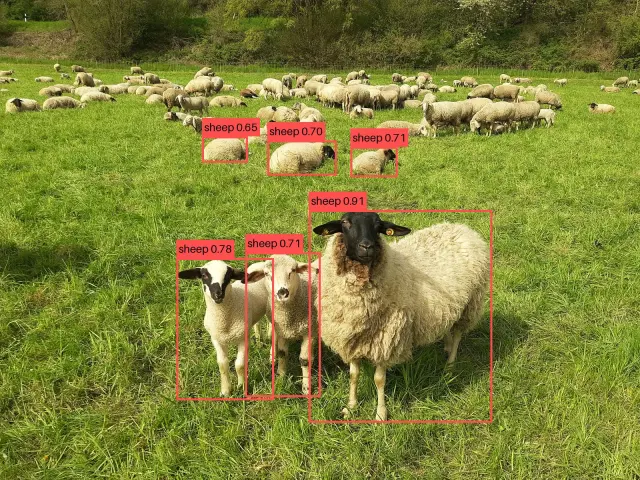 sheep-meadow-lambs
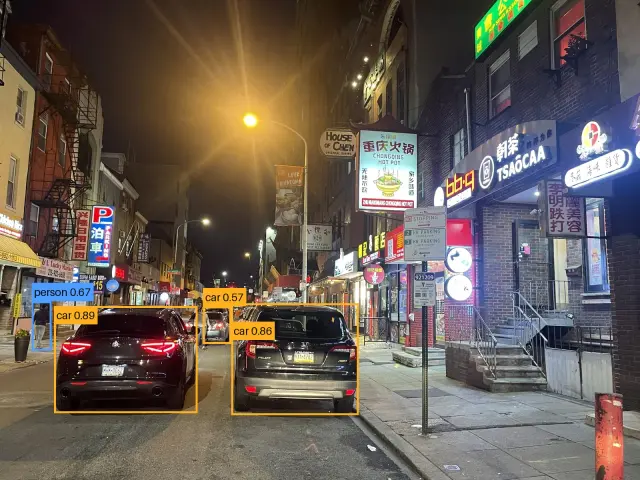 street-night-chinatown
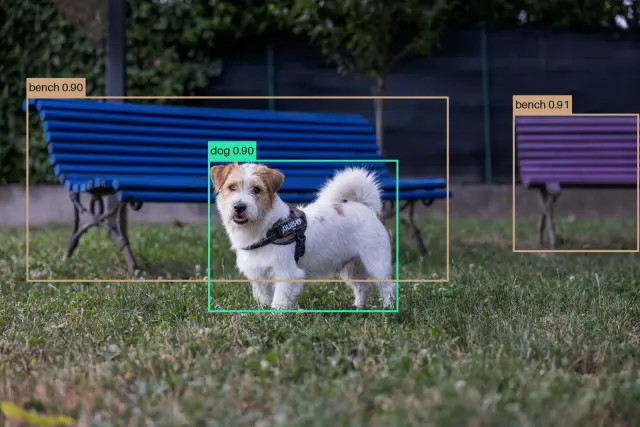 terrier-dog-park
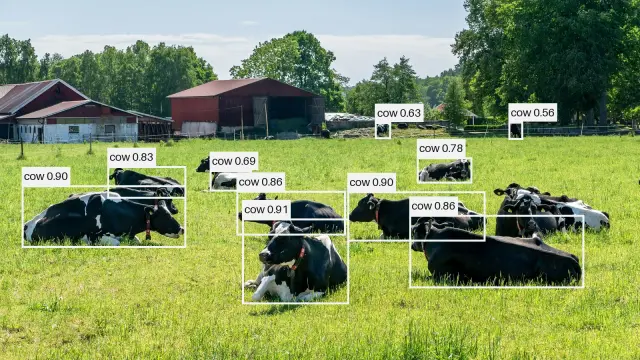 cows-pastureFails: misses the group of cows lying on the right
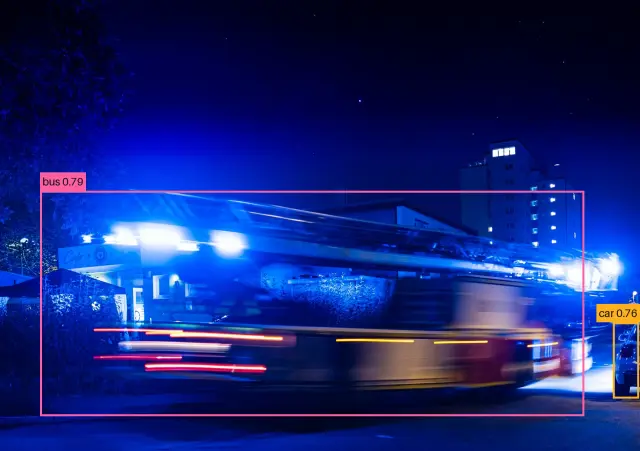 fire-engine-blurFails: labels the fire engine as a bus
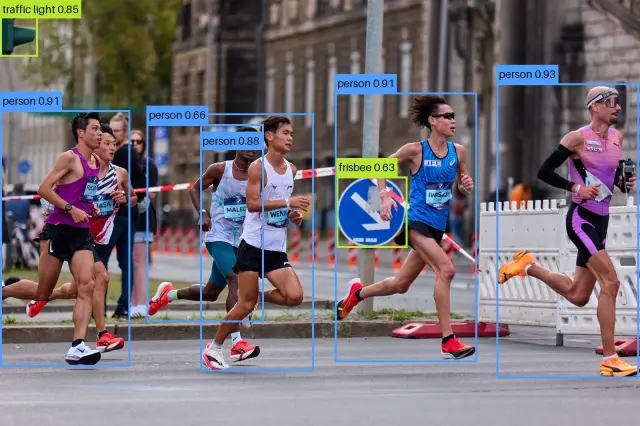 marathon-packFails: labels the blue keep-right sign as a frisbee
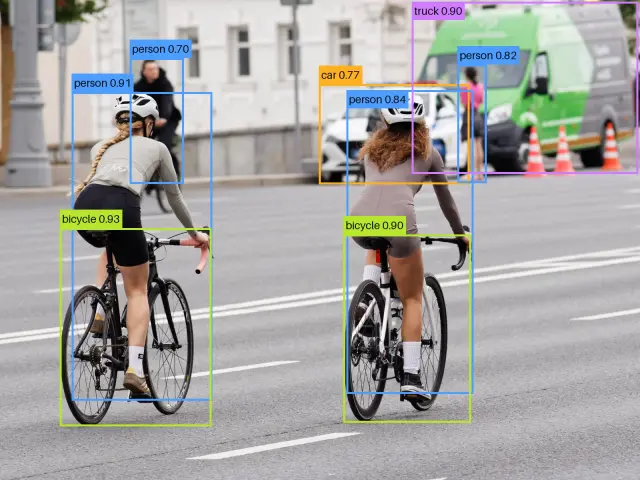 bike-parade-riders
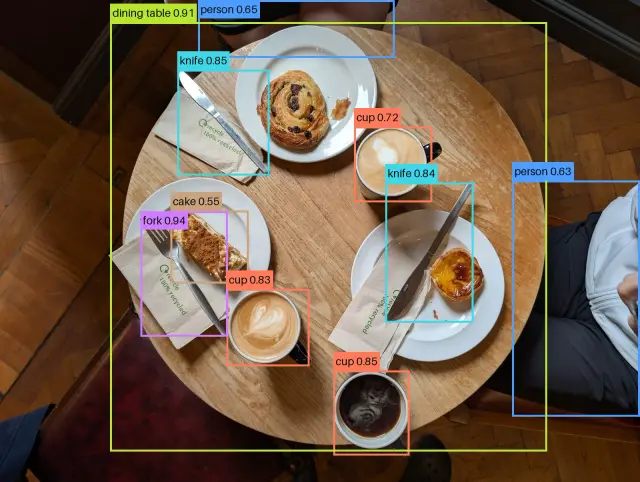 breakfast-top-down
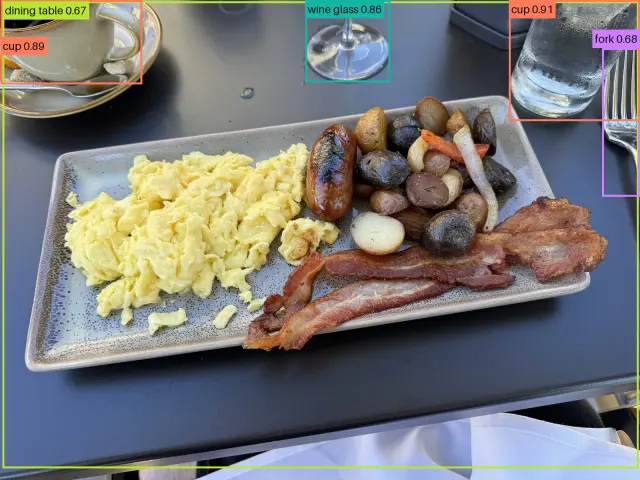 cafe-table-glasses
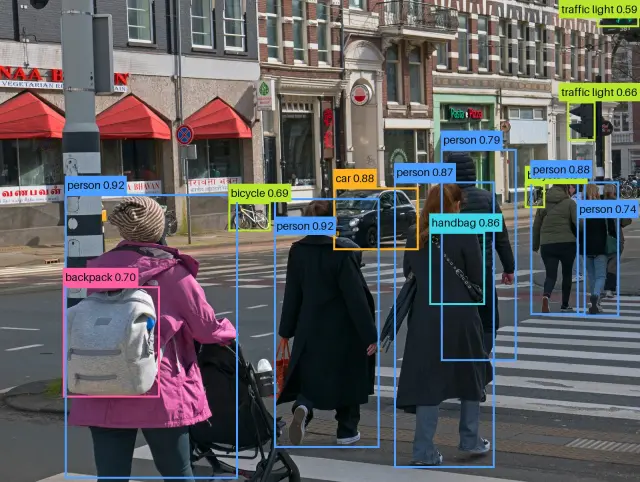 crossing-amsterdam
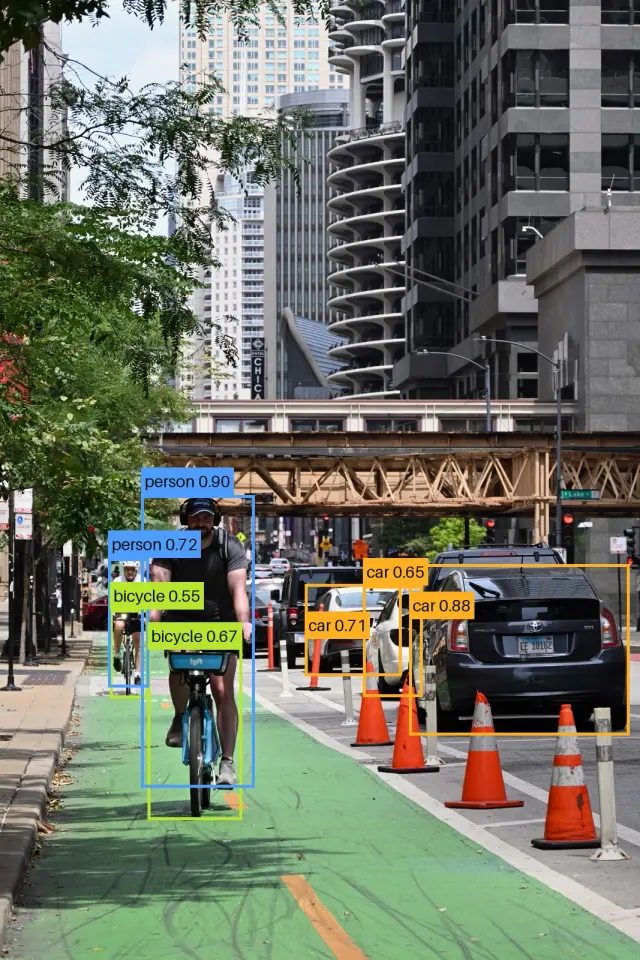 cyclist-bike-lane
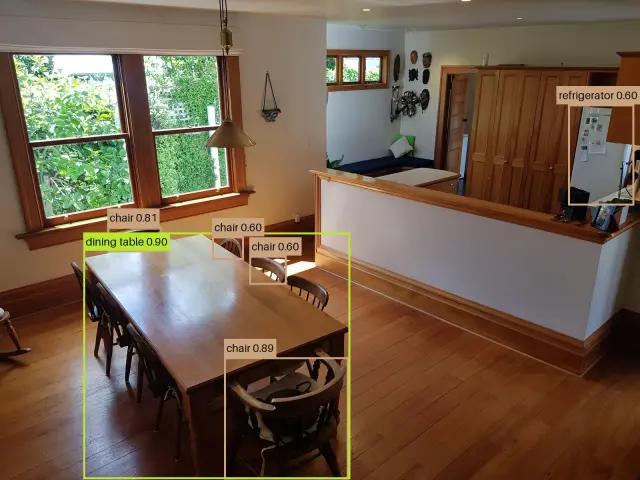 dining-room-kitchen
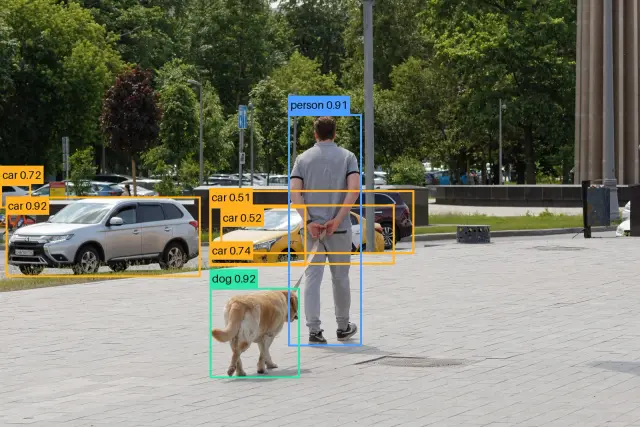 dog-walk-square
- drone-city-block
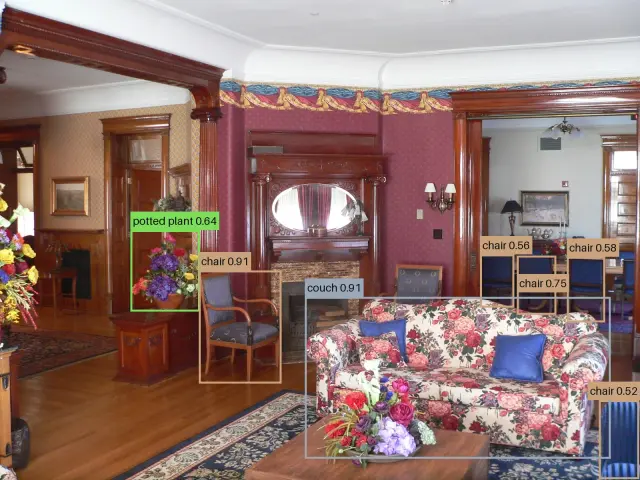 living-room-couch
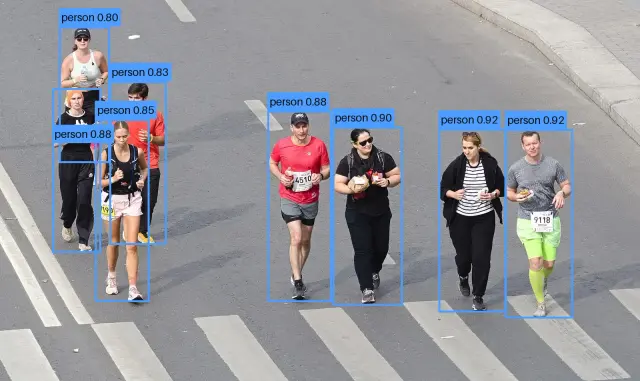 marathon-crossing
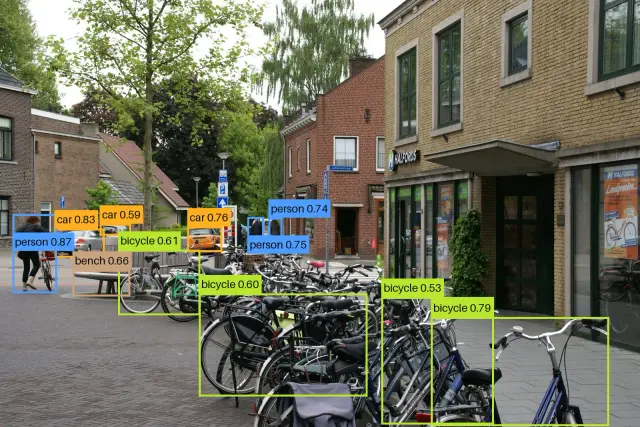 parked-bicycles
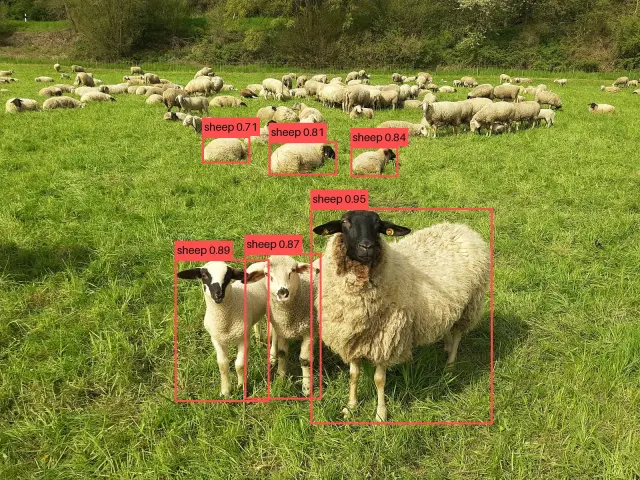 sheep-meadow-lambs
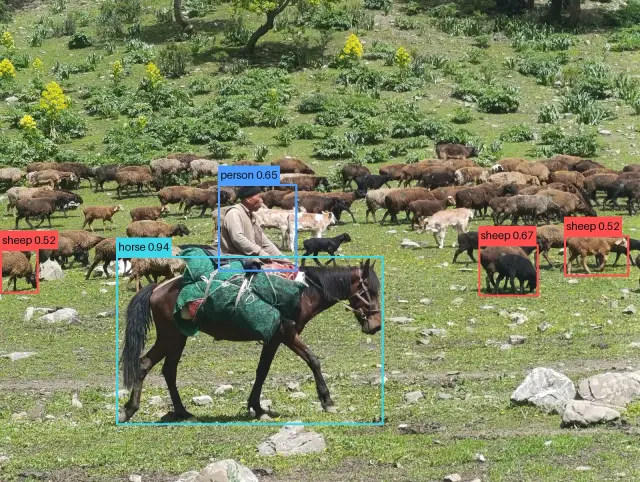 shepherd-sheep
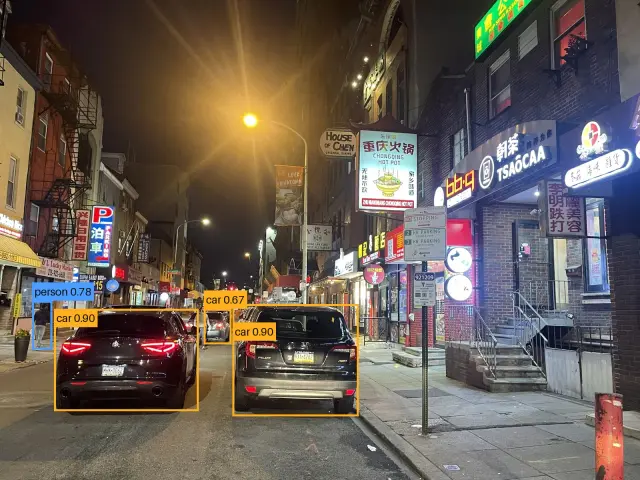 street-night-chinatown
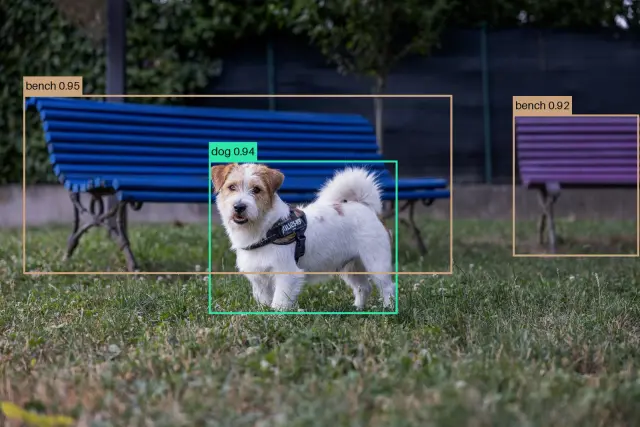 terrier-dog-park
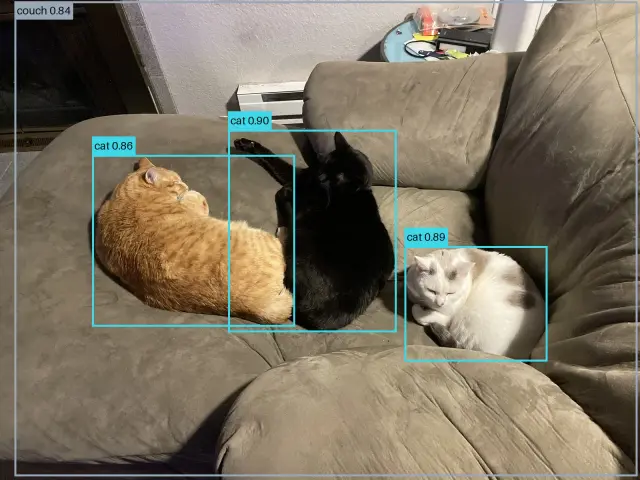 three-cats-couch
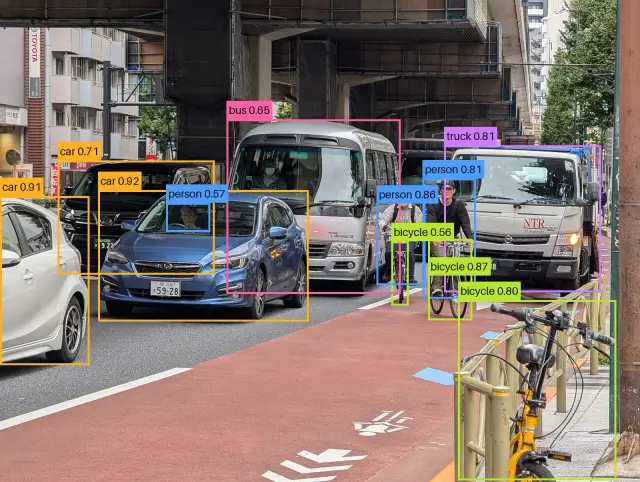 tokyo-street-cyclists
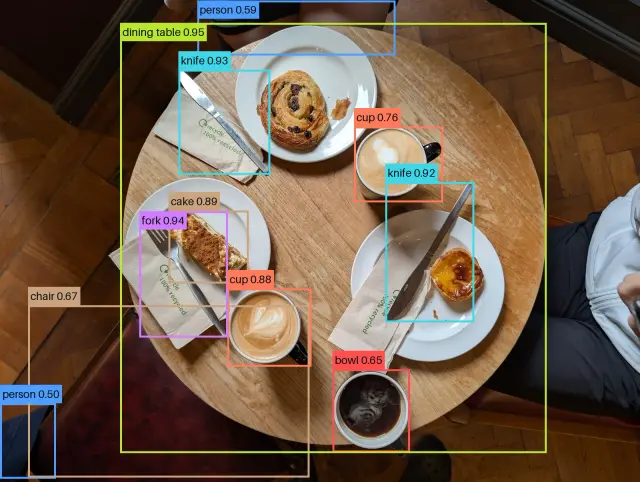 breakfast-top-downFails: labels the black coffee cup as a bowl
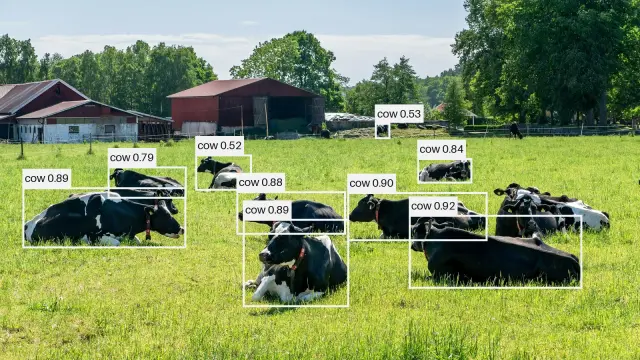 cows-pastureFails: misses the group of cows lying on the right
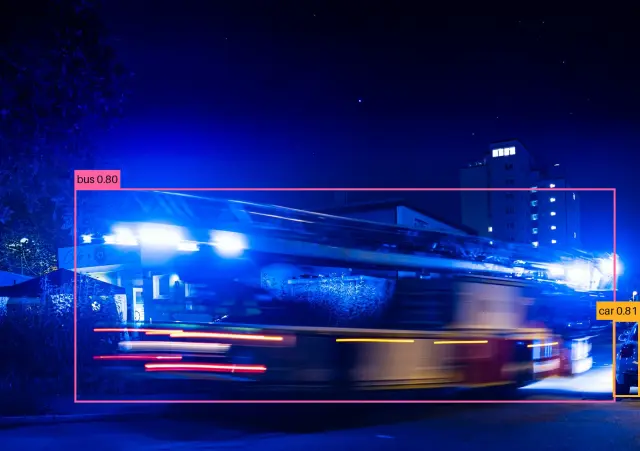 fire-engine-blurFails: labels the fire engine as a bus
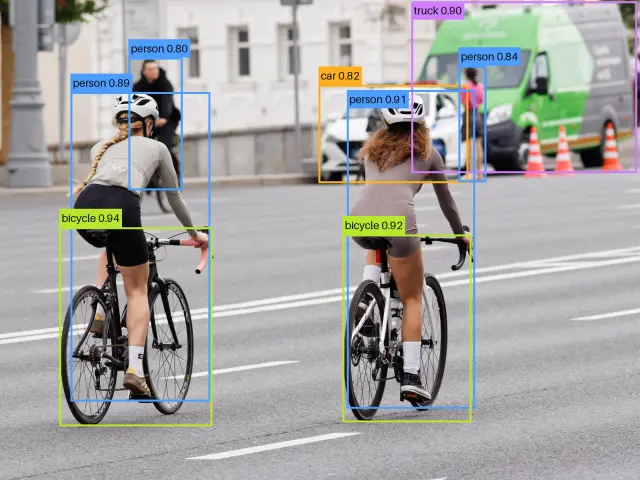 bike-parade-riders
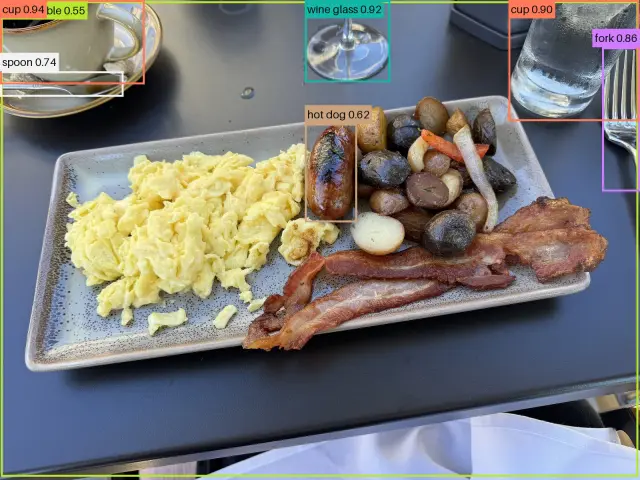 cafe-table-glasses
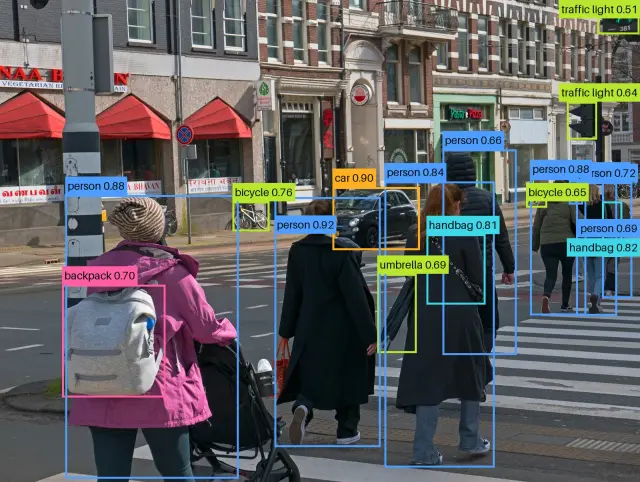 crossing-amsterdam
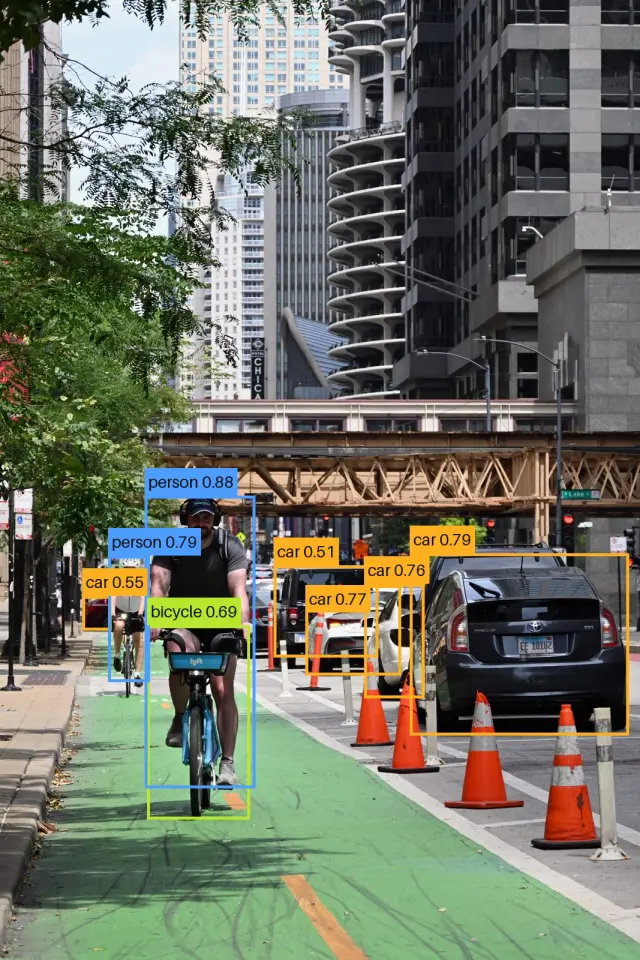 cyclist-bike-lane
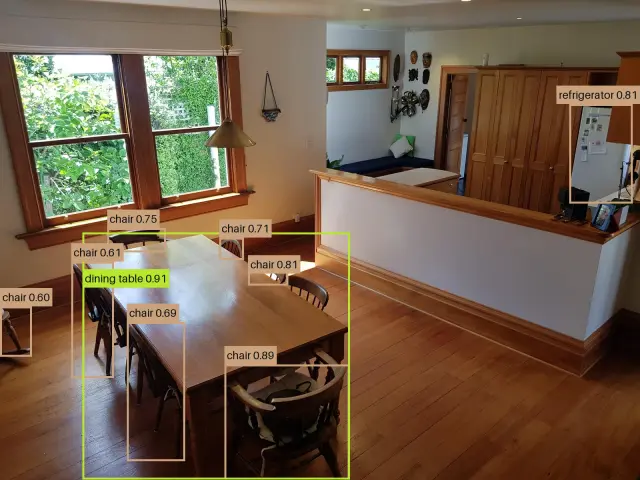 dining-room-kitchen
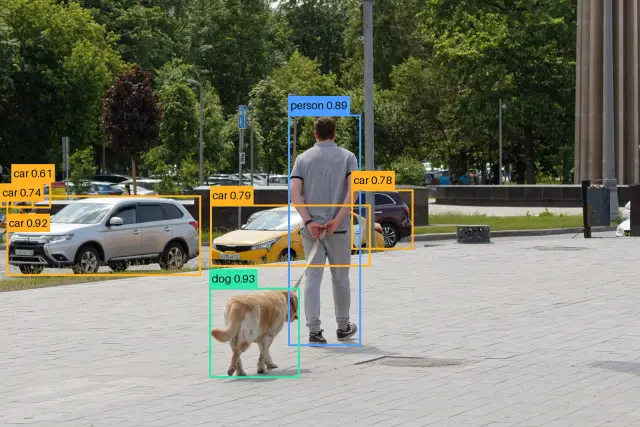 dog-walk-square
- drone-city-block
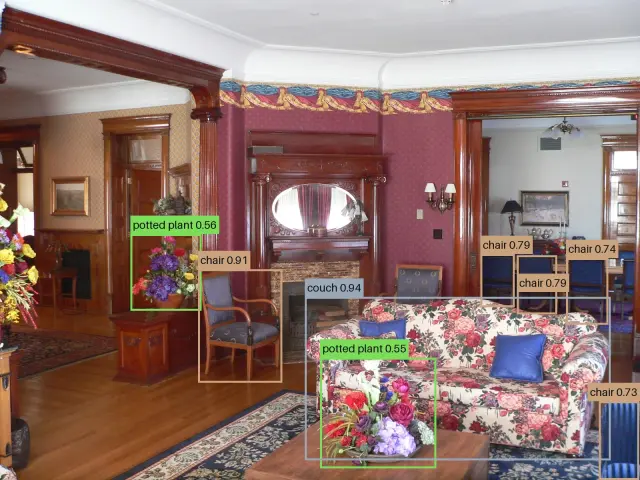 living-room-couch
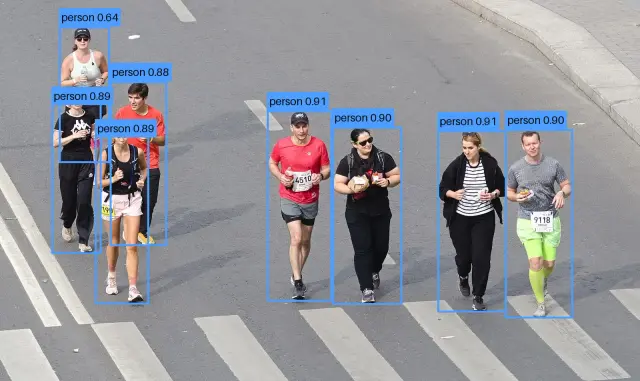 marathon-crossing
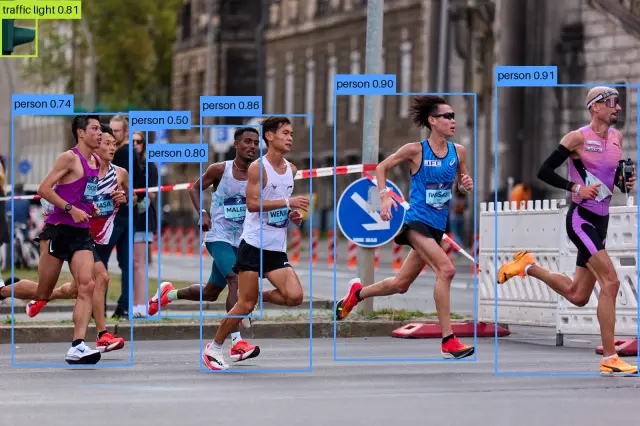 marathon-pack
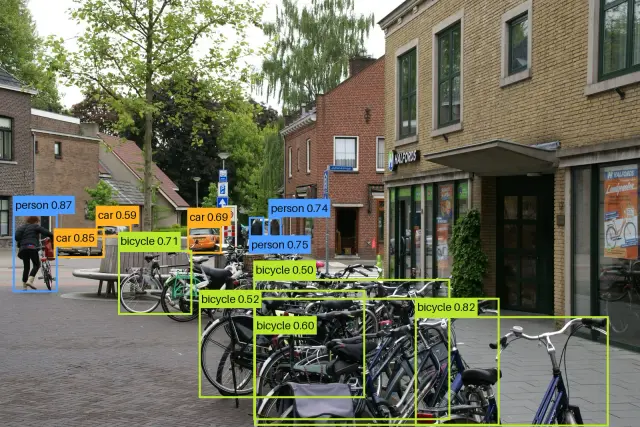 parked-bicycles
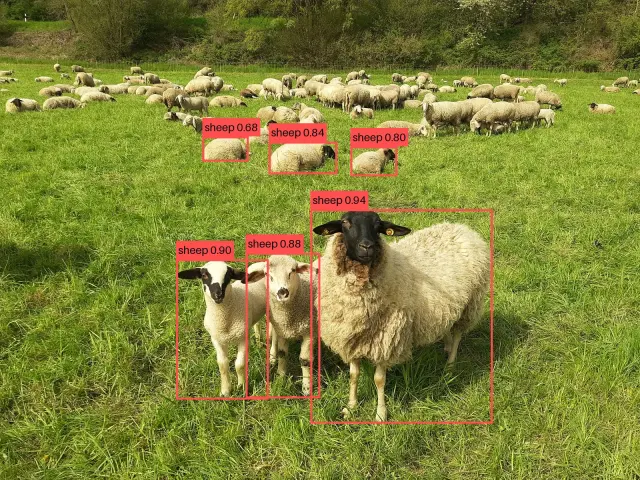 sheep-meadow-lambs
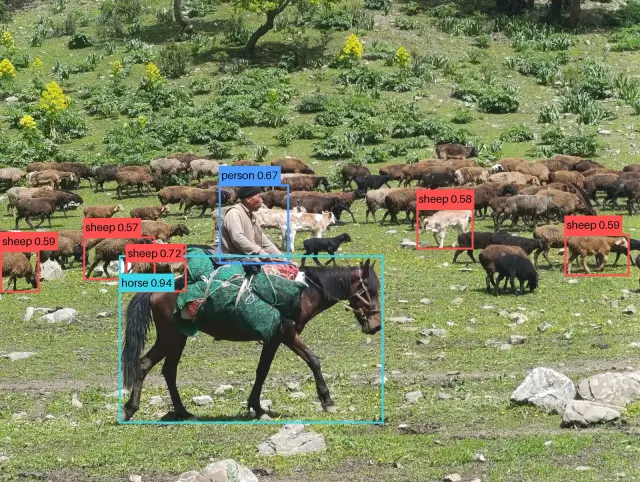 shepherd-sheep
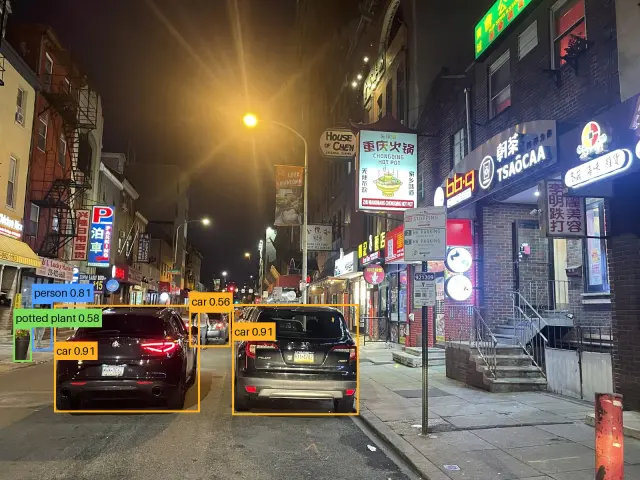 street-night-chinatown
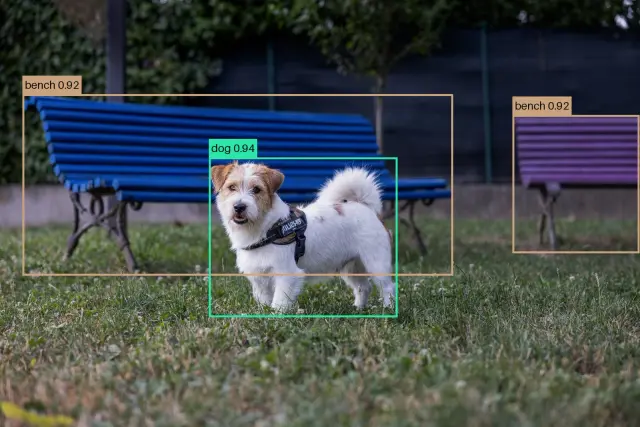 terrier-dog-park
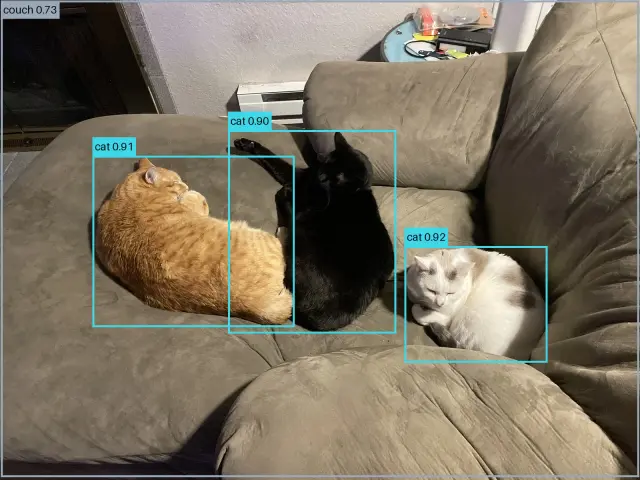 three-cats-couch
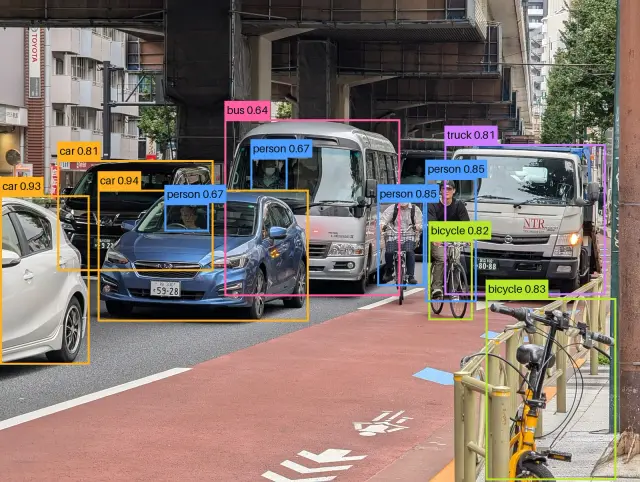 tokyo-street-cyclists
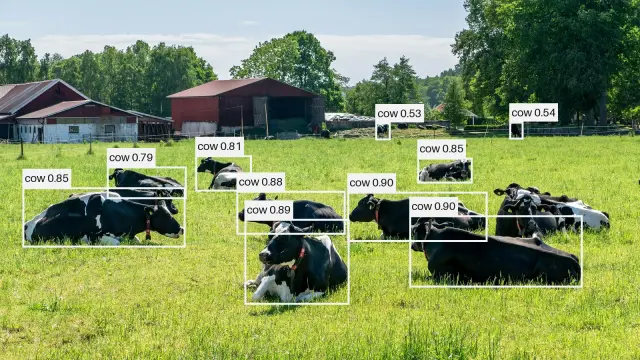 cows-pastureFails: misses the group of cows lying on the right
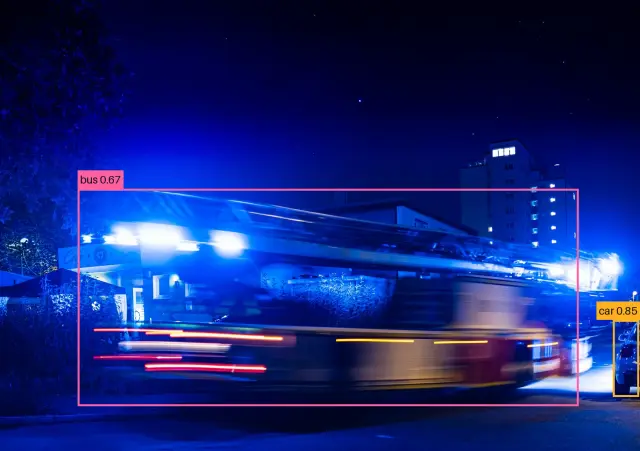 fire-engine-blurFails: labels the fire engine as a bus
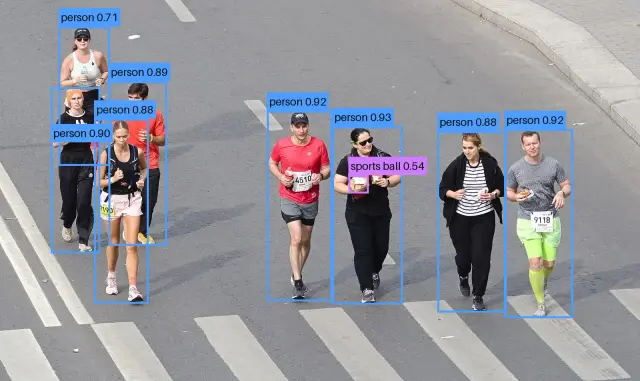 marathon-crossingFails: labels a paper bag in a runner's hands as a sports ball
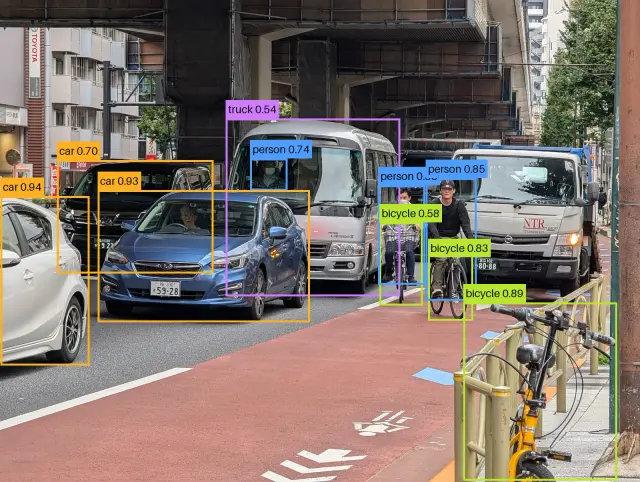 tokyo-street-cyclistsFails: labels the minibus as a truck and misses the white truck on the right
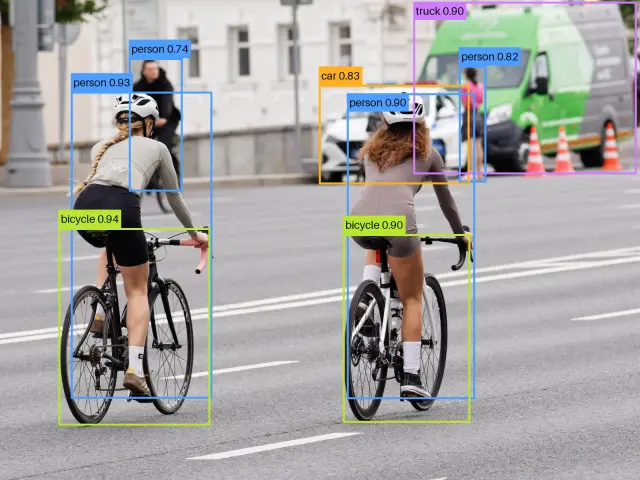 bike-parade-riders
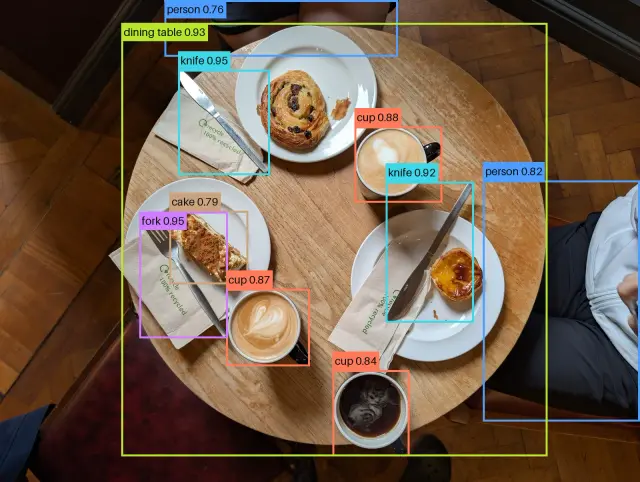 breakfast-top-down
 cafe-table-glasses
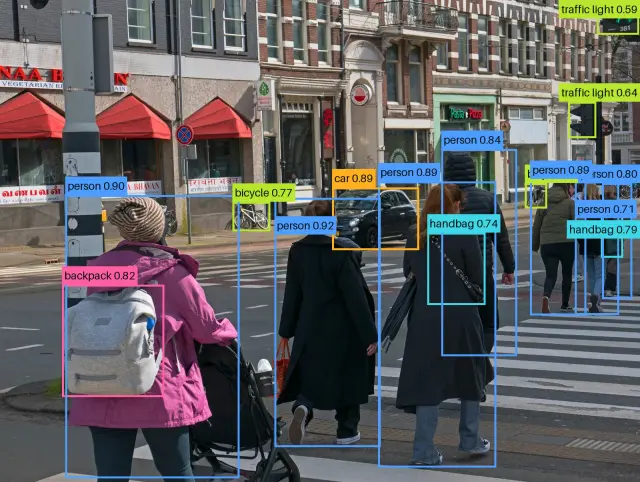 crossing-amsterdam
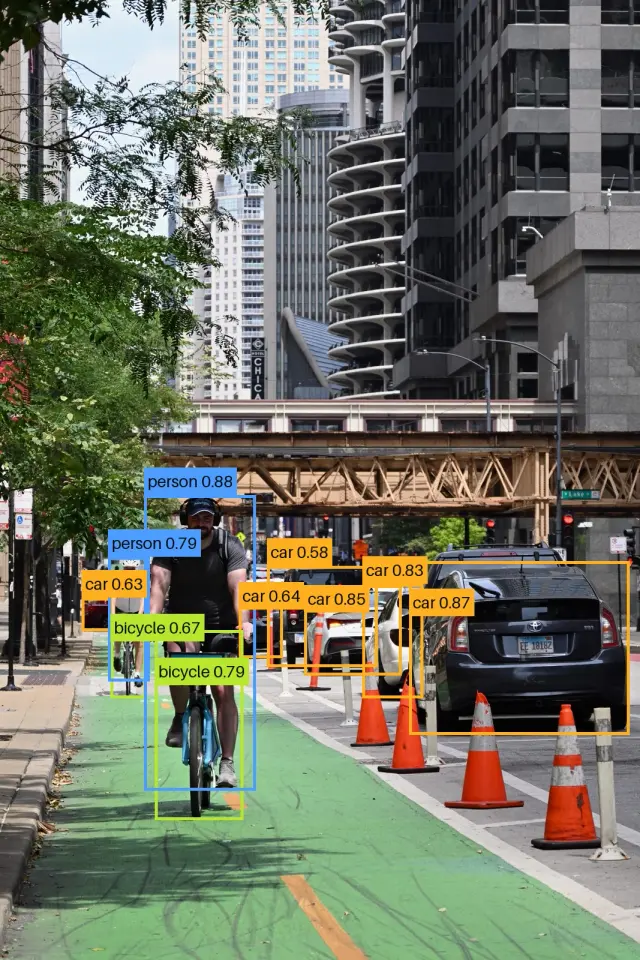 cyclist-bike-lane
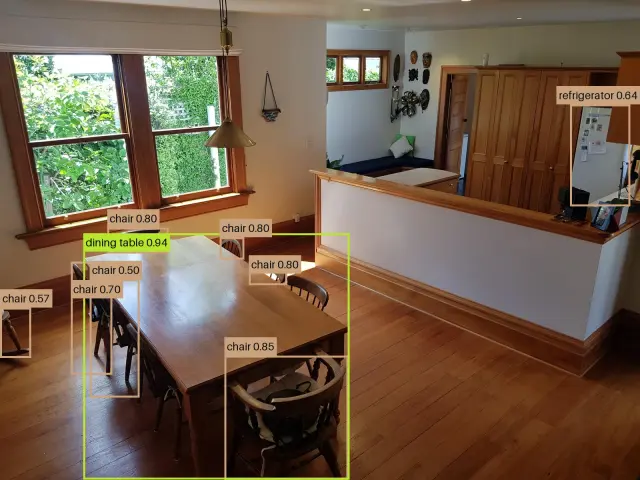 dining-room-kitchen
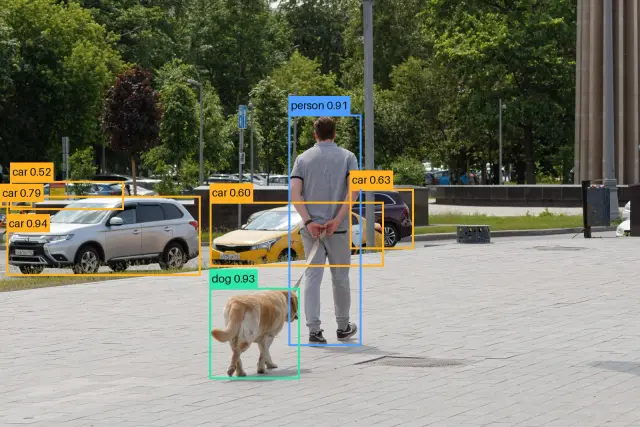 dog-walk-square
- drone-city-block
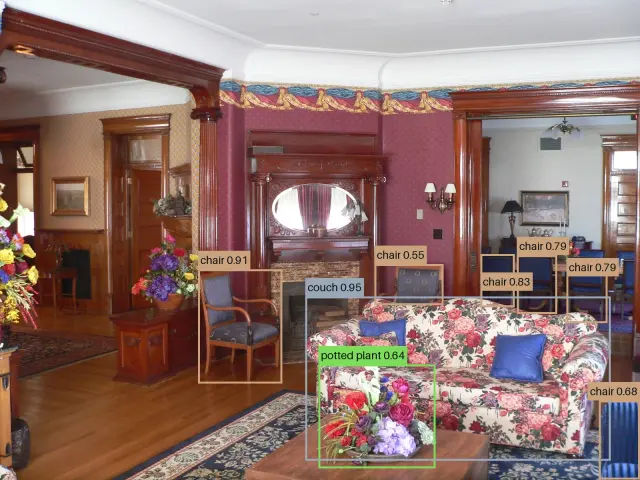 living-room-couch
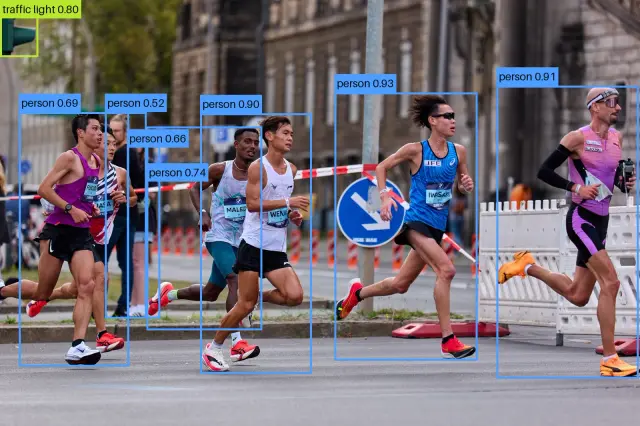 marathon-pack
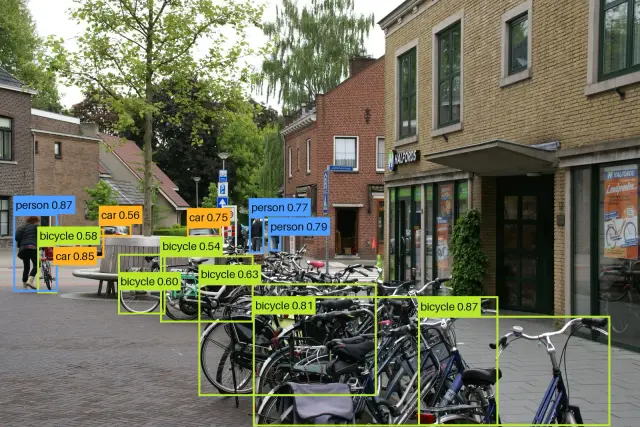 parked-bicycles
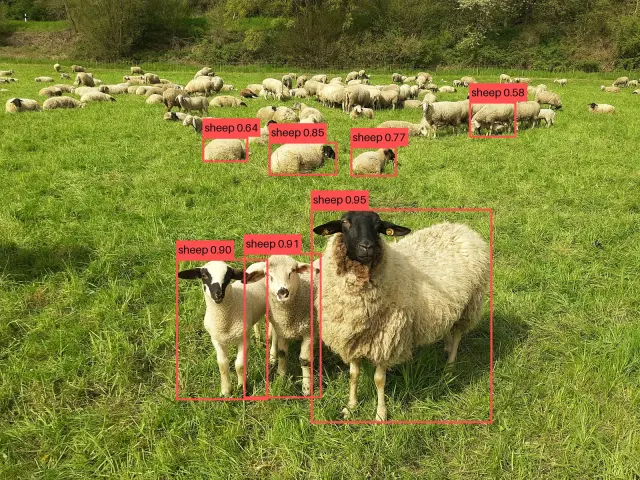 sheep-meadow-lambs
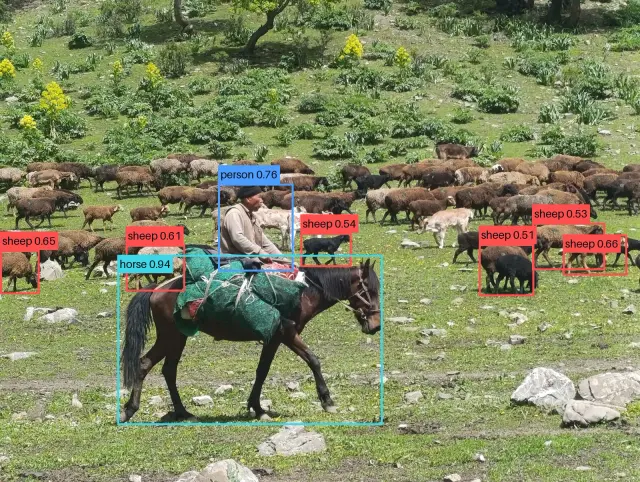 shepherd-sheep
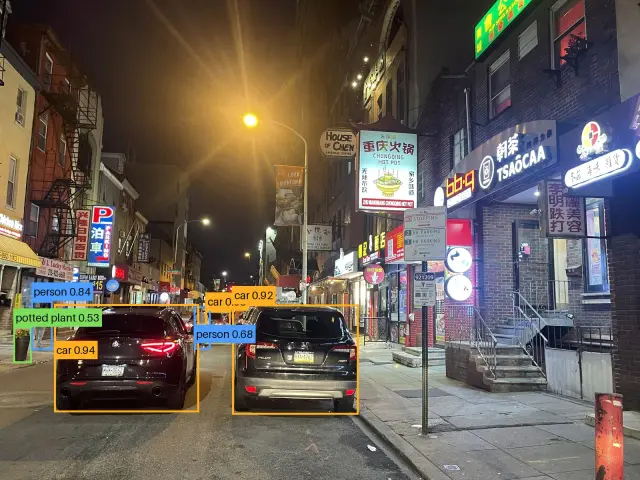 street-night-chinatown
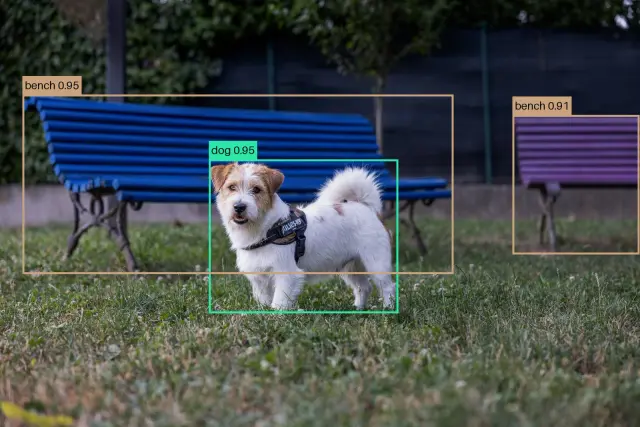 terrier-dog-park
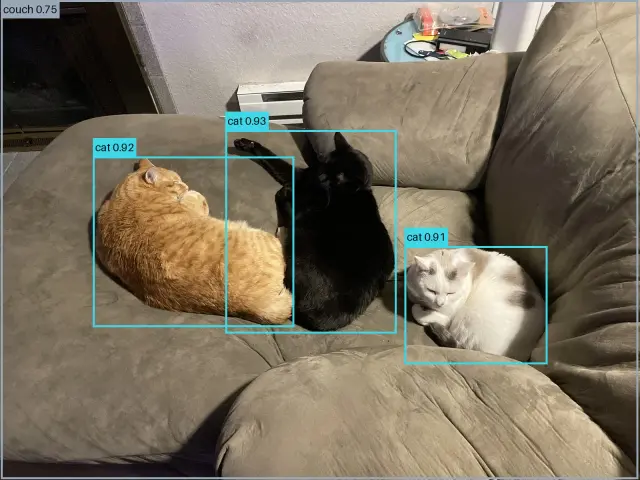 three-cats-couch
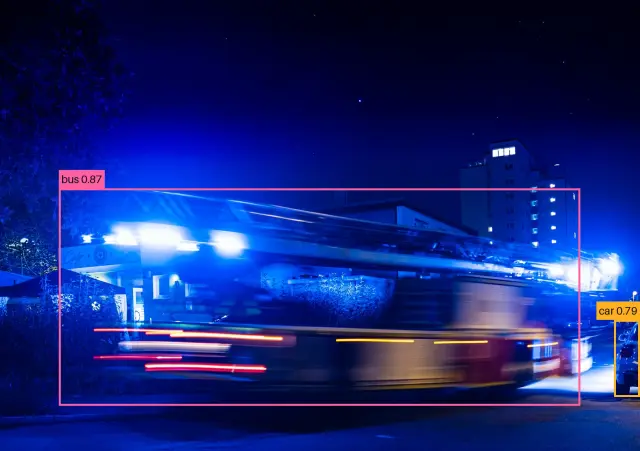 fire-engine-blurFails: labels the fire engine as a bus
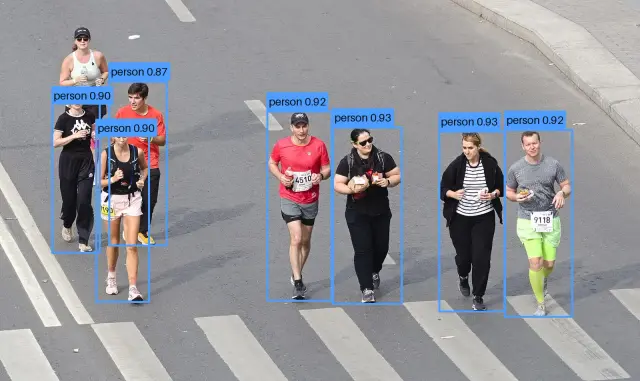 marathon-crossingFails: misses the runner in the white tank top
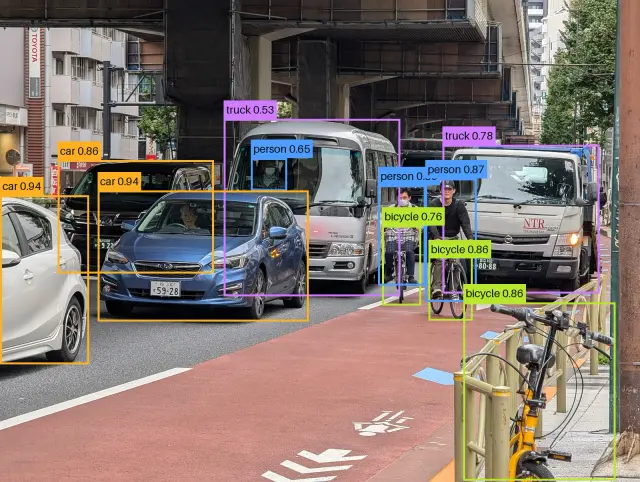 tokyo-street-cyclistsFails: labels the minibus as a truck
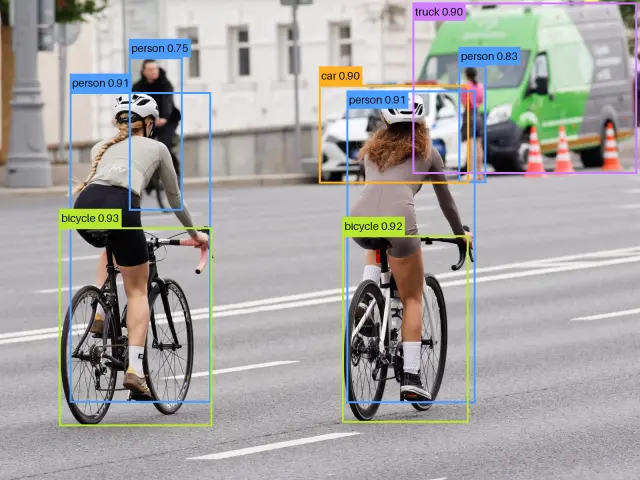 bike-parade-riders
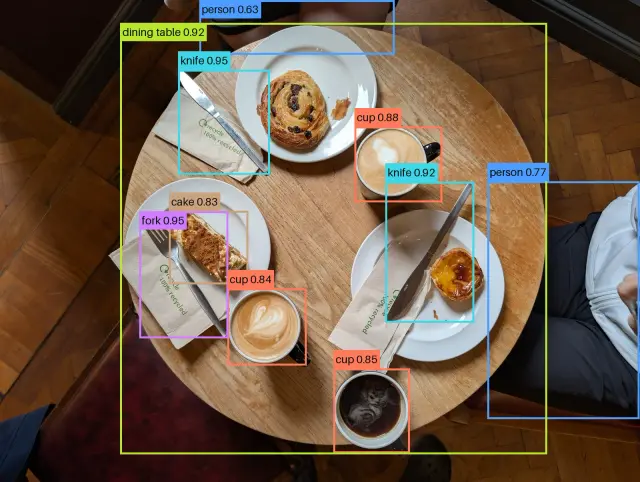 breakfast-top-down
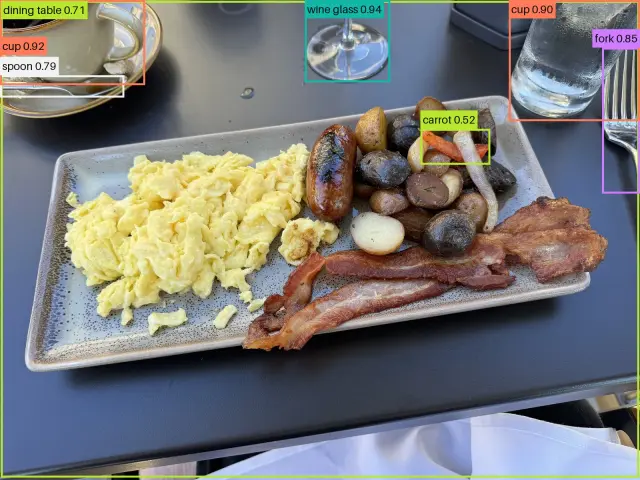 cafe-table-glasses
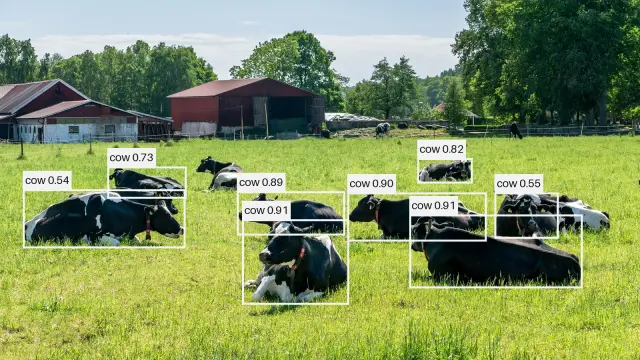 cows-pasture
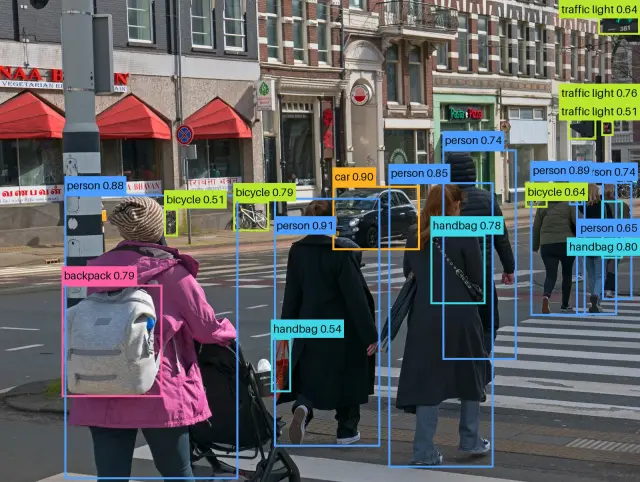 crossing-amsterdam
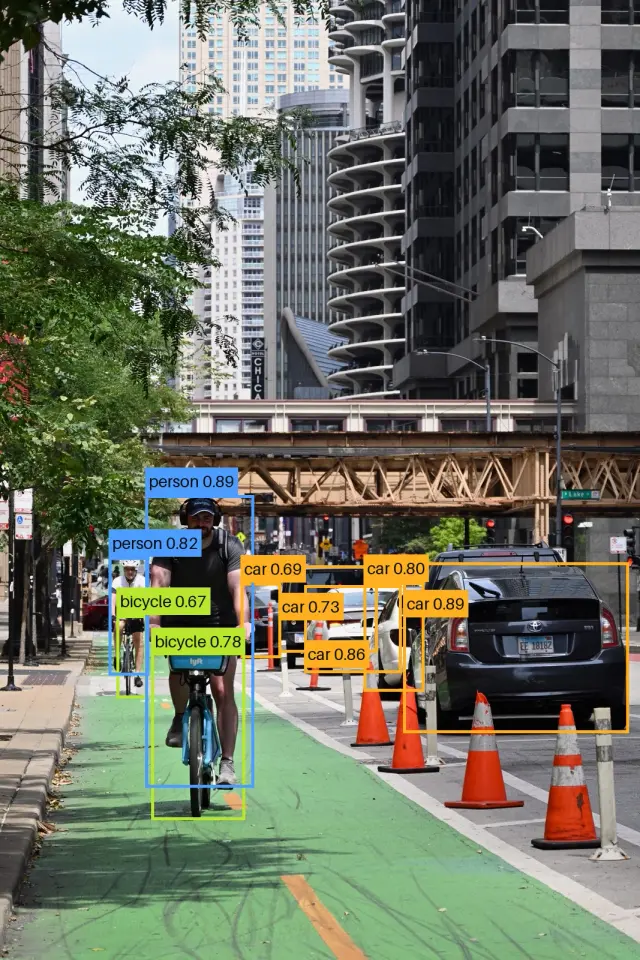 cyclist-bike-lane
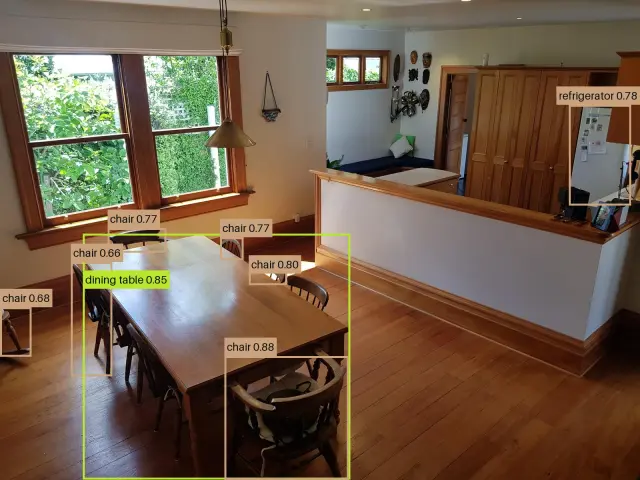 dining-room-kitchen
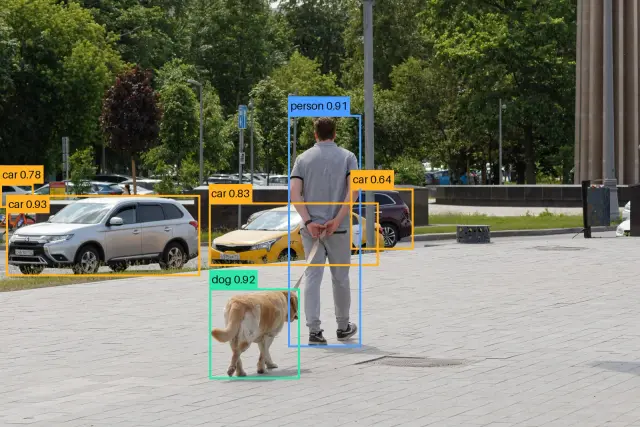 dog-walk-square
- drone-city-block
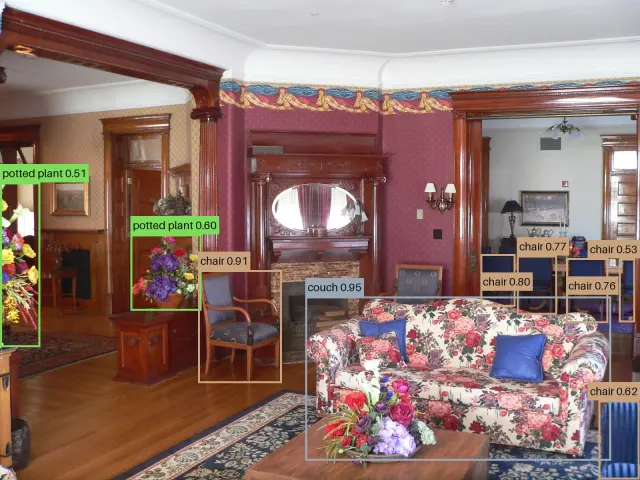 living-room-couch
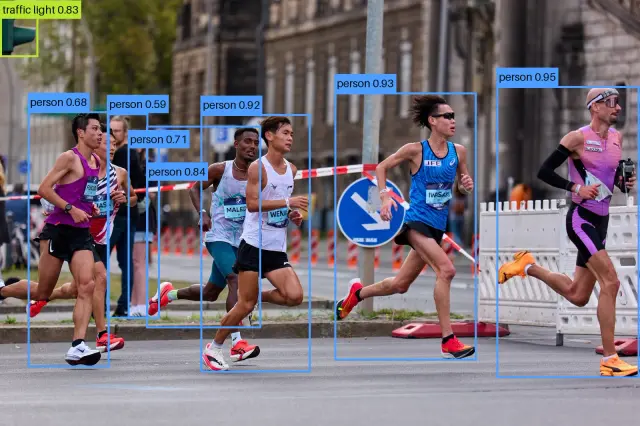 marathon-pack
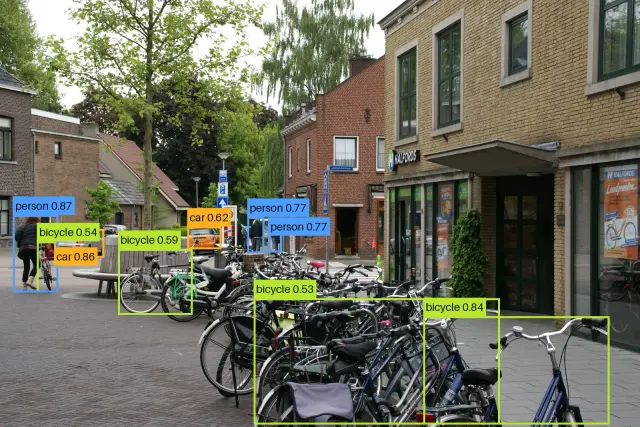 parked-bicycles
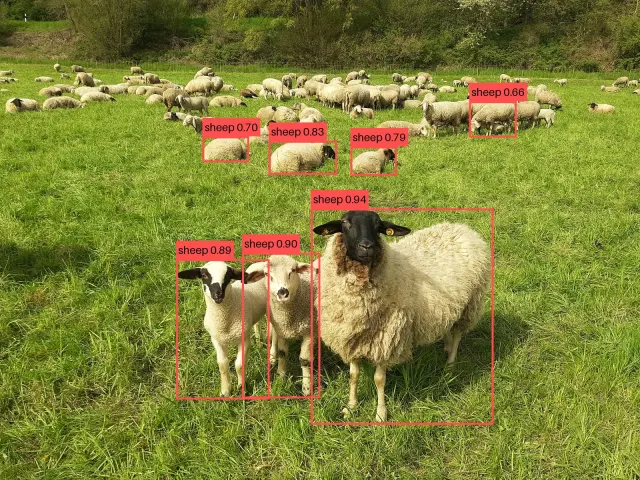 sheep-meadow-lambs
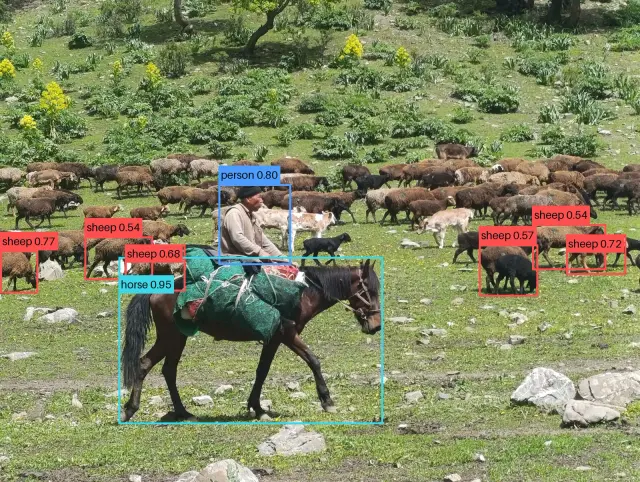 shepherd-sheep
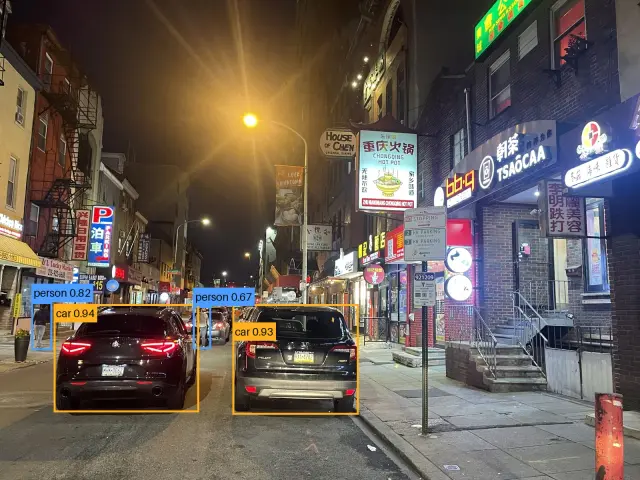 street-night-chinatown
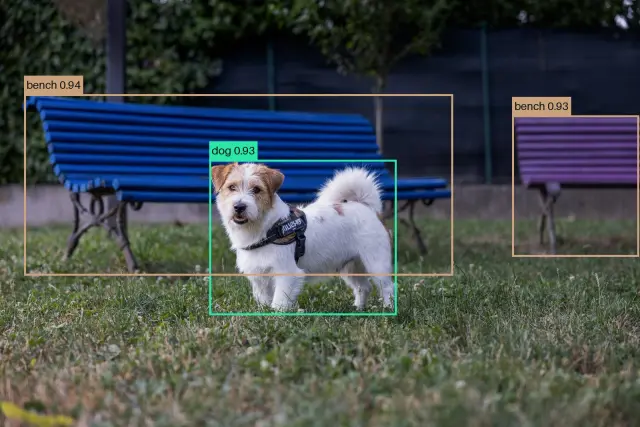 terrier-dog-park
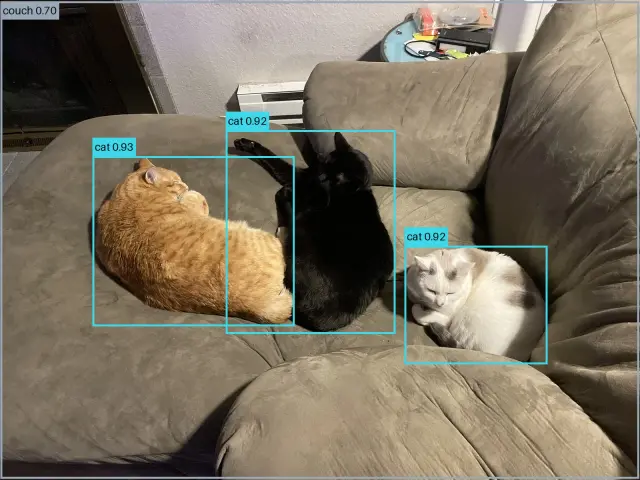 three-cats-couch
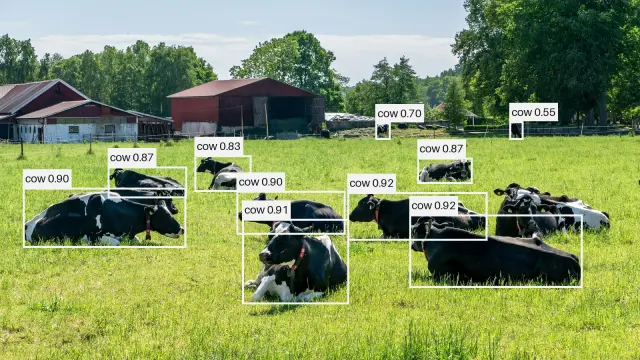 cows-pastureFails: misses the group of cows lying on the right
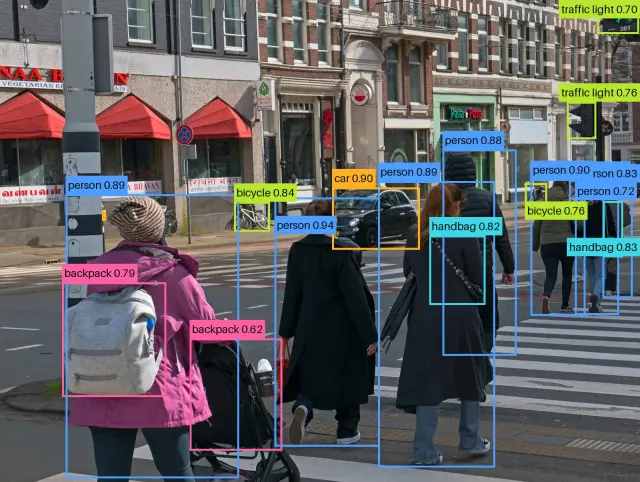 crossing-amsterdamFails: labels the stroller as a backpack
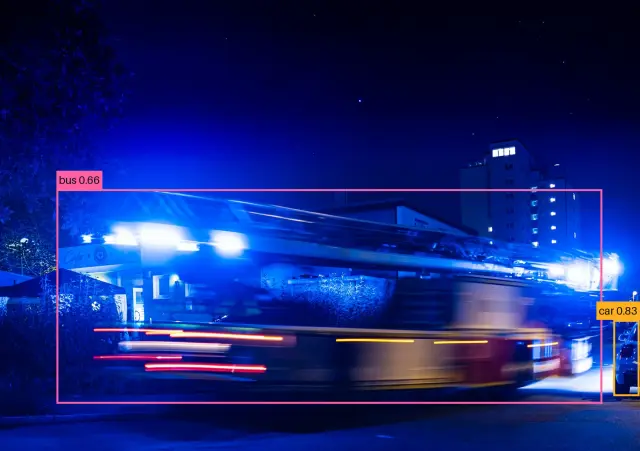 fire-engine-blurFails: labels the fire engine as a bus
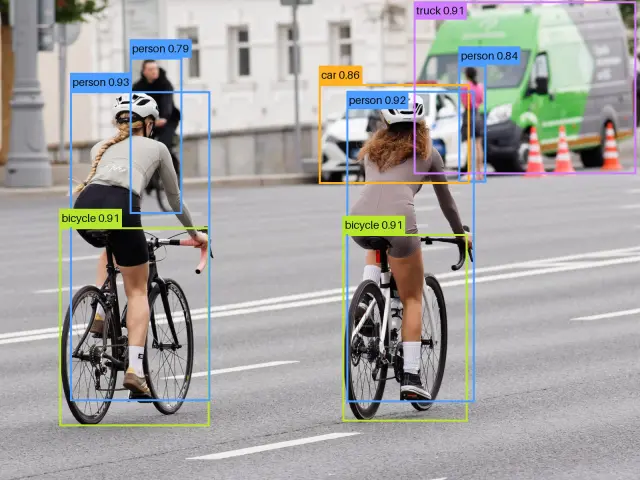 bike-parade-riders
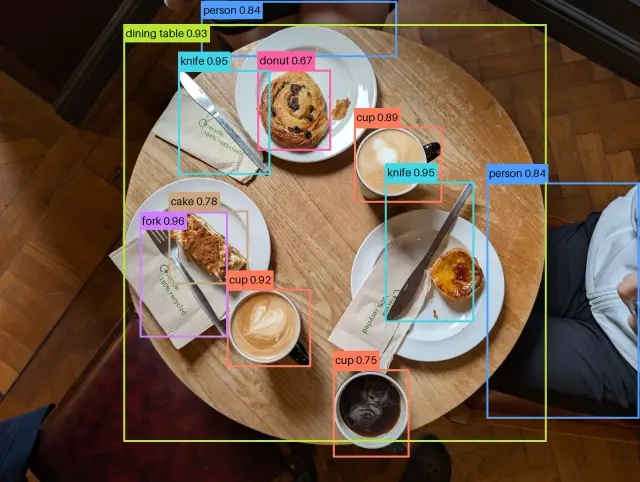 breakfast-top-down
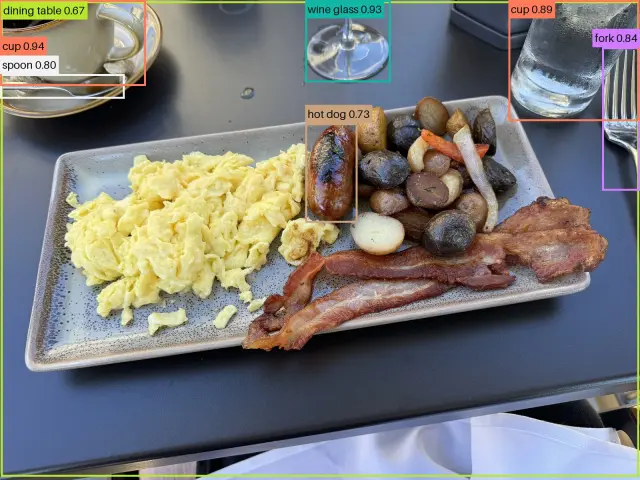 cafe-table-glasses
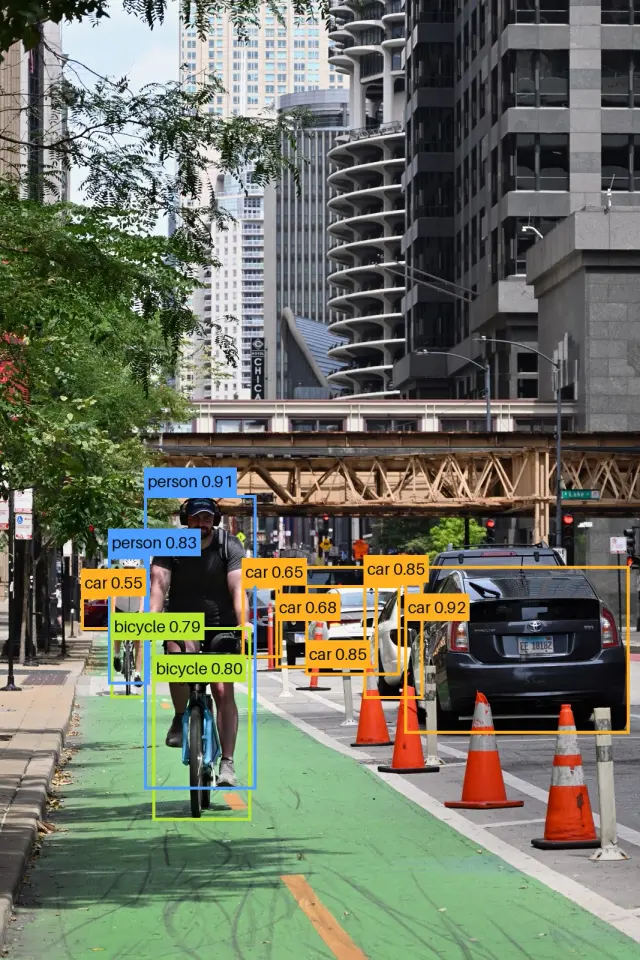 cyclist-bike-lane
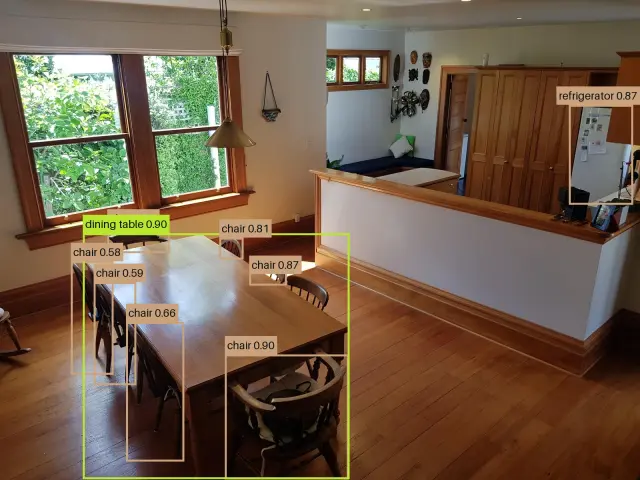 dining-room-kitchen
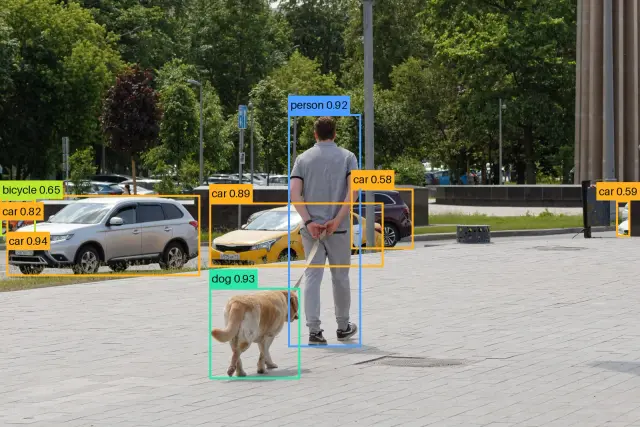 dog-walk-square
- drone-city-block
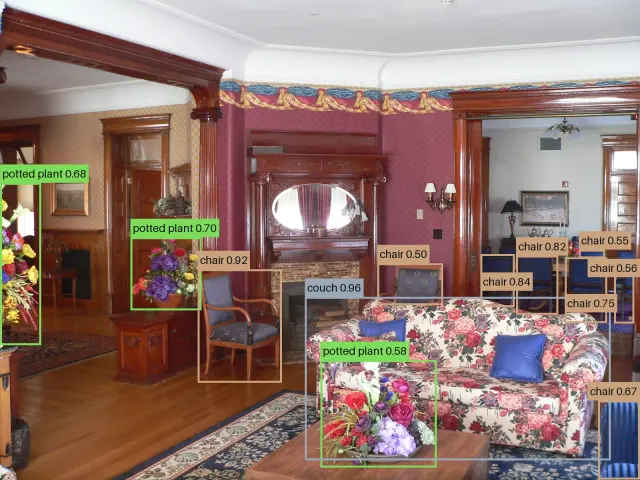 living-room-couch
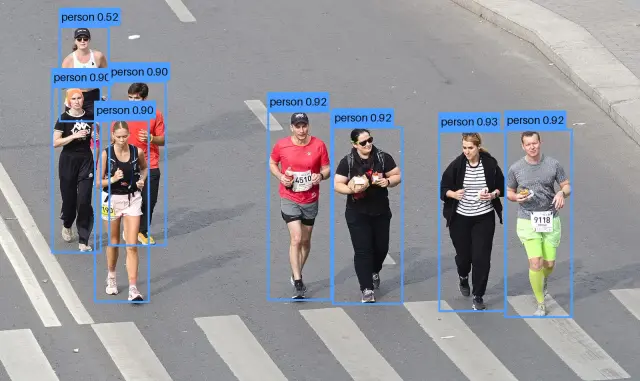 marathon-crossing
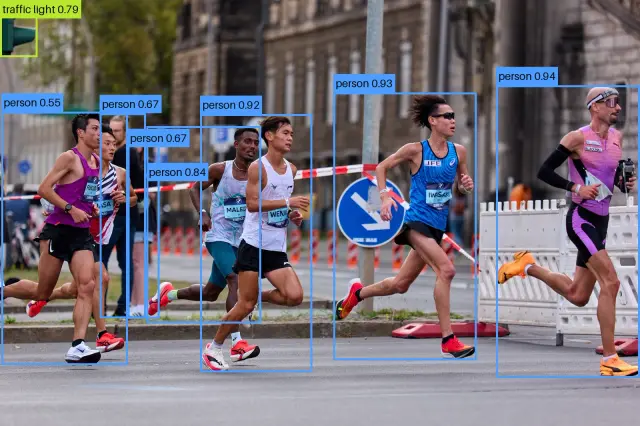 marathon-pack
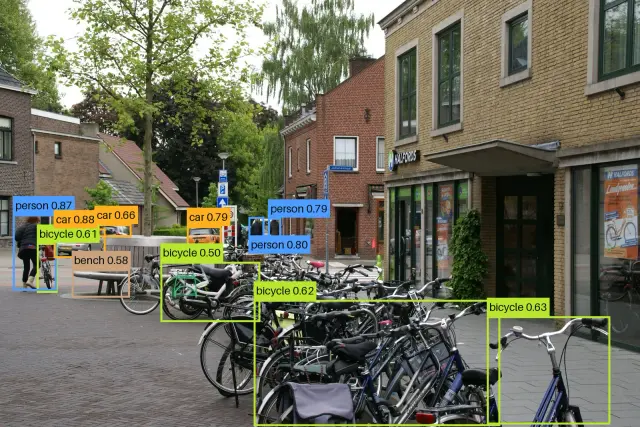 parked-bicycles
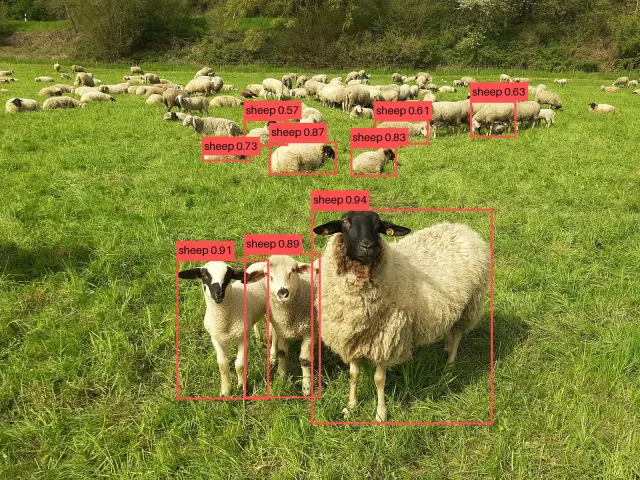 sheep-meadow-lambs
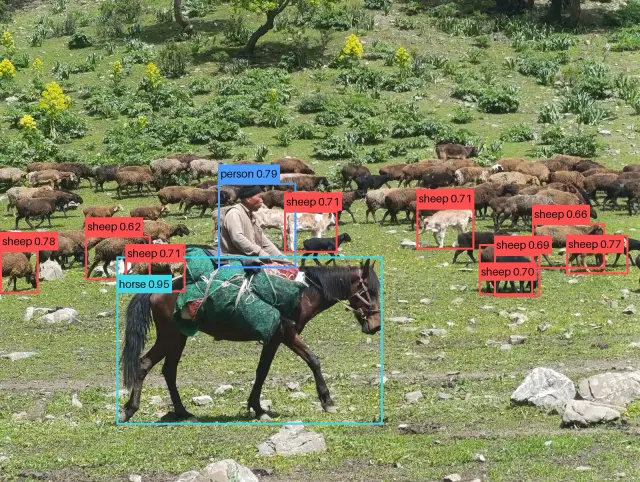 shepherd-sheep
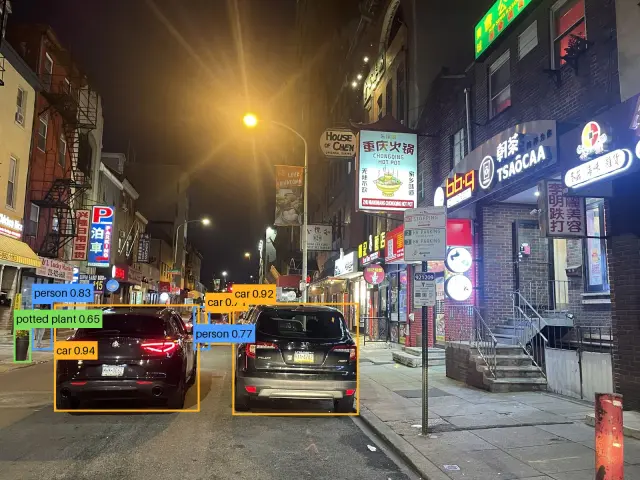 street-night-chinatown
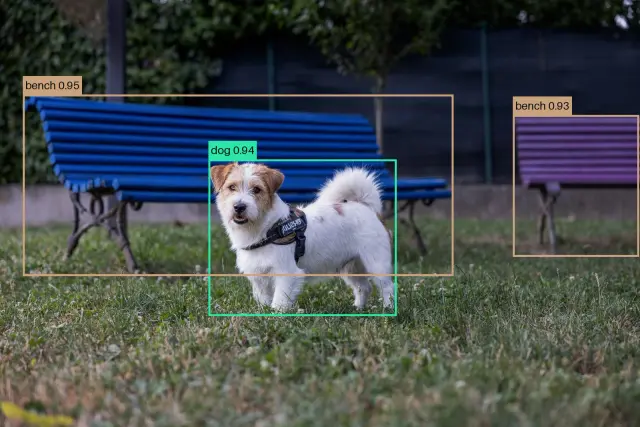 terrier-dog-park
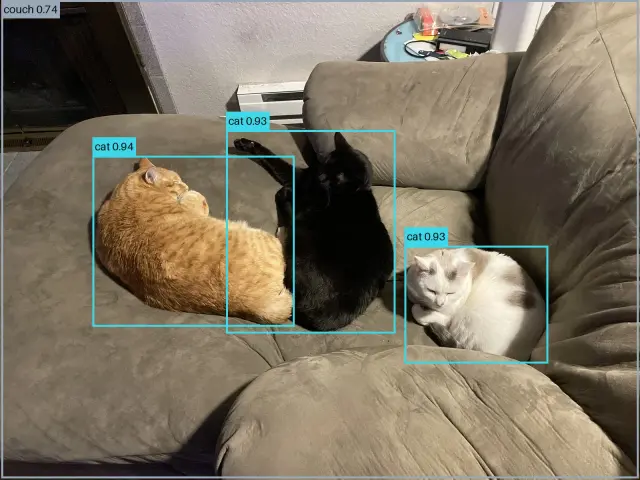 three-cats-couch
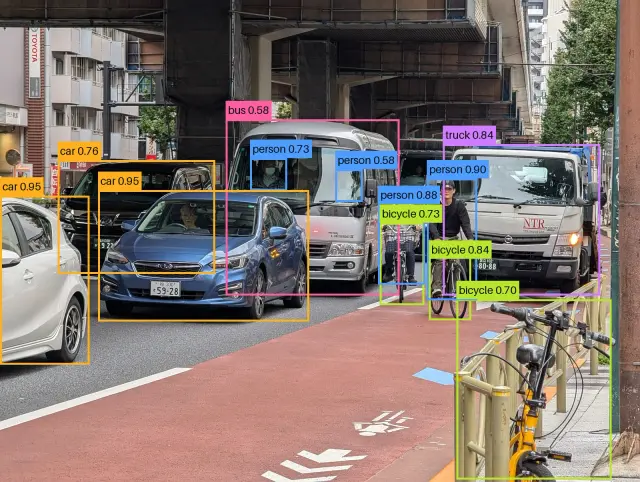 tokyo-street-cyclists
Use it when
You want an NMS-free YOLO that is a little quicker than YOLO26 in PyTorch at each size (n 11.1 against 12.6 ms a call), with six sizes to pick from.
Avoid it when
You need the best accuracy for the time, or a license without copyleft: YOLO26 scored 1.5 to 3.2 box AP higher at each matching size, and both are AGPL-3.0.
Sizes
| Size | Latency | VRAM | Accuracy | Weights | Runs | License |
|---|---|---|---|---|---|---|
| n | 11.1 ms640x448 | 589 MiB | 39.1 box AP, measured38.5 COCO mAP50-95 paper | 6 MB | As is | Conditional |
| s | 11.6 ms640x448 | 630 MiB | 46.3 box AP, measured46.3 COCO mAP50-95 paper | 16 MB | As is | Conditional |
| m | 13.1 ms640x448 | 704 MiB | 50.8 box AP, measured51.1 COCO mAP50-95 paper | 32 MB | As is | Conditional |
| b | 13.9 ms640x448 | 704 MiB | 52.1 box AP, measured52.5 COCO mAP50-95 paper | 40 MB | As is | Conditional |
| l | 16.5 ms640x448 | 772 MiB | 52.8 box AP, measured53.2 COCO mAP50-95 paper | 50 MB | As is | Conditional |
| x | 17.3 ms640x448 | 810 MiB | 53.8 box AP, measured54.4 COCO mAP50-95 paper | 61 MB | As is | Conditional |
Runtimes
Measured on our RTX 4090. Each row is our own measurement, timed under the same protocol and scored through that runtime. The TensorRT engine is built from the authors' own ONNX export of the released weights, with the settings their docs give. The card at the top and the charts use the PyTorch row.
| Runtime, size n | Latency (input under it) | VRAM peak | Accuracy (on that runtime) |
|---|---|---|---|
| PyTorchfp16 · torch 2.14.1+cu130 | 11.1 ms640x448 | 589 MiB | 39.1 box AP, fp16 |
| TensorRT10.16.1.11 · fp16 | 5.6 ms640x640 | 559 MiB | 39.2 box AP, fp16 |
How the TensorRT engine was made, 22 Nov 2026
TensorRT 10.16.1.11, runs as is. Exported with ultralytics YOLO.export format=engine quantize=16 imgsz=640 device=0, opset 18; ONNX sha256 31875fb496ad…. Engine sha256 c84d2cad0ec1…, 6 MB, built in 209 s. Builder settings: api ultralytics==8.4.189, which builds with TensorRT's Python API, flags ["FP16"], other the package's own settings, input 1x3x640x640, static, workspace TensorRT's default. NVIDIA GeForce RTX 4090, driver 580.173.02, CUDA 13.0, torch 2.14.1+cu130, ultralytics==8.4.189. 10 warm-up + 100 timed, median of 3 runs. Scope: predict(): pre-processing, forward pass and post-processing; input file decoded beforehand.
| Runtime, size s | Latency (input under it) | VRAM peak | Accuracy (on that runtime) |
|---|---|---|---|
| PyTorchfp16 · torch 2.14.1+cu130 | 11.6 ms640x448 | 630 MiB | 46.3 box AP, fp16 |
| TensorRT10.16.1.11 · fp16 | 5.8 ms640x640 | 564 MiB | 46.5 box AP, fp16 |
How the TensorRT engine was made, 22 Nov 2026
TensorRT 10.16.1.11, runs as is. Exported with ultralytics YOLO.export format=engine quantize=16 imgsz=640 device=0, opset 18; ONNX sha256 04b780b63286…. Engine sha256 48fd4ea3073a…, 16 MB, built in 209 s. Builder settings: api ultralytics==8.4.189, which builds with TensorRT's Python API, flags ["FP16"], other the package's own settings, input 1x3x640x640, static, workspace TensorRT's default. NVIDIA GeForce RTX 4090, driver 580.173.02, CUDA 13.0, torch 2.14.1+cu130, ultralytics==8.4.189. 10 warm-up + 100 timed, median of 3 runs. Scope: predict(): pre-processing, forward pass and post-processing; input file decoded beforehand.
| Runtime, size m | Latency (input under it) | VRAM peak | Accuracy (on that runtime) |
|---|---|---|---|
| PyTorchfp16 · torch 2.14.1+cu130 | 13.1 ms640x448 | 704 MiB | 50.8 box AP, fp16 |
| TensorRT10.16.1.11 · fp16 | 6.1 ms640x640 | 564 MiB | 51.1 box AP, fp16 |
How the TensorRT engine was made, 22 Nov 2026
TensorRT 10.16.1.11, runs as is. Exported with ultralytics YOLO.export format=engine quantize=16 imgsz=640 device=0, opset 18; ONNX sha256 e5de9e55b6ce…. Engine sha256 a8c3659a194d…, 33 MB, built in 232 s. Builder settings: api ultralytics==8.4.189, which builds with TensorRT's Python API, flags ["FP16"], other the package's own settings, input 1x3x640x640, static, workspace TensorRT's default. NVIDIA GeForce RTX 4090, driver 580.173.02, CUDA 13.0, torch 2.14.1+cu130, ultralytics==8.4.189. 10 warm-up + 100 timed, median of 3 runs. Scope: predict(): pre-processing, forward pass and post-processing; input file decoded beforehand.
| Runtime, size b | Latency (input under it) | VRAM peak | Accuracy (on that runtime) |
|---|---|---|---|
| PyTorchfp16 · torch 2.14.1+cu130 | 13.9 ms640x448 | 704 MiB | 52.1 box AP, fp16 |
| TensorRT10.16.1.11 · fp16 | 6.7 ms640x640 | 604 MiB | 52.4 box AP, fp16 |
How the TensorRT engine was made, 22 Nov 2026
TensorRT 10.16.1.11, runs as is. Exported with ultralytics YOLO.export format=engine quantize=16 imgsz=640 device=0, opset 18; ONNX sha256 aa3826944511…. Engine sha256 91a8780d1824…, 40 MB, built in 223 s. Builder settings: api ultralytics==8.4.189, which builds with TensorRT's Python API, flags ["FP16"], other the package's own settings, input 1x3x640x640, static, workspace TensorRT's default. NVIDIA GeForce RTX 4090, driver 580.173.02, CUDA 13.0, torch 2.14.1+cu130, ultralytics==8.4.189. 10 warm-up + 100 timed, median of 3 runs. Scope: predict(): pre-processing, forward pass and post-processing; input file decoded beforehand.
| Runtime, size l | Latency (input under it) | VRAM peak | Accuracy (on that runtime) |
|---|---|---|---|
| PyTorchfp16 · torch 2.14.1+cu130 | 16.5 ms640x448 | 772 MiB | 52.8 box AP, fp16 |
| TensorRT10.16.1.11 · fp16 | 6.8 ms640x640 | 616 MiB | 53.1 box AP, fp16 |
How the TensorRT engine was made, 22 Nov 2026
TensorRT 10.16.1.11, runs as is. Exported with ultralytics YOLO.export format=engine quantize=16 imgsz=640 device=0, opset 18; ONNX sha256 5683293f413a…. Engine sha256 0f0ee256cab1…, 50 MB, built in 251 s. Builder settings: api ultralytics==8.4.189, which builds with TensorRT's Python API, flags ["FP16"], other the package's own settings, input 1x3x640x640, static, workspace TensorRT's default. NVIDIA GeForce RTX 4090, driver 580.173.02, CUDA 13.0, torch 2.14.1+cu130, ultralytics==8.4.189. 10 warm-up + 100 timed, median of 3 runs. Scope: predict(): pre-processing, forward pass and post-processing; input file decoded beforehand.
| Runtime, size x | Latency (input under it) | VRAM peak | Accuracy (on that runtime) |
|---|---|---|---|
| PyTorchfp16 · torch 2.14.1+cu130 | 17.3 ms640x448 | 810 MiB | 53.8 box AP, fp16 |
| TensorRT10.16.1.11 · fp16 | 7.3 ms640x640 | 634 MiB | 54.1 box AP, fp16 |
How the TensorRT engine was made, 22 Nov 2026
TensorRT 10.16.1.11, runs as is. Exported with ultralytics YOLO.export format=engine quantize=16 imgsz=640 device=0, opset 18; ONNX sha256 22d89dc4978c…. Engine sha256 5e9fb480fe96…, 60 MB, built in 274 s. Builder settings: api ultralytics==8.4.189, which builds with TensorRT's Python API, flags ["FP16"], other the package's own settings, input 1x3x640x640, static, workspace TensorRT's default. NVIDIA GeForce RTX 4090, driver 580.173.02, CUDA 13.0, torch 2.14.1+cu130, ultralytics==8.4.189. 10 warm-up + 100 timed, median of 3 runs. Scope: predict(): pre-processing, forward pass and post-processing; input file decoded beforehand.
Estimated on other GPUs
Estimate, not measured. Worked out from our RTX 4090 run and NVIDIA's spec sheets. Each kind of GPU work is scaled by that GPU's peak for it: tensor cores at the precision the kernels used, CUDA cores, or memory bandwidth. The CPU's part of each call is kept at what it took on our Intel Core i7-10700K. How we estimate
Where a call's time goes on our RTX 4090: CPU and kernel launches 91%, memory-bound 5%, tensor cores, FP16 (FP32 accumulate) 2%.
GeForce (13)
| GPU | Fits | Latency |
|---|---|---|
| GeForce RTX 5090Blackwell, 32 GB GDDR7 | Yes | ≈ 11 ms |
| GeForce RTX 5080Blackwell, 16 GB GDDR7 | Yes | ≈ 11 ms |
| GeForce RTX 5070 TiBlackwell, 16 GB GDDR7 | Yes | ≈ 11 ms |
| GeForce RTX 5070Blackwell, 12 GB GDDR7 | Yes | ≈ 11–12 ms |
| GeForce RTX 5060 Ti 16GBBlackwell, 16 GB GDDR7 | Yes | ≈ 11–13 ms |
| GeForce RTX 5060Blackwell, 8 GB GDDR7 | Yes | ≈ 12–13 ms |
| GeForce RTX 4080Ada Lovelace, 16 GB GDDR6X | Yes | ≈ 11–12 ms |
| GeForce RTX 4070 TiAda Lovelace, 12 GB GDDR6X | Yes | ≈ 11–12 ms |
| GeForce RTX 4070Ada Lovelace, 12 GB GDDR6X | Yes | ≈ 11–12 ms |
| GeForce RTX 3090Ampere, 24 GB GDDR6X | Yes | ≈ 11–12 ms |
| GeForce RTX 3080Ampere, 10 GB GDDR6X | Yes | ≈ 11–12 ms |
| GeForce RTX 3070 TiAmpere, 8 GB GDDR6X | Yes | ≈ 11–12 ms |
| GeForce RTX 3070Ampere, 8 GB GDDR6 | Yes | ≈ 11–13 ms |
Workstation (4)
| GPU | Fits | Latency |
|---|---|---|
| RTX PRO 6000 Blackwell Workstation EditionBlackwell, 96 GB GDDR7 | Yes | ≈ 11 ms |
| RTX PRO 6000 Blackwell Max-Q Workstation EditionBlackwell, 96 GB GDDR7 | Yes | ≈ 11 ms |
| RTX 6000 Ada GenerationAda Lovelace, 48 GB GDDR6 | Yes | ≈ 11 ms |
| RTX A6000Ampere, 48 GB GDDR6 | Yes | ≈ 11 ms |
Data center (6)
| GPU | Fits | Latency |
|---|---|---|
| B200 (HGX, one GPU)Blackwell, 180 GB HBM3E | Yes | ≈ 10–11 ms |
| H200 SXMHopper, 141 GB HBM3e | Yes | ≈ 10–11 ms |
| H100 SXMHopper, 80 GB HBM3 | Yes | ≈ 10–11 ms |
| A100 SXM 80GBAmpere, 80 GB HBM2e | Yes | ≈ 11 ms |
| L40SAda Lovelace, 48 GB GDDR6 | Yes | ≈ 11 ms |
| L4Ada Lovelace, 24 GB GDDR6 | Yes | ≈ 11–13 ms |
Where a call's time goes on our RTX 4090: CPU and kernel launches 89%, memory-bound 6%, tensor cores, FP16 (FP32 accumulate) 4%.
GeForce (13)
| GPU | Fits | Latency |
|---|---|---|
| GeForce RTX 5090Blackwell, 32 GB GDDR7 | Yes | ≈ 11–12 ms |
| GeForce RTX 5080Blackwell, 16 GB GDDR7 | Yes | ≈ 12 ms |
| GeForce RTX 5070 TiBlackwell, 16 GB GDDR7 | Yes | ≈ 12 ms |
| GeForce RTX 5070Blackwell, 12 GB GDDR7 | Yes | ≈ 12–13 ms |
| GeForce RTX 5060 Ti 16GBBlackwell, 16 GB GDDR7 | Yes | ≈ 12–14 ms |
| GeForce RTX 5060Blackwell, 8 GB GDDR7 | Yes | ≈ 12–14 ms |
| GeForce RTX 4080Ada Lovelace, 16 GB GDDR6X | Yes | ≈ 12 ms |
| GeForce RTX 4070 TiAda Lovelace, 12 GB GDDR6X | Yes | ≈ 12–13 ms |
| GeForce RTX 4070Ada Lovelace, 12 GB GDDR6X | Yes | ≈ 12–13 ms |
| GeForce RTX 3090Ampere, 24 GB GDDR6X | Yes | ≈ 12 ms |
| GeForce RTX 3080Ampere, 10 GB GDDR6X | Yes | ≈ 12–13 ms |
| GeForce RTX 3070 TiAmpere, 8 GB GDDR6X | Yes | ≈ 12–13 ms |
| GeForce RTX 3070Ampere, 8 GB GDDR6 | Yes | ≈ 12–14 ms |
Workstation (4)
| GPU | Fits | Latency |
|---|---|---|
| RTX PRO 6000 Blackwell Workstation EditionBlackwell, 96 GB GDDR7 | Yes | ≈ 11 ms |
| RTX PRO 6000 Blackwell Max-Q Workstation EditionBlackwell, 96 GB GDDR7 | Yes | ≈ 11 ms |
| RTX 6000 Ada GenerationAda Lovelace, 48 GB GDDR6 | Yes | ≈ 11 ms |
| RTX A6000Ampere, 48 GB GDDR6 | Yes | ≈ 12 ms |
Data center (6)
| GPU | Fits | Latency |
|---|---|---|
| B200 (HGX, one GPU)Blackwell, 180 GB HBM3E | Yes | ≈ 11 ms |
| H200 SXMHopper, 141 GB HBM3e | Yes | ≈ 11 ms |
| H100 SXMHopper, 80 GB HBM3 | Yes | ≈ 11 ms |
| A100 SXM 80GBAmpere, 80 GB HBM2e | Yes | ≈ 11 ms |
| L40SAda Lovelace, 48 GB GDDR6 | Yes | ≈ 11 ms |
| L4Ada Lovelace, 24 GB GDDR6 | Yes | ≈ 12–13 ms |
Where a call's time goes on our RTX 4090: CPU and kernel launches 86%, memory-bound 7%, tensor cores, FP16 (FP32 accumulate) 6%.
GeForce (13)
| GPU | Fits | Latency |
|---|---|---|
| GeForce RTX 5090Blackwell, 32 GB GDDR7 | Yes | ≈ 13 ms |
| GeForce RTX 5080Blackwell, 16 GB GDDR7 | Yes | ≈ 13–14 ms |
| GeForce RTX 5070 TiBlackwell, 16 GB GDDR7 | Yes | ≈ 14 ms |
| GeForce RTX 5070Blackwell, 12 GB GDDR7 | Yes | ≈ 14–15 ms |
| GeForce RTX 5060 Ti 16GBBlackwell, 16 GB GDDR7 | Yes | ≈ 15–16 ms |
| GeForce RTX 5060Blackwell, 8 GB GDDR7 | Yes | ≈ 15–17 ms |
| GeForce RTX 4080Ada Lovelace, 16 GB GDDR6X | Yes | ≈ 14 ms |
| GeForce RTX 4070 TiAda Lovelace, 12 GB GDDR6X | Yes | ≈ 14–15 ms |
| GeForce RTX 4070Ada Lovelace, 12 GB GDDR6X | Yes | ≈ 14–16 ms |
| GeForce RTX 3090Ampere, 24 GB GDDR6X | Yes | ≈ 14 ms |
| GeForce RTX 3080Ampere, 10 GB GDDR6X | Yes | ≈ 14–15 ms |
| GeForce RTX 3070 TiAmpere, 8 GB GDDR6X | Yes | ≈ 15–16 ms |
| GeForce RTX 3070Ampere, 8 GB GDDR6 | Yes | ≈ 15–17 ms |
Workstation (4)
| GPU | Fits | Latency |
|---|---|---|
| RTX PRO 6000 Blackwell Workstation EditionBlackwell, 96 GB GDDR7 | Yes | ≈ 12–13 ms |
| RTX PRO 6000 Blackwell Max-Q Workstation EditionBlackwell, 96 GB GDDR7 | Yes | ≈ 12–13 ms |
| RTX 6000 Ada GenerationAda Lovelace, 48 GB GDDR6 | Yes | ≈ 13 ms |
| RTX A6000Ampere, 48 GB GDDR6 | Yes | ≈ 13–14 ms |
Data center (6)
| GPU | Fits | Latency |
|---|---|---|
| B200 (HGX, one GPU)Blackwell, 180 GB HBM3E | Yes | ≈ 12–13 ms |
| H200 SXMHopper, 141 GB HBM3e | Yes | ≈ 12–13 ms |
| H100 SXMHopper, 80 GB HBM3 | Yes | ≈ 12–13 ms |
| A100 SXM 80GBAmpere, 80 GB HBM2e | Yes | ≈ 13 ms |
| L40SAda Lovelace, 48 GB GDDR6 | Yes | ≈ 13 ms |
| L4Ada Lovelace, 24 GB GDDR6 | Yes | ≈ 13–16 ms |
Where a call's time goes on our RTX 4090: CPU and kernel launches 83%, tensor cores, FP16 (FP32 accumulate) 8%, memory-bound 7%.
GeForce (13)
| GPU | Fits | Latency |
|---|---|---|
| GeForce RTX 5090Blackwell, 32 GB GDDR7 | Yes | ≈ 13–14 ms |
| GeForce RTX 5080Blackwell, 16 GB GDDR7 | Yes | ≈ 14 ms |
| GeForce RTX 5070 TiBlackwell, 16 GB GDDR7 | Yes | ≈ 15 ms |
| GeForce RTX 5070Blackwell, 12 GB GDDR7 | Yes | ≈ 15–16 ms |
| GeForce RTX 5060 Ti 16GBBlackwell, 16 GB GDDR7 | Yes | ≈ 16–18 ms |
| GeForce RTX 5060Blackwell, 8 GB GDDR7 | Yes | ≈ 16–19 ms |
| GeForce RTX 4080Ada Lovelace, 16 GB GDDR6X | Yes | ≈ 14–15 ms |
| GeForce RTX 4070 TiAda Lovelace, 12 GB GDDR6X | Yes | ≈ 15–16 ms |
| GeForce RTX 4070Ada Lovelace, 12 GB GDDR6X | Yes | ≈ 15–17 ms |
| GeForce RTX 3090Ampere, 24 GB GDDR6X | Yes | ≈ 15–16 ms |
| GeForce RTX 3080Ampere, 10 GB GDDR6X | Yes | ≈ 15–16 ms |
| GeForce RTX 3070 TiAmpere, 8 GB GDDR6X | Yes | ≈ 16–18 ms |
| GeForce RTX 3070Ampere, 8 GB GDDR6 | Yes | ≈ 16–19 ms |
Workstation (4)
| GPU | Fits | Latency |
|---|---|---|
| RTX PRO 6000 Blackwell Workstation EditionBlackwell, 96 GB GDDR7 | Yes | ≈ 13 ms |
| RTX PRO 6000 Blackwell Max-Q Workstation EditionBlackwell, 96 GB GDDR7 | Yes | ≈ 13 ms |
| RTX 6000 Ada GenerationAda Lovelace, 48 GB GDDR6 | Yes | ≈ 13 ms |
| RTX A6000Ampere, 48 GB GDDR6 | Yes | ≈ 14 ms |
Data center (6)
| GPU | Fits | Latency |
|---|---|---|
| B200 (HGX, one GPU)Blackwell, 180 GB HBM3E | Yes | ≈ 12–13 ms |
| H200 SXMHopper, 141 GB HBM3e | Yes | ≈ 12–13 ms |
| H100 SXMHopper, 80 GB HBM3 | Yes | ≈ 12–13 ms |
| A100 SXM 80GBAmpere, 80 GB HBM2e | Yes | ≈ 13 ms |
| L40SAda Lovelace, 48 GB GDDR6 | Yes | ≈ 13 ms |
| L4Ada Lovelace, 24 GB GDDR6 | Yes | ≈ 14–17 ms |
Where a call's time goes on our RTX 4090: CPU and kernel launches 83%, tensor cores, FP16 (FP32 accumulate) 8%, memory-bound 8%.
GeForce (13)
| GPU | Fits | Latency |
|---|---|---|
| GeForce RTX 5090Blackwell, 32 GB GDDR7 | Yes | ≈ 16 ms |
| GeForce RTX 5080Blackwell, 16 GB GDDR7 | Yes | ≈ 17 ms |
| GeForce RTX 5070 TiBlackwell, 16 GB GDDR7 | Yes | ≈ 17–18 ms |
| GeForce RTX 5070Blackwell, 12 GB GDDR7 | Yes | ≈ 18–20 ms |
| GeForce RTX 5060 Ti 16GBBlackwell, 16 GB GDDR7 | Yes | ≈ 19–22 ms |
| GeForce RTX 5060Blackwell, 8 GB GDDR7 | Yes | ≈ 20–23 ms |
| GeForce RTX 4080Ada Lovelace, 16 GB GDDR6X | Yes | ≈ 17–18 ms |
| GeForce RTX 4070 TiAda Lovelace, 12 GB GDDR6X | Yes | ≈ 18–19 ms |
| GeForce RTX 4070Ada Lovelace, 12 GB GDDR6X | Yes | ≈ 18–21 ms |
| GeForce RTX 3090Ampere, 24 GB GDDR6X | Yes | ≈ 18–19 ms |
| GeForce RTX 3080Ampere, 10 GB GDDR6X | Yes | ≈ 18–20 ms |
| GeForce RTX 3070 TiAmpere, 8 GB GDDR6X | Yes | ≈ 19–22 ms |
| GeForce RTX 3070Ampere, 8 GB GDDR6 | Yes | ≈ 20–23 ms |
Workstation (4)
| GPU | Fits | Latency |
|---|---|---|
| RTX PRO 6000 Blackwell Workstation EditionBlackwell, 96 GB GDDR7 | Yes | ≈ 15–16 ms |
| RTX PRO 6000 Blackwell Max-Q Workstation EditionBlackwell, 96 GB GDDR7 | Yes | ≈ 15–16 ms |
| RTX 6000 Ada GenerationAda Lovelace, 48 GB GDDR6 | Yes | ≈ 16 ms |
| RTX A6000Ampere, 48 GB GDDR6 | Yes | ≈ 17 ms |
Data center (6)
| GPU | Fits | Latency |
|---|---|---|
| B200 (HGX, one GPU)Blackwell, 180 GB HBM3E | Yes | ≈ 14–16 ms |
| H200 SXMHopper, 141 GB HBM3e | Yes | ≈ 14–16 ms |
| H100 SXMHopper, 80 GB HBM3 | Yes | ≈ 15–16 ms |
| A100 SXM 80GBAmpere, 80 GB HBM2e | Yes | ≈ 16 ms |
| L40SAda Lovelace, 48 GB GDDR6 | Yes | ≈ 16 ms |
| L4Ada Lovelace, 24 GB GDDR6 | Yes | ≈ 17–20 ms |
Where a call's time goes on our RTX 4090: CPU and kernel launches 81%, tensor cores, FP16 (FP32 accumulate) 10%, memory-bound 8%, CUDA cores, FP32 1%.
GeForce (13)
| GPU | Fits | Latency |
|---|---|---|
| GeForce RTX 5090Blackwell, 32 GB GDDR7 | Yes | ≈ 16–17 ms |
| GeForce RTX 5080Blackwell, 16 GB GDDR7 | Yes | ≈ 18 ms |
| GeForce RTX 5070 TiBlackwell, 16 GB GDDR7 | Yes | ≈ 18–19 ms |
| GeForce RTX 5070Blackwell, 12 GB GDDR7 | Yes | ≈ 20–21 ms |
| GeForce RTX 5060 Ti 16GBBlackwell, 16 GB GDDR7 | Yes | ≈ 21–24 ms |
| GeForce RTX 5060Blackwell, 8 GB GDDR7 | Yes | ≈ 22–25 ms |
| GeForce RTX 4080Ada Lovelace, 16 GB GDDR6X | Yes | ≈ 18–19 ms |
| GeForce RTX 4070 TiAda Lovelace, 12 GB GDDR6X | Yes | ≈ 19–21 ms |
| GeForce RTX 4070Ada Lovelace, 12 GB GDDR6X | Yes | ≈ 20–22 ms |
| GeForce RTX 3090Ampere, 24 GB GDDR6X | Yes | ≈ 19–20 ms |
| GeForce RTX 3080Ampere, 10 GB GDDR6X | Yes | ≈ 20–21 ms |
| GeForce RTX 3070 TiAmpere, 8 GB GDDR6X | Yes | ≈ 21–24 ms |
| GeForce RTX 3070Ampere, 8 GB GDDR6 | Yes | ≈ 22–25 ms |
Workstation (4)
| GPU | Fits | Latency |
|---|---|---|
| RTX PRO 6000 Blackwell Workstation EditionBlackwell, 96 GB GDDR7 | Yes | ≈ 15–16 ms |
| RTX PRO 6000 Blackwell Max-Q Workstation EditionBlackwell, 96 GB GDDR7 | Yes | ≈ 16 ms |
| RTX 6000 Ada GenerationAda Lovelace, 48 GB GDDR6 | Yes | ≈ 16–17 ms |
| RTX A6000Ampere, 48 GB GDDR6 | Yes | ≈ 17–18 ms |
Data center (6)
| GPU | Fits | Latency |
|---|---|---|
| B200 (HGX, one GPU)Blackwell, 180 GB HBM3E | Yes | ≈ 15–16 ms |
| H200 SXMHopper, 141 GB HBM3e | Yes | ≈ 15–16 ms |
| H100 SXMHopper, 80 GB HBM3 | Yes | ≈ 15–16 ms |
| A100 SXM 80GBAmpere, 80 GB HBM2e | Yes | ≈ 16–17 ms |
| L40SAda Lovelace, 48 GB GDDR6 | Yes | ≈ 17 ms |
| L4Ada Lovelace, 24 GB GDDR6 | Yes | ≈ 18–21 ms |
CPU only
Measured by us with no GPU on an Intel(R) Core(TM) i7-10700K CPU @ 3.80GHz, 8 cores, 94.2 GiB of memory: the same official code with the GPU hidden, in fp32 on 8 threads. Before it was timed, its output on the timing input was checked against the GPU's. These numbers say what to expect without a GPU. They aren't compared with any GPU's, here or in the charts. How we measure on a CPU
| Size | Runtime | Latency on the CPU | RAM peak |
|---|---|---|---|
| n | PyTorch2.14.1 · fp32 · 8 threads | 26.1 ms640x448 | 810 MiB |
| n | ONNX Runtime1.31.1 · fp32 · 8 threads | 32.9 ms640x640 | 836 MiB |
| s | PyTorch2.14.1 · fp32 · 8 threads | 50.6 ms640x448 | 872 MiB |
| s | ONNX Runtime1.31.1 · fp32 · 8 threads | 63.1 ms640x640 | 908 MiB |
| m | PyTorch2.14.1 · fp32 · 8 threads | 110 ms640x448 | 962 MiB |
| m | ONNX Runtime1.31.1 · fp32 · 8 threads | 124 ms640x640 | 1.0 GiB |
| b | PyTorch2.14.1 · fp32 · 8 threads | 159 ms640x448 | 1018 MiB |
| b | ONNX Runtime1.31.1 · fp32 · 8 threads | 176 ms640x640 | 1.1 GiB |
| l | PyTorch2.14.1 · fp32 · 8 threads | 179 ms640x448 | 1.0 GiB |
| l | ONNX Runtime1.31.1 · fp32 · 8 threads | 220 ms640x640 | 1.2 GiB |
| x | PyTorch2.14.1 · fp32 · 8 threads | 264 ms640x448 | 1.1 GiB |
| x | ONNX Runtime1.31.1 · fp32 · 8 threads | 314 ms640x640 | 1.3 GiB |
ONNX Runtime rows run the authors' own ONNX export with their own ONNX Runtime code, whose pre-processing may differ from the PyTorch code's, so their input can differ too.


Alternatives
Changes
First published . Every model's changes
Badge for a README
It says the model ran on our RTX 4090 and links to this page. It carries no number, so it never goes out of date.

[](https://modelsthatrun.dev/models/yolov10/)Something wrong on this page, such as a license or a number? Email us.