OneFormer
SHI Labs' universal segmentation model trained once on COCO panoptic; here its instance masks. One Swin-L size, MIT, through transformers.
Commercial use OK: code MIT, weights MIT. Measured on our RTX 4090: 168 ms median, 8.7 GiB VRAM peak. We scored it 48.8 mask AP on COCO val2017. PyTorch weights, 839 MB.
On our RTX 4090, measured
168ms median
p90 172 ms, fp32, batch 1, 1216x800
- VRAM peak
- 8.7 GiB
- Status
- Runs as is
Environment, 22 Nov 2026
NVIDIA GeForce RTX 4090, driver 580.173.02, CUDA 13.0, torch 2.14.1+cu130, Python 3.12.9, transformers==5.20.2. Baseline 1032 MiB. 10 warm-up + 100 timed. Scope: predict(): pre-processing, forward pass and post-processing; input file decoded beforehand.
Accuracy
48.8mask APmeasured
COCO val2017, mask AP, 5,000 images, fp32, pycocotools==2.0.11 · 21 Nov 2026
Reported49 COCO mask AP on COCO val2017 panoptic annotations converted to instances (coco_2017_val_panoptic2instance), not the instance annotations our benchmark usesSource: https://github.com/SHI-Labs/OneFormer/blob/4962ef6a96ffb76a76771bfa3e8b3587f209752b/README.md, COCO results table (OneFormer Swin-L, AP column); the evaluation set is DATASETS.TEST_INSTANCE in configs/coco/Base-COCO-UnifiedSegmentation.yaml
Weights
PyTorch
- Size
- 839 MB
- sha256
36d01ceb971e9b3824bf35de022cd3148aad0c928f6365302db492a4cff6bf2b
Outputs on the shared test photos
Same photos and one score threshold for every model of this task. Failures are marked.
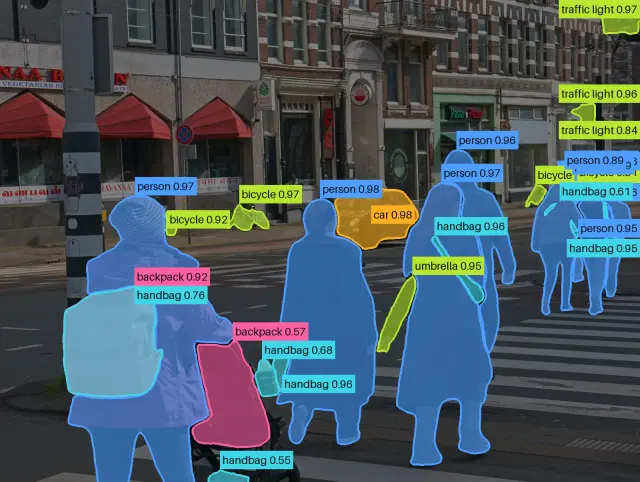 crossing-amsterdamFails: stroller masked as a backpack
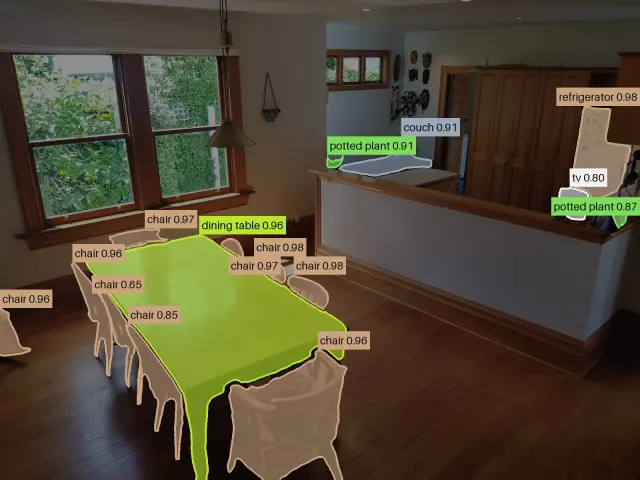 dining-room-kitchenFails: coffee maker masked as a tv
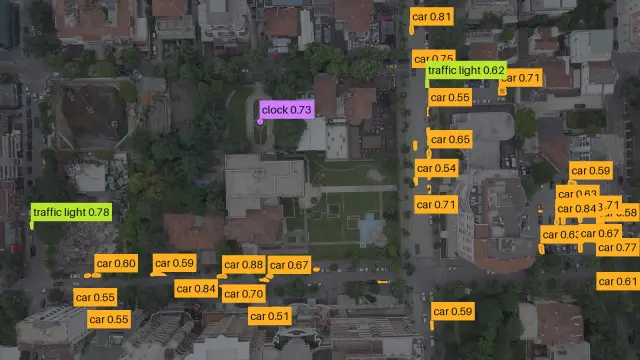 drone-city-blockFails: clock mask on the round garden fountain
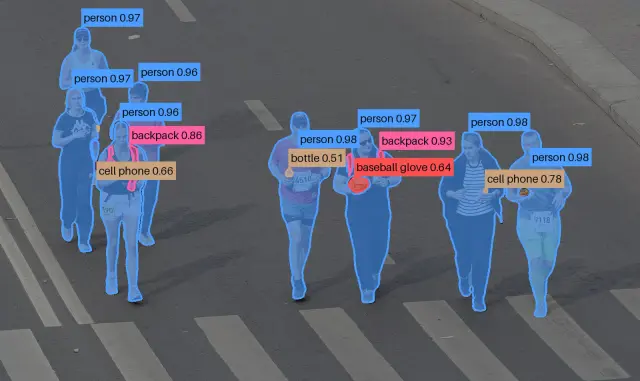 marathon-crossingFails: paper bag in a runner's hands masked as a baseball glove
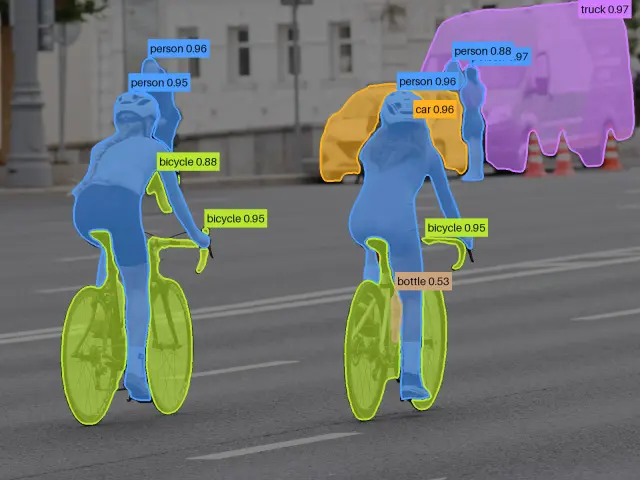 bike-parade-riders
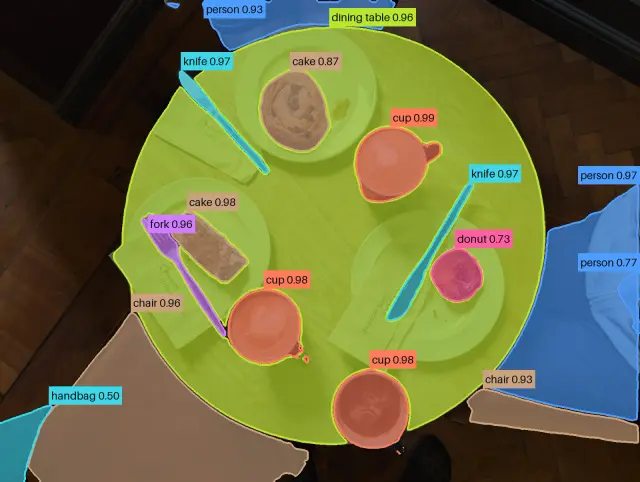 breakfast-top-down
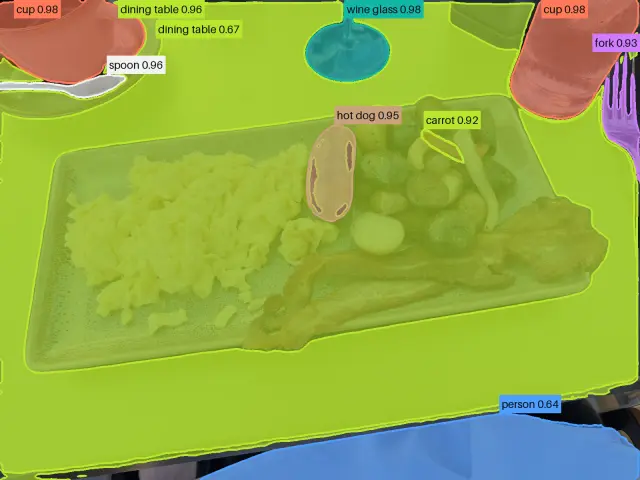 cafe-table-glasses
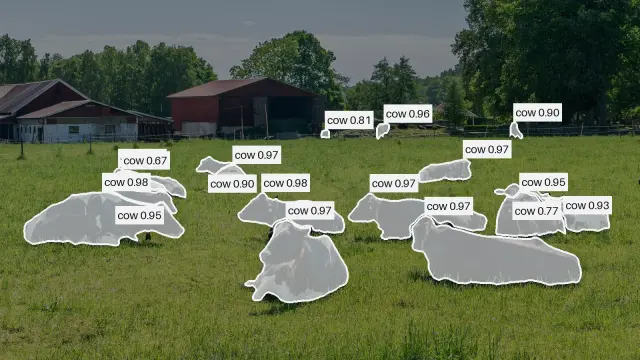 cows-pasture
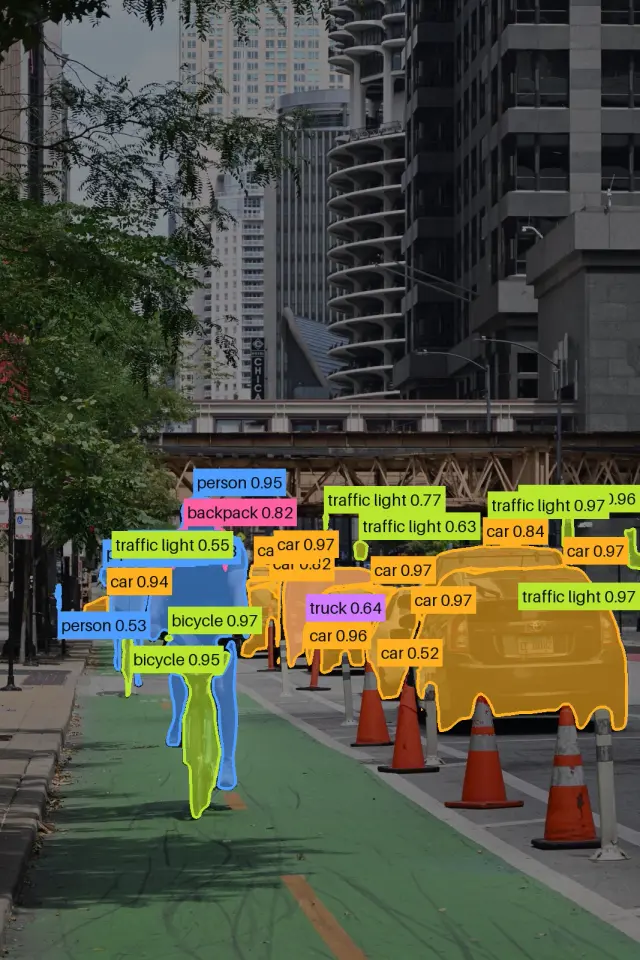 cyclist-bike-lane
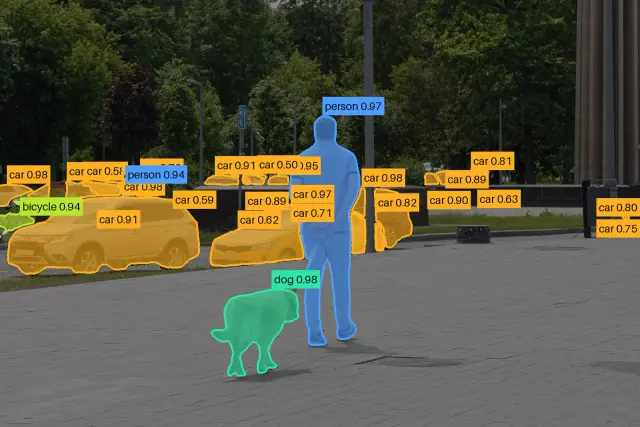 dog-walk-square
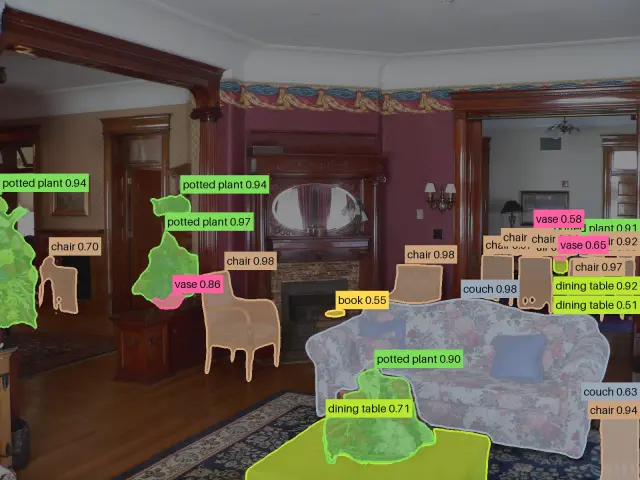 living-room-couch
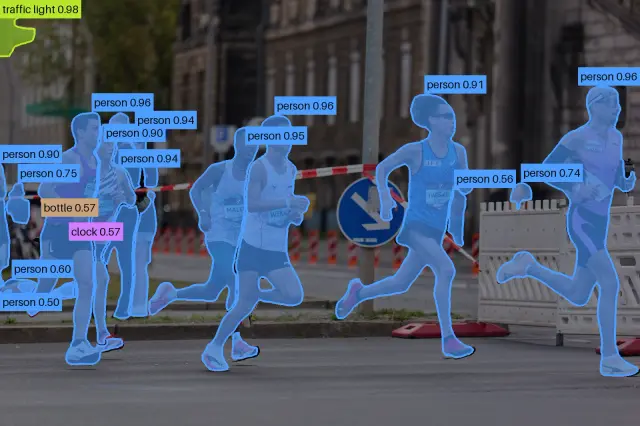 marathon-pack
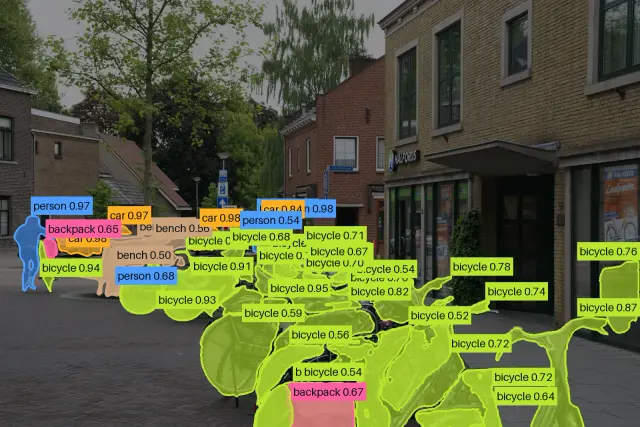 parked-bicycles
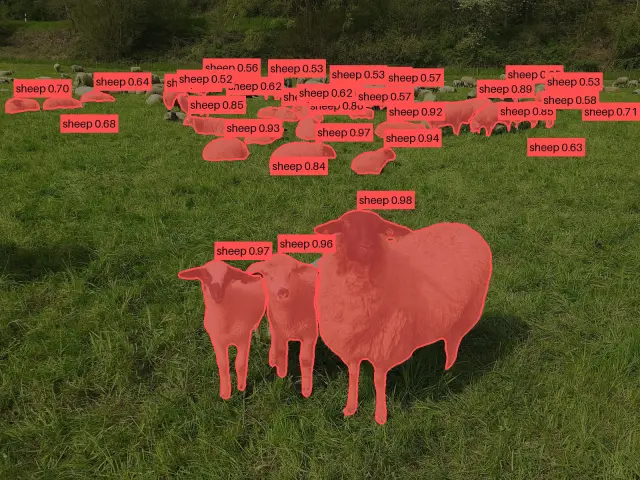 sheep-meadow-lambs
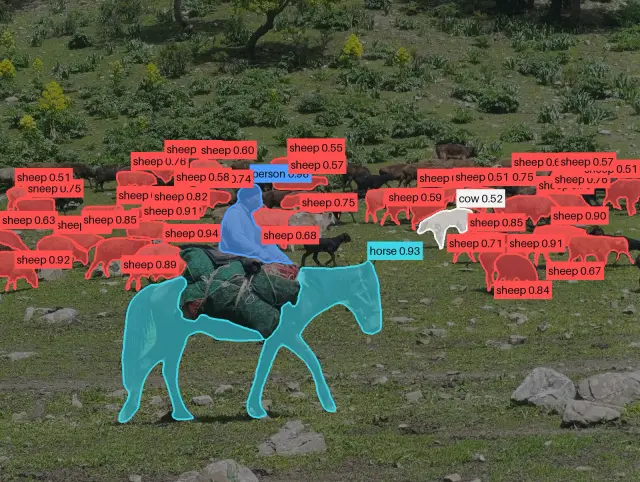 shepherd-sheep
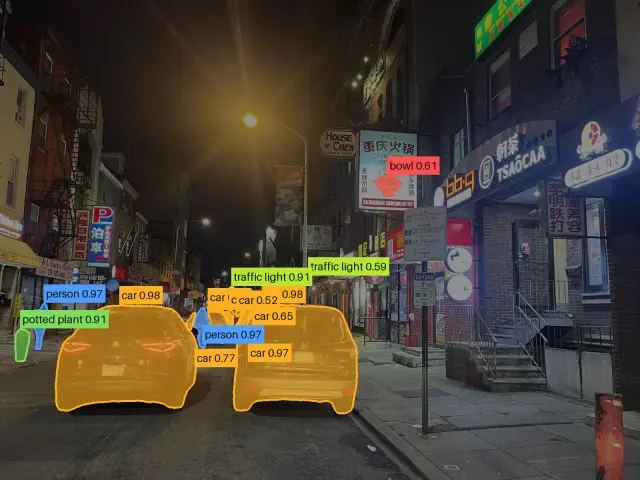 street-night-chinatown
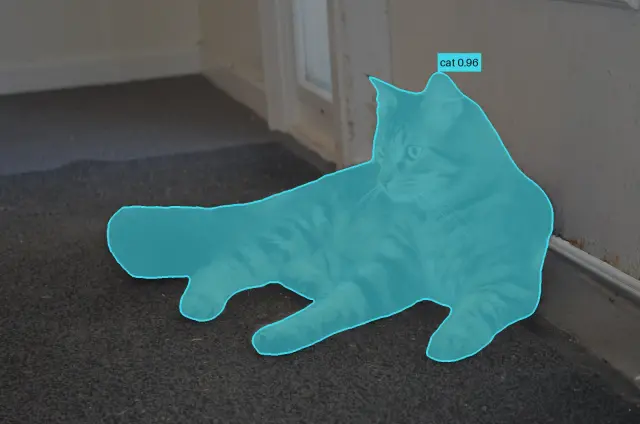 tabby-cat-door
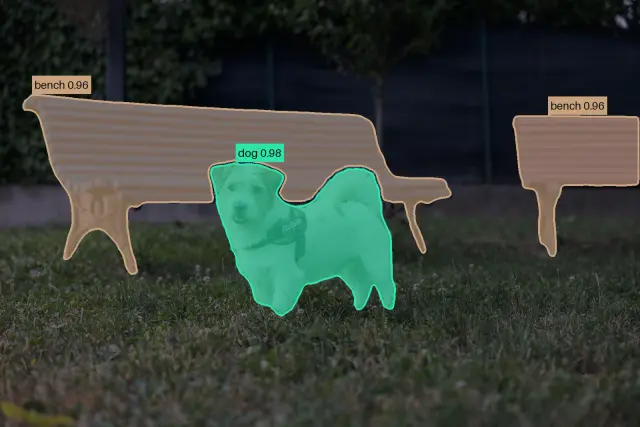 terrier-dog-park
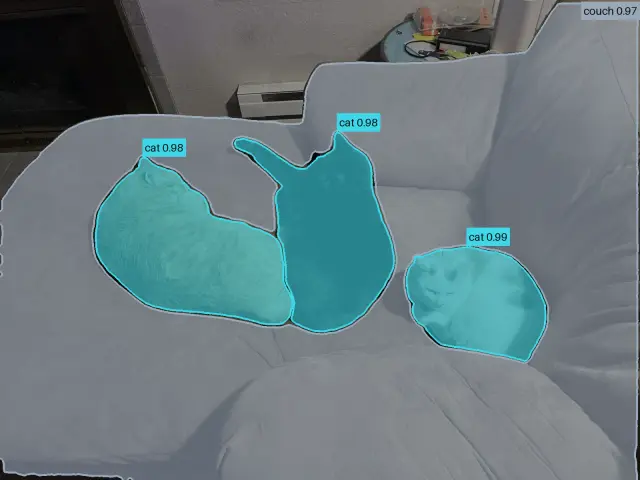 three-cats-couch
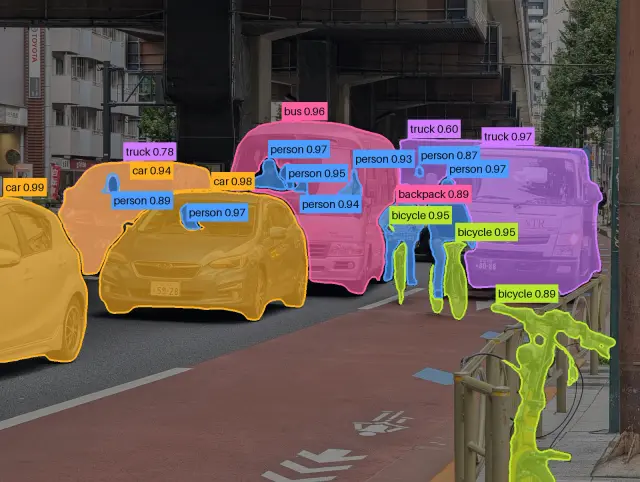 tokyo-street-cyclists
Use it when
You want one MIT-licensed model whose same weights also give panoptic and semantic segmentation. This page measures its instance masks only: 48.8 mask AP on COCO.
Avoid it when
You need instance masks fast or on a small GPU: 168 ms a call and 8.7 GiB of VRAM, the most of any instance segmentation model here, while GTR-Seg x scored higher (49.7 mask AP) in 37 ms and under 1 GiB.
Sizes
| Size | Latency | VRAM | Accuracy | Weights | Runs | License |
|---|---|---|---|---|---|---|
| swin-large | 168 ms1216x800 | 8.7 GiB | 48.8 mask AP, measured49 COCO mask AP paper | 839 MB | As is | Commercial OK |
Estimated on other GPUs
Estimate, not measured. Worked out from our RTX 4090 run and NVIDIA's spec sheets. Each kind of GPU work is scaled by that GPU's peak for it: tensor cores at the precision the kernels used, CUDA cores, or memory bandwidth. The CPU's part of each call is kept at what it took on our Intel Core i7-10700K. How we estimate
Where a call's time goes on our RTX 4090: CUDA cores, FP32 47%, memory-bound 34%, CPU and kernel launches 17%, host–device copies 1%.
GeForce (13)
| GPU | Fits | Latency |
|---|---|---|
| GeForce RTX 5090Blackwell, 32 GB GDDR7 | Yes | ≈ 130 ms |
| GeForce RTX 5080Blackwell, 16 GB GDDR7 | Yes | ≈ 210 ms |
| GeForce RTX 5070 TiBlackwell, 16 GB GDDR7 | Yes | ≈ 240–250 ms |
| GeForce RTX 5070Blackwell, 12 GB GDDR7 | Yes | ≈ 330 ms |
| GeForce RTX 5060 Ti 16GBBlackwell, 16 GB GDDR7 | Yes | ≈ 430–440 ms |
| GeForce RTX 5060Blackwell, 8 GB GDDR7 | No, needs 8.7 GB | Doesn’t fit |
| GeForce RTX 4080Ada Lovelace, 16 GB GDDR6X | Yes | ≈ 250 ms |
| GeForce RTX 4070 TiAda Lovelace, 12 GB GDDR6X | Yes | ≈ 310 ms |
| GeForce RTX 4070Ada Lovelace, 12 GB GDDR6X | Yes | ≈ 370 ms |
| GeForce RTX 3090Ampere, 24 GB GDDR6X | Yes | ≈ 280 ms |
| GeForce RTX 3080Ampere, 10 GB GDDR6X | Yes | ≈ 330 ms |
| GeForce RTX 3070 TiAmpere, 8 GB GDDR6X | No, needs 8.7 GB | Doesn’t fit |
| GeForce RTX 3070Ampere, 8 GB GDDR6 | No, needs 8.7 GB | Doesn’t fit |
Workstation (4)
| GPU | Fits | Latency |
|---|---|---|
| RTX PRO 6000 Blackwell Workstation EditionBlackwell, 96 GB GDDR7 | Yes | ≈ 110–120 ms |
| RTX PRO 6000 Blackwell Max-Q Workstation EditionBlackwell, 96 GB GDDR7 | Yes | ≈ 120 ms |
| RTX 6000 Ada GenerationAda Lovelace, 48 GB GDDR6 | Yes | ≈ 160 ms |
| RTX A6000Ampere, 48 GB GDDR6 | Yes | ≈ 270 ms |
Data center (6)
| GPU | Fits | Latency |
|---|---|---|
| B200 (HGX, one GPU)Blackwell, 180 GB HBM3E | Yes | ≈ 130 ms |
| H200 SXMHopper, 141 GB HBM3e | Yes | ≈ 140 ms |
| H100 SXMHopper, 80 GB HBM3 | Yes | ≈ 150 ms |
| A100 SXM 80GBAmpere, 80 GB HBM2e | Yes | ≈ 390 ms |
| L40SAda Lovelace, 48 GB GDDR6 | Yes | ≈ 170 ms |
| L4Ada Lovelace, 24 GB GDDR6 | Yes | ≈ 430–440 ms |
CPU only
Measured by us with no GPU on an Intel(R) Core(TM) i7-10700K CPU @ 3.80GHz, 8 cores, 94.2 GiB of memory: the same official code with the GPU hidden, in fp32 on 8 threads. Before it was timed, its output on the timing input was checked against the GPU's. These numbers say what to expect without a GPU. They aren't compared with any GPU's, here or in the charts. How we measure on a CPU
| Size | Runtime | Latency on the CPU | RAM peak |
|---|---|---|---|
| swin-large | PyTorch2.14.1 · fp32 · 8 threads | 8095 ms1216x800 | 6.7 GiB |


Alternatives
Changes
First published . Every model's changes
Badge for a README
It says the model ran on our RTX 4090 and links to this page. It carries no number, so it never goes out of date.

[](https://modelsthatrun.dev/models/oneformer/)Something wrong on this page, such as a license or a number? Email us.