Depth Anything 3
Depth Anything 3's main any-view series, run on one photo for relative depth. Small and Base, Apache-2.0.
Commercial use OK for size small: code Apache-2.0, weights Apache-2.0. Measured on our RTX 4090: 32.0 ms median, 838 MiB VRAM peak. safetensors weights, 131 MB.
Commercial use OK for size base: code Apache-2.0, weights Apache-2.0. Measured on our RTX 4090: 33.9 ms median, 1.4 GiB VRAM peak. safetensors weights, 516 MB.
License
Commercial use OK
Commercial use OK
- Code
- Apache-2.0checked 21 Nov 2026
- Weights
- Apache-2.0all sizes, checked 21 Nov 2026
Apache-2.0 covers Small and Base. The same README lists the main series' Large and Giant as CC BY-NC 4.0.
Apache-2.0 covers Small and Base. The same README lists the main series' Large and Giant as CC BY-NC 4.0.
On our RTX 4090, measured
32.0ms median
p90 35.5 ms, bf16, batch 1, 504x336
- VRAM peak
- 838 MiB
- Status
- Runs as is
Environment, 22 Nov 2026
NVIDIA GeForce RTX 4090, driver 580.173.02, CUDA 13.0, torch 2.14.1+cu130, Python 3.12.9, ByteDance-Seed/Depth-Anything-3@3d835ec1a5802d64a8b8b15f817a1ab54809bfe4. Baseline 1059 MiB. 10 warm-up + 100 timed. Scope: predict(): pre-processing, forward pass and post-processing, with the depth map at the processing size; input file decoded beforehand.
Accuracy
Not yet scored
33.9ms median
p90 39.8 ms, bf16, batch 1, 504x336
- VRAM peak
- 1.4 GiB
- Status
- Runs as is
Environment, 22 Nov 2026
NVIDIA GeForce RTX 4090, driver 580.173.02, CUDA 13.0, torch 2.14.1+cu130, Python 3.12.9, ByteDance-Seed/Depth-Anything-3@3d835ec1a5802d64a8b8b15f817a1ab54809bfe4. Baseline 1070 MiB. 10 warm-up + 100 timed. Scope: predict(): pre-processing, forward pass and post-processing, with the depth map at the processing size; input file decoded beforehand.
Accuracy
Not yet scored
Weights
safetensors
- Size
- 131 MB
- sha256
364492e38a3a06d221ac75da7f6621ada3f2361cd24fde11ba79091e9f40efcf
safetensors
- Size
- 516 MB
- sha256
e01067dc1659613083d9145a9a2547ccdbe6ccbbf83c4fe7b3e8a4e2bdae78b5
Outputs on the shared test photos
Same photos and one score threshold for every model of this task. Failures are marked.
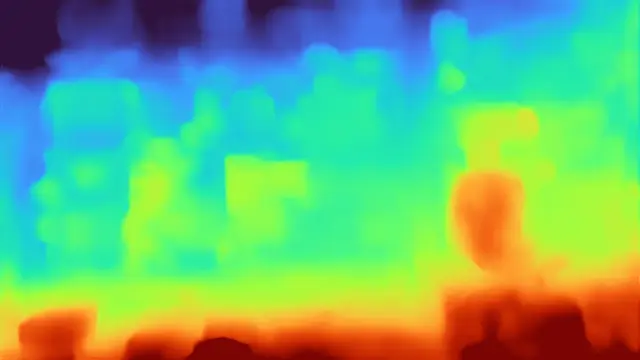 drone-city-blockFails: top-down view drawn as a blurred tilted plane; low buildings barely separate
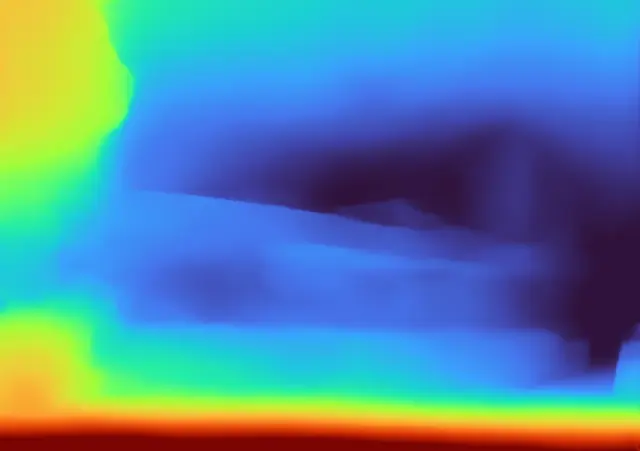 fire-engine-blurFails: draws the fire engine as far as the night sky
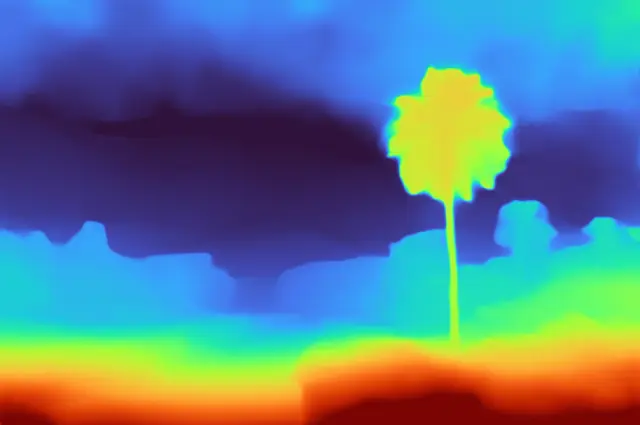 valley-landscapeFails: sky drawn nearer than the mountains; ridge line lost
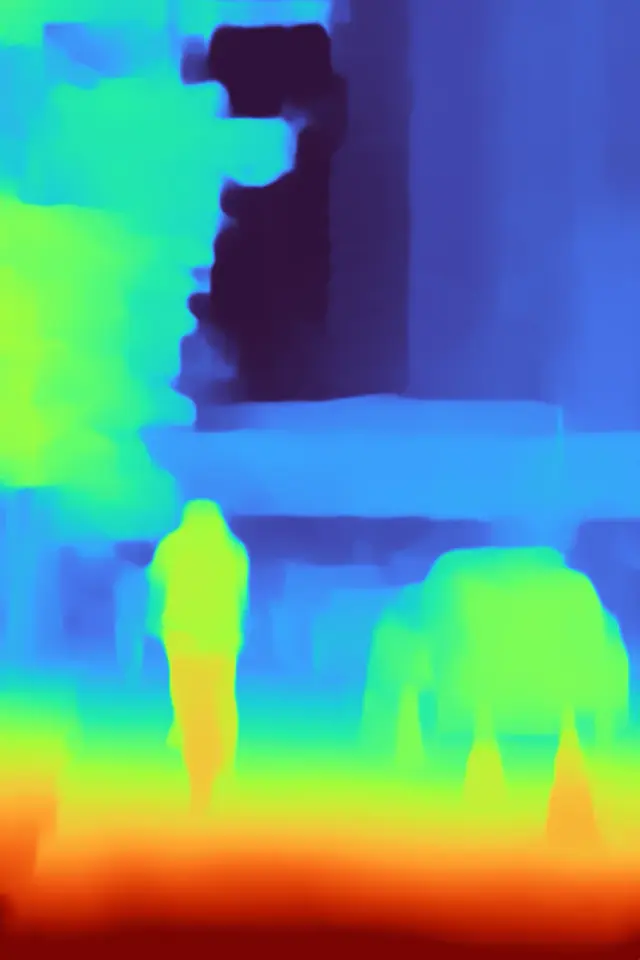 cyclist-bike-lane
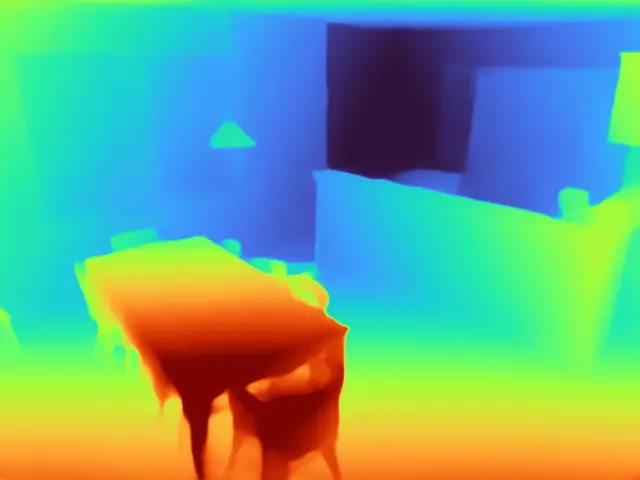 dining-room-kitchen
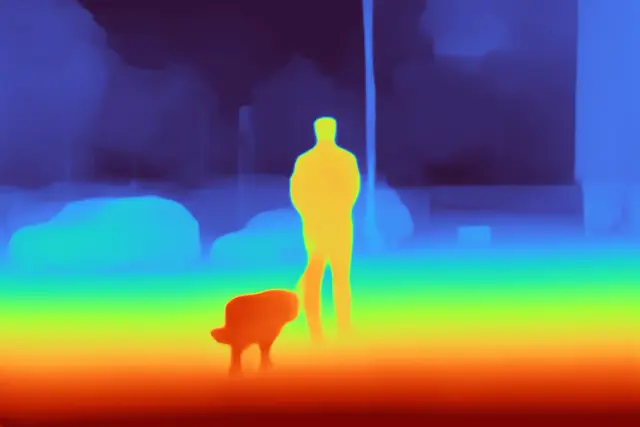 dog-walk-square
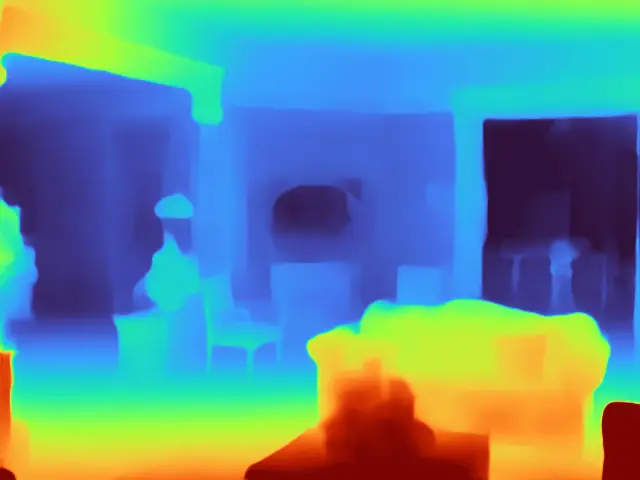 living-room-couch
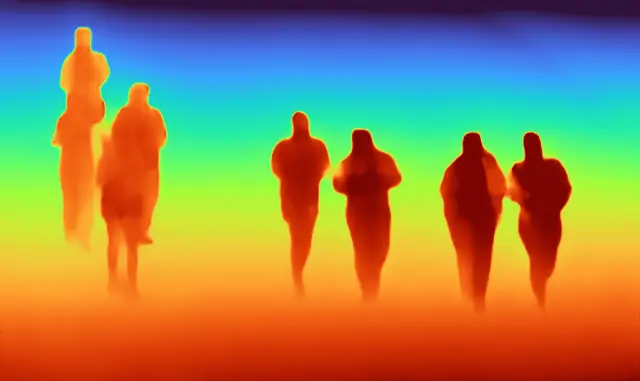 marathon-crossing
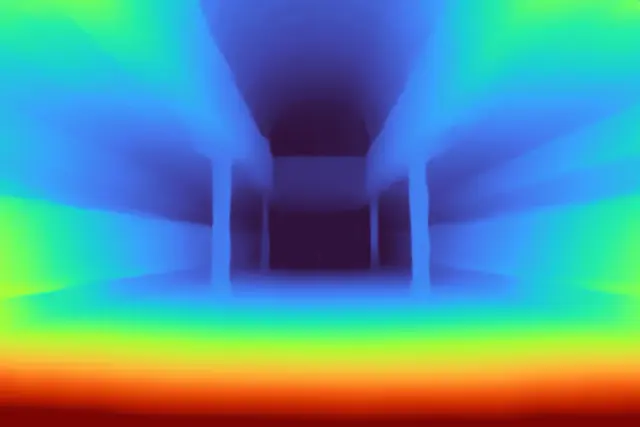 metro-platform
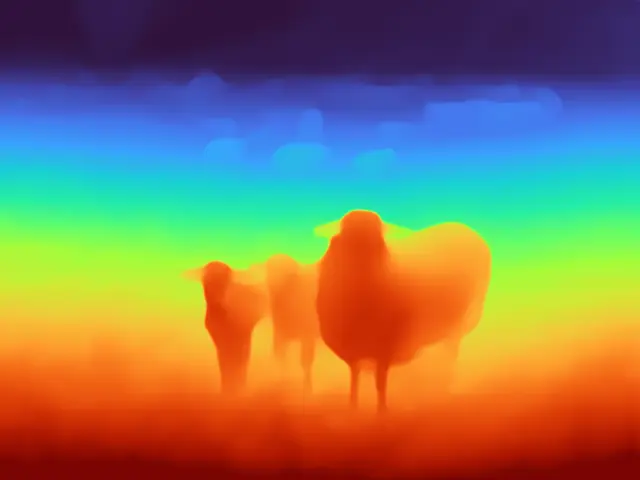 sheep-meadow-lambs
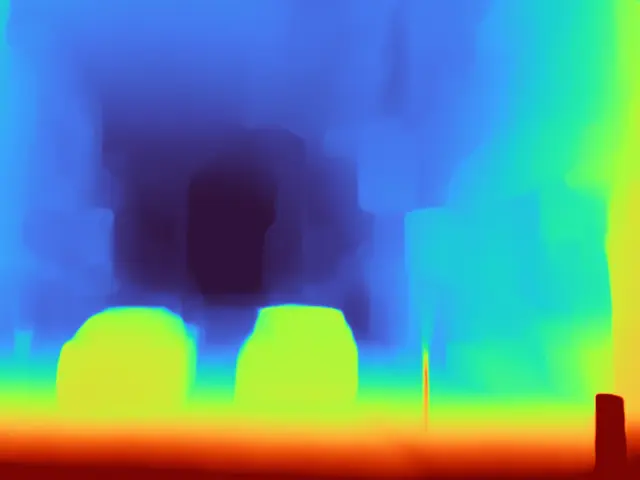 street-night-chinatown
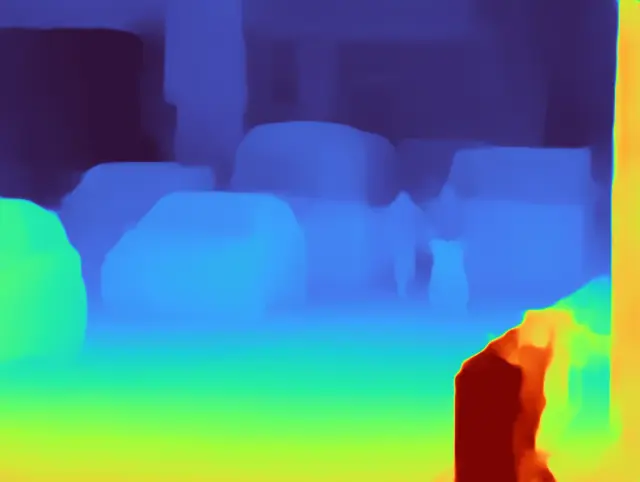 tokyo-street-cyclists
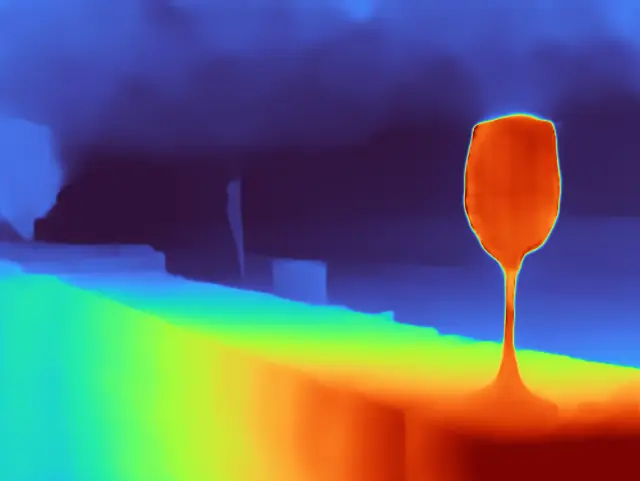 wine-glass-river
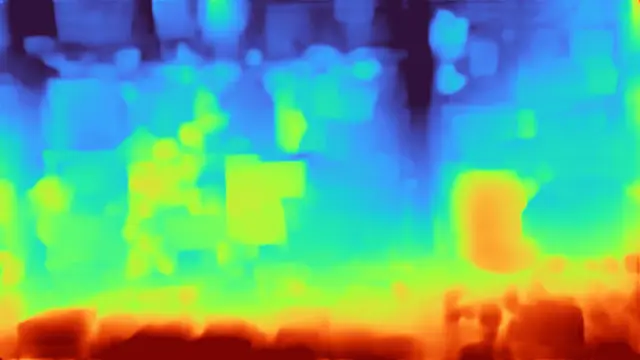 drone-city-blockFails: top-down view drawn as a blurred tilted plane; low buildings barely separate
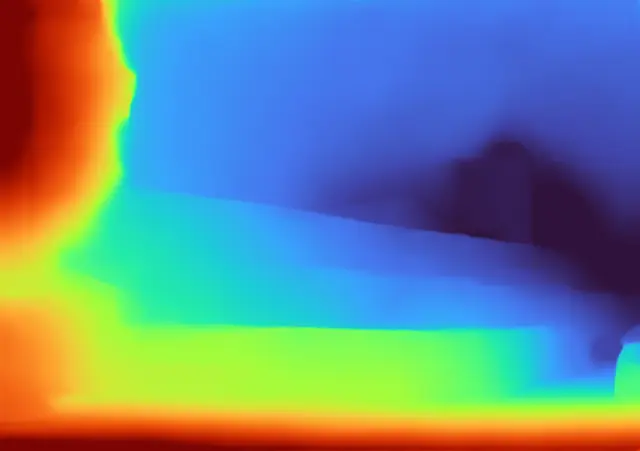 fire-engine-blurFails: draws the fire engine as far as the night sky
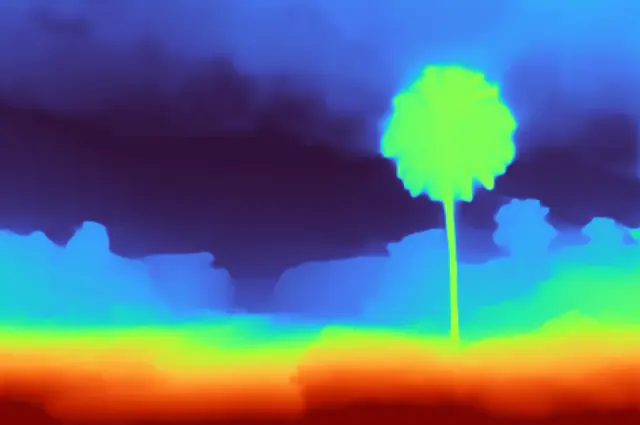 valley-landscapeFails: sky drawn nearer than the mountains; ridge line lost
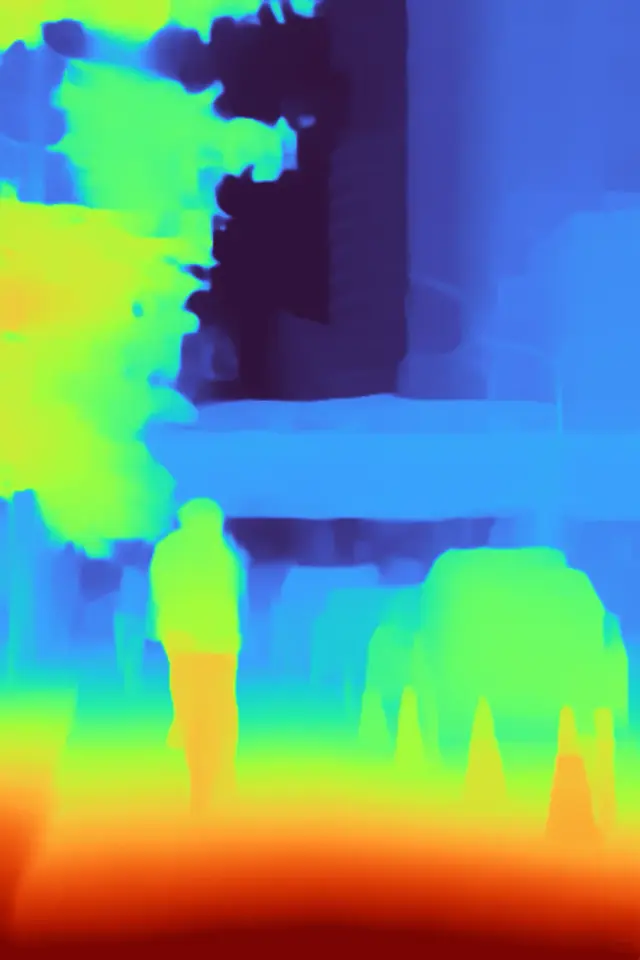 cyclist-bike-lane
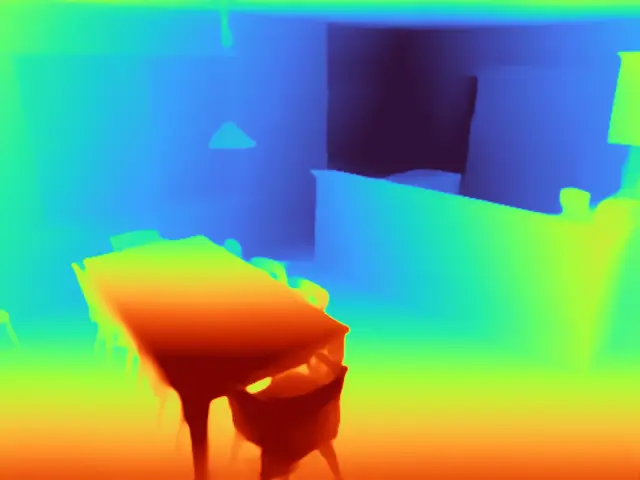 dining-room-kitchen
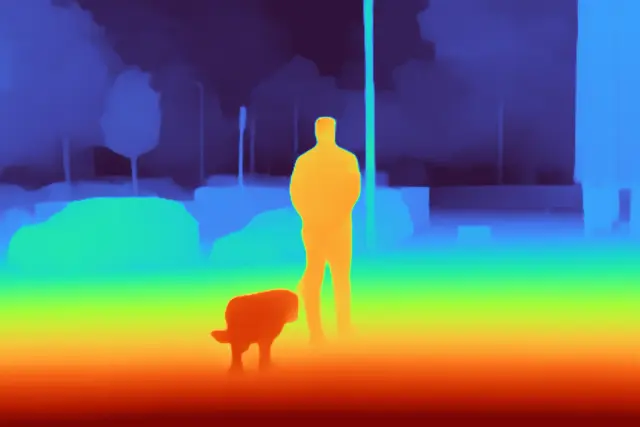 dog-walk-square
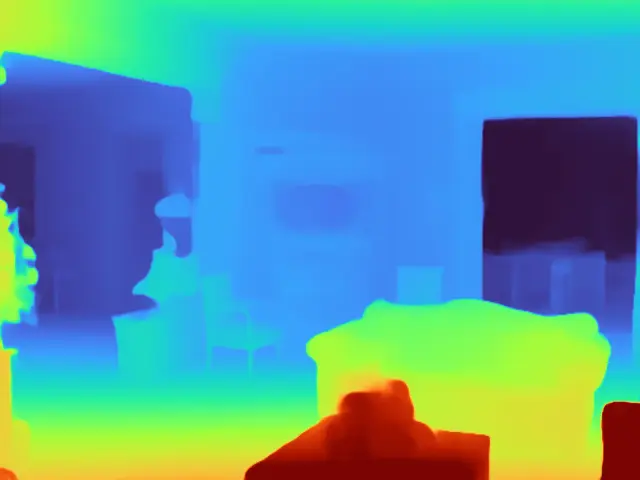 living-room-couch
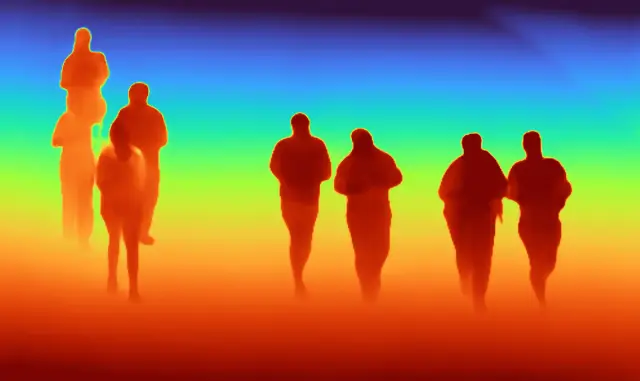 marathon-crossing
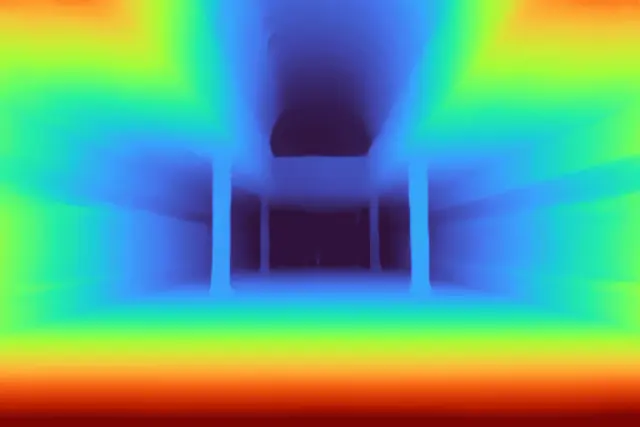 metro-platform
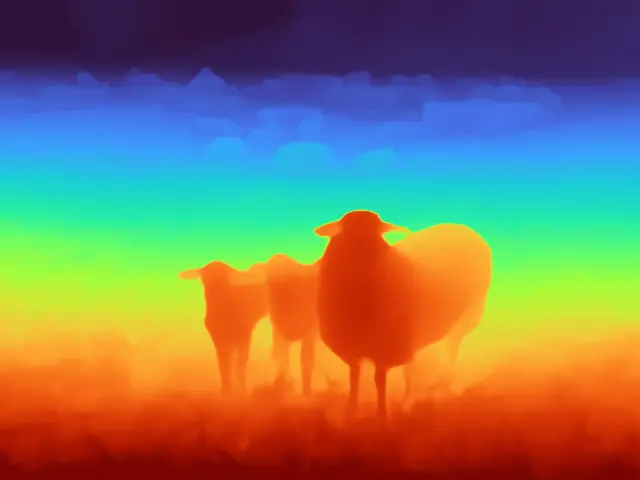 sheep-meadow-lambs
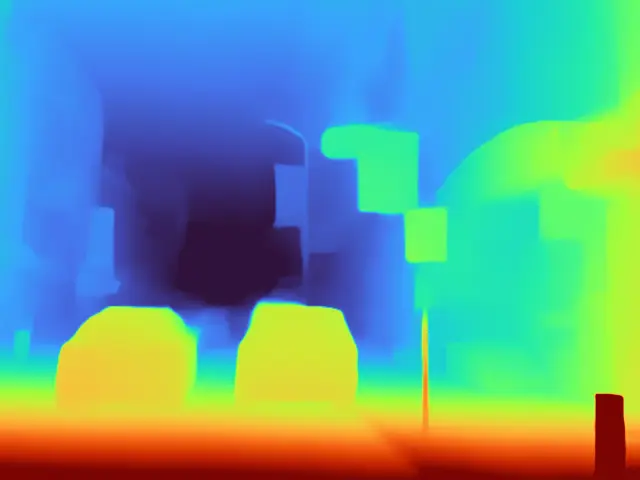 street-night-chinatown
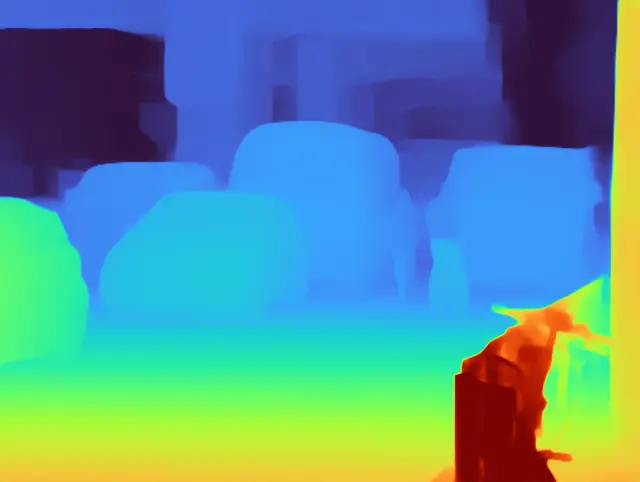 tokyo-street-cyclists
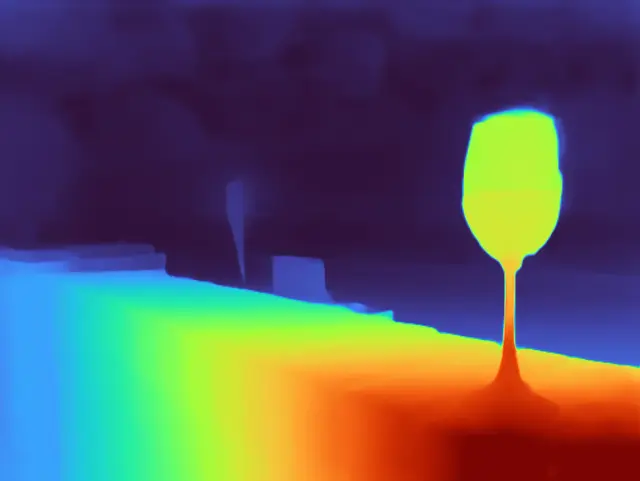 wine-glass-river
Use it when
You want relative depth from one photo with the newest Depth Anything, under Apache-2.0, in 0.8 to 1.4 GiB of VRAM.
Avoid it when
You need it on a CPU, where its code computes in half precision so we couldn't time it, or speed: Depth Anything V2 Small took 18 ms a call against 32 ms here. Both sizes also put a fire engine at night as far away as the sky.
Sizes
| Size | Latency | VRAM | Accuracy | Weights | Runs | License |
|---|---|---|---|---|---|---|
| small | 32.0 ms504x336 | 838 MiB | Not yet scored | 131 MB | As is | Commercial OK |
| base | 33.9 ms504x336 | 1.4 GiB | Not yet scored | 516 MB | As is | Commercial OK |
Estimated on other GPUs
Estimate, not measured. Worked out from our RTX 4090 run and NVIDIA's spec sheets. Each kind of GPU work is scaled by that GPU's peak for it: tensor cores at the precision the kernels used, CUDA cores, or memory bandwidth. The CPU's part of each call is kept at what it took on our Intel Core i7-10700K. How we estimate
Where a call's time goes on our RTX 4090: CPU and kernel launches 84%, memory-bound 9%, tensor cores, TF32 3%, tensor cores, BF16 2%.
GeForce (13)
| GPU | Fits | Latency |
|---|---|---|
| GeForce RTX 5090Blackwell, 32 GB GDDR7 | Yes | ≈ 30–32 ms |
| GeForce RTX 5080Blackwell, 16 GB GDDR7 | Yes | ≈ 33 ms |
| GeForce RTX 5070 TiBlackwell, 16 GB GDDR7 | Yes | ≈ 33–34 ms |
| GeForce RTX 5070Blackwell, 12 GB GDDR7 | Yes | ≈ 34–37 ms |
| GeForce RTX 5060 Ti 16GBBlackwell, 16 GB GDDR7 | Yes | ≈ 35–41 ms |
| GeForce RTX 5060Blackwell, 8 GB GDDR7 | Yes | ≈ 36–42 ms |
| GeForce RTX 4080Ada Lovelace, 16 GB GDDR6X | Yes | ≈ 33–35 ms |
| GeForce RTX 4070 TiAda Lovelace, 12 GB GDDR6X | Yes | ≈ 34–37 ms |
| GeForce RTX 4070Ada Lovelace, 12 GB GDDR6X | Yes | ≈ 34–39 ms |
| GeForce RTX 3090Ampere, 24 GB GDDR6X | Yes | ≈ 34–35 ms |
| GeForce RTX 3080Ampere, 10 GB GDDR6X | Yes | ≈ 34–37 ms |
| GeForce RTX 3070 TiAmpere, 8 GB GDDR6X | Yes | ≈ 35–40 ms |
| GeForce RTX 3070Ampere, 8 GB GDDR6 | Yes | ≈ 36–42 ms |
Workstation (4)
| GPU | Fits | Latency |
|---|---|---|
| RTX PRO 6000 Blackwell Workstation EditionBlackwell, 96 GB GDDR7 | Yes | ≈ 30–31 ms |
| RTX PRO 6000 Blackwell Max-Q Workstation EditionBlackwell, 96 GB GDDR7 | Yes | ≈ 30–31 ms |
| RTX 6000 Ada GenerationAda Lovelace, 48 GB GDDR6 | Yes | ≈ 31–32 ms |
| RTX A6000Ampere, 48 GB GDDR6 | Yes | ≈ 33 ms |
Data center (6)
| GPU | Fits | Latency |
|---|---|---|
| B200 (HGX, one GPU)Blackwell, 180 GB HBM3E | Yes | ≈ 28–31 ms |
| H200 SXMHopper, 141 GB HBM3e | Yes | ≈ 28–31 ms |
| H100 SXMHopper, 80 GB HBM3 | Yes | ≈ 29–31 ms |
| A100 SXM 80GBAmpere, 80 GB HBM2e | Yes | ≈ 31–32 ms |
| L40SAda Lovelace, 48 GB GDDR6 | Yes | ≈ 32 ms |
| L4Ada Lovelace, 24 GB GDDR6 | Yes | ≈ 34–40 ms |
Where a call's time goes on our RTX 4090: CPU and kernel launches 73%, memory-bound 13%, tensor cores, TF32 7%, tensor cores, BF16 5%.
GeForce (13)
| GPU | Fits | Latency |
|---|---|---|
| GeForce RTX 5090Blackwell, 32 GB GDDR7 | Yes | ≈ 31–33 ms |
| GeForce RTX 5080Blackwell, 16 GB GDDR7 | Yes | ≈ 36 ms |
| GeForce RTX 5070 TiBlackwell, 16 GB GDDR7 | Yes | ≈ 37–39 ms |
| GeForce RTX 5070Blackwell, 12 GB GDDR7 | Yes | ≈ 40–44 ms |
| GeForce RTX 5060 Ti 16GBBlackwell, 16 GB GDDR7 | Yes | ≈ 44–51 ms |
| GeForce RTX 5060Blackwell, 8 GB GDDR7 | Yes | ≈ 46–55 ms |
| GeForce RTX 4080Ada Lovelace, 16 GB GDDR6X | Yes | ≈ 37–39 ms |
| GeForce RTX 4070 TiAda Lovelace, 12 GB GDDR6X | Yes | ≈ 39–43 ms |
| GeForce RTX 4070Ada Lovelace, 12 GB GDDR6X | Yes | ≈ 41–47 ms |
| GeForce RTX 3090Ampere, 24 GB GDDR6X | Yes | ≈ 38–40 ms |
| GeForce RTX 3080Ampere, 10 GB GDDR6X | Yes | ≈ 40–44 ms |
| GeForce RTX 3070 TiAmpere, 8 GB GDDR6X | Yes | ≈ 44–50 ms |
| GeForce RTX 3070Ampere, 8 GB GDDR6 | Yes | ≈ 45–54 ms |
Workstation (4)
| GPU | Fits | Latency |
|---|---|---|
| RTX PRO 6000 Blackwell Workstation EditionBlackwell, 96 GB GDDR7 | Yes | ≈ 29–31 ms |
| RTX PRO 6000 Blackwell Max-Q Workstation EditionBlackwell, 96 GB GDDR7 | Yes | ≈ 29–31 ms |
| RTX 6000 Ada GenerationAda Lovelace, 48 GB GDDR6 | Yes | ≈ 32 ms |
| RTX A6000Ampere, 48 GB GDDR6 | Yes | ≈ 35–36 ms |
Data center (6)
| GPU | Fits | Latency |
|---|---|---|
| B200 (HGX, one GPU)Blackwell, 180 GB HBM3E | Yes | ≈ 26–30 ms |
| H200 SXMHopper, 141 GB HBM3e | Yes | ≈ 27–31 ms |
| H100 SXMHopper, 80 GB HBM3 | Yes | ≈ 27–31 ms |
| A100 SXM 80GBAmpere, 80 GB HBM2e | Yes | ≈ 31–33 ms |
| L40SAda Lovelace, 48 GB GDDR6 | Yes | ≈ 32 ms |
| L4Ada Lovelace, 24 GB GDDR6 | Yes | ≈ 38–47 ms |
CPU only
Measured by us with no GPU on an Intel(R) Core(TM) i7-10700K CPU @ 3.80GHz, 8 cores, 94.2 GiB of memory: the same official code with the GPU hidden, in fp32. These numbers say what to expect without a GPU. They aren't compared with any GPU's, here or in the charts. How we measure on a CPU
| Size | Runtime | Latency on the CPU | RAM peak |
|---|---|---|---|
| small | PyTorch2.14.1 | Not timed: on a CPU the official code computes in half precision, which a CPU only emulates | |
| base | PyTorch2.14.1 | Not timed: on a CPU the official code computes in half precision, which a CPU only emulates | |


Alternatives
Changes
First published . Every model's changes
Badge for a README
It says the model ran on our RTX 4090 and links to this page. It carries no number, so it never goes out of date.

[](https://modelsthatrun.dev/models/depth-anything-3/)Something wrong on this page, such as a license or a number? Email us.